
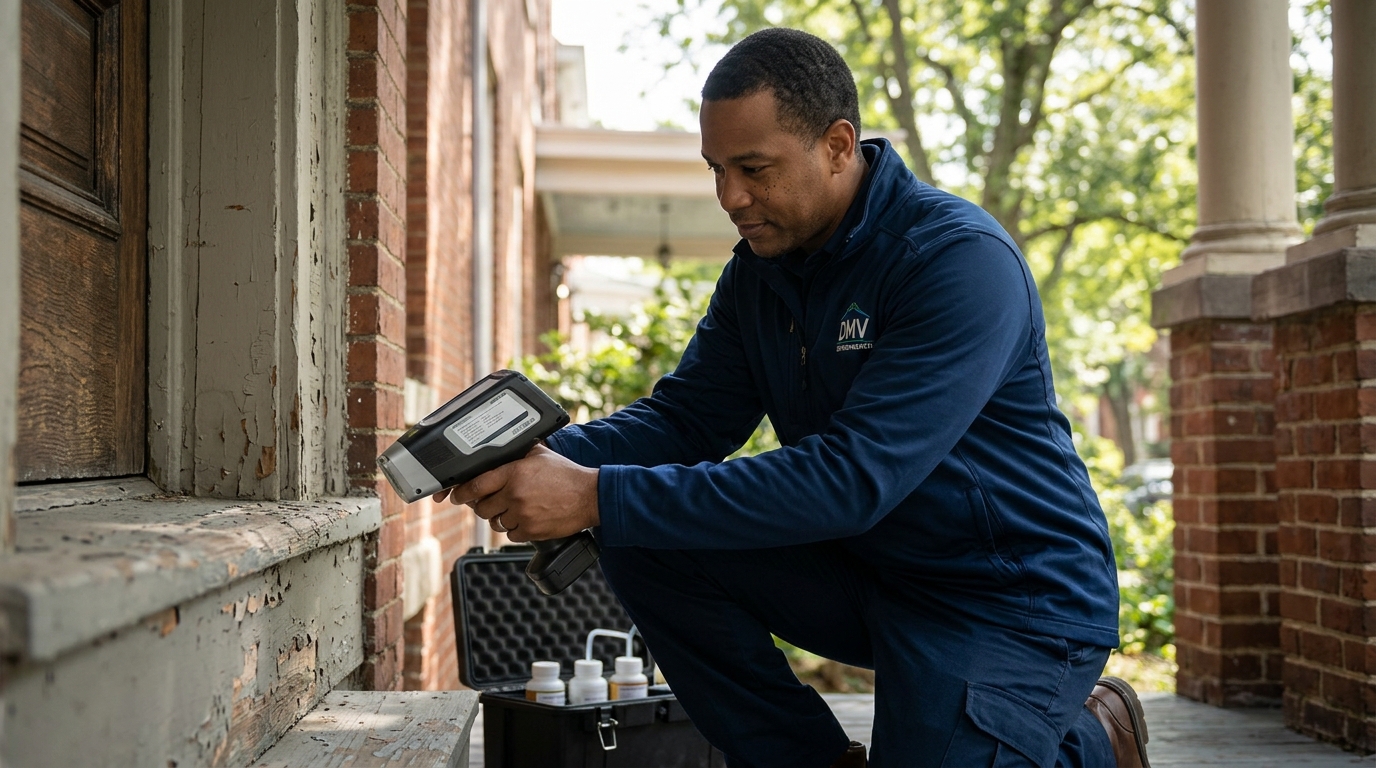
Trusted lead paint removal services in the DMV area require verifying state-specific certifications, reviewing scope of work, and ensuring compliance with federal and local regulations. DMV Environmental provides certified lead inspections and abatement services across Washington, DC, Maryland, and Virginia, ensuring that your property is safe and legally compliant before renovation begins.
Understanding Regulatory Frameworks in the Tri-State Area
Lead-based paint is a significant health hazard, particularly for children under the age of six. The Environmental Protection Agency (EPA) regulates lead-based paint activities to identify and address hazards in housing and child-occupied facilities built before 1978. EPA guidelines distinguish between inspections, risk assessments, and abatement projects, each requiring specific training and certification. In the District of Columbia, the Department of Energy and the Environment (DOEE) maintains a list of certified companies authorized to conduct lead-based paint activities. DOEE certification is mandatory for any business eliminating lead-based paint hazards in the District. Maryland and Virginia have their own state-specific licensing requirements, meaning a contractor licensed in one jurisdiction may not be legally permitted to perform abatement in another. Property owners must verify that their service provider holds the correct license for the specific location of the property.
Verifying Contractor Credentials and Licensing
When selecting a lead paint removal service, the first step is verifying credentials. The EPA requires that those performing lead-based paint activities be trained and certified by the EPA or an authorized state. EPA certification ensures that workers understand the necessary work practices to prevent lead dust contamination. In the DMV region, DMV Environmental employs licensed lead inspectors with extensive experience in commercial properties, multi-family dwellings, and single-family homes. You should request proof of certification for both the company and the individual workers who will be on-site. Additionally, check for state-specific licenses. For example, in Virginia, the Department of Health regulates lead abatement, and in Maryland, the Department of the Environment oversees lead poisoning prevention. A trusted provider will willingly provide documentation of their licenses and insurance coverage.
Distinguishing Between Inspection and Abatement
Many homeowners confuse lead inspection with lead abatement. Lead inspection is the process of identifying the presence of lead-based paint in a building. Lead abatement is the process of permanently eliminating or reducing lead-based paint hazards. EPA definitions clarify that abatement includes activities such as paint removal, replacement of components, encapsulation, or repainting. It is critical to understand which service you need. If you are planning a renovation, a risk assessment may be sufficient to determine if lead-safe work practices are needed. However, if you are removing lead paint, you must hire a certified abatement contractor. DMV Environmental offers both lead paint inspections and risk assessments, as well as abatement services, allowing for a seamless transition from identification to remediation. Understanding this distinction prevents you from hiring the wrong type of contractor for your specific project needs.
Evaluating Scope of Work and Safety Protocols
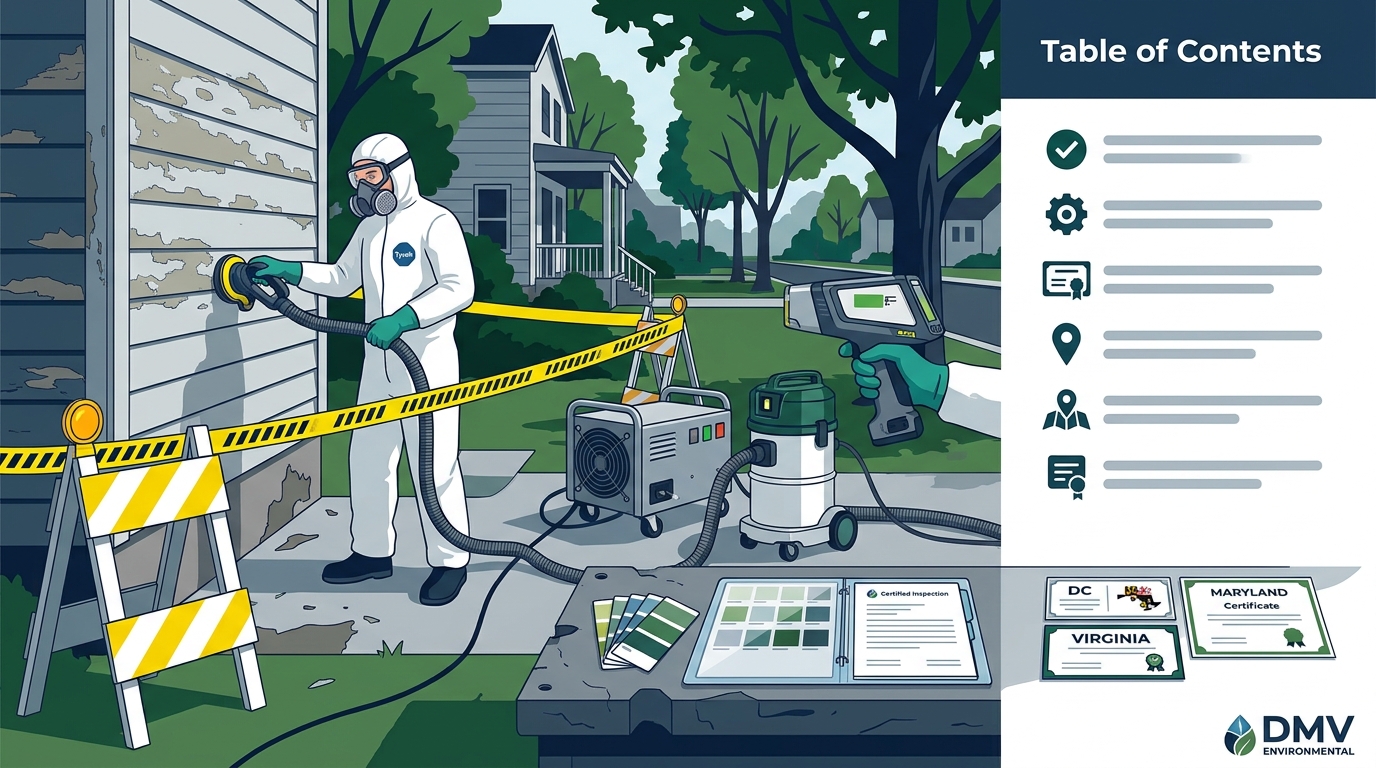
A trusted lead paint removal service will provide a detailed scope of work before beginning any project. This document should outline the specific areas to be treated, the methods to be used, and the safety protocols in place. HUD guidelines recommend that property owners and landlords use these guidelines to identify and control lead paint hazards. The scope of work should include provisions for containment, such as using plastic sheeting to protect floors and furniture, and negative air pressure systems to prevent dust migration. It should also specify how waste will be handled and disposed of. In the DMV area, local regulations may have additional requirements for waste disposal. DMV Environmental provides written scopes of work and ongoing monitoring to ensure that all safety protocols are followed. Reviewing this document carefully helps you understand the extent of the work and ensures that the contractor is committed to safety and compliance.
Assessing Experience and Local Expertise
Local expertise is a key factor in finding a trusted lead paint removal service. Older buildings in the DMV region often have unique construction materials and structural challenges. A contractor with experience in the local market will be familiar with these issues and can provide more accurate estimates and timelines. DMV Environmental specializes in high-end hotels, high-rise office buildings, and residences in the Washington, DC metropolitan area. This local focus allows them to navigate the specific regulatory landscape of the tri-state area. When evaluating a contractor, ask about their experience with properties similar to yours. Have they worked in multi-family dwellings? Have they handled commercial spaces? Their answers will give you insight into their capability and reliability. Additionally, check for reviews and testimonials from previous clients. A trusted provider will have a track record of successful projects and satisfied customers. according to Lead Paint Abatement
Key Takeaways
- Verify that the contractor holds the correct state-specific licenses for the property location.
- Distinguish between lead inspection, risk assessment, and abatement to hire the right service.
- Request proof of EPA or state certification for both the company and individual workers.
- Review the scope of work to ensure comprehensive safety protocols and containment measures.
- Choose a provider with local expertise in the DMV region to navigate specific regulatory requirements.
- Ensure the contractor provides written documentation of all findings and remediation steps.
Frequently Asked Questions
What is the difference between lead inspection and lead abatement?
Lead inspection identifies the presence of lead-based paint, while lead abatement permanently eliminates or reduces lead hazards through removal, encapsulation, or replacement.
Who regulates lead paint abatement in the DMV area?
The EPA sets federal standards, while DOEE in DC, MDE in Maryland, and VDH in Virginia enforce state-specific licensing and regulations.
Do I need a certified contractor for lead paint removal?
Yes, federal and state regulations require that lead abatement work be performed by certified contractors to ensure safety and compliance.
How can I verify a contractor's license?
You can check state-specific license lookup tools, such as the DOEE certified companies list for DC or the MDE license lookup for Maryland.
What should be included in a lead abatement scope of work?
A scope of work should detail the areas to be treated, methods used, containment measures, waste disposal plans, and safety protocols.
Is lead paint a health risk for adults?
Yes, lead exposure can cause serious health problems for both adults and children, including high blood pressure and kidney damage in adults.
Next Steps for Property Owners
Identifying a trusted lead paint removal service is a critical step in protecting your property and its occupants. By verifying credentials, understanding regulatory requirements, and reviewing the scope of work, you can make an informed decision. DMV Environmental is committed to providing safe, compliant, and efficient lead paint services across the DMV region. To plan your project, to discuss your specific needs and schedule an inspection.