

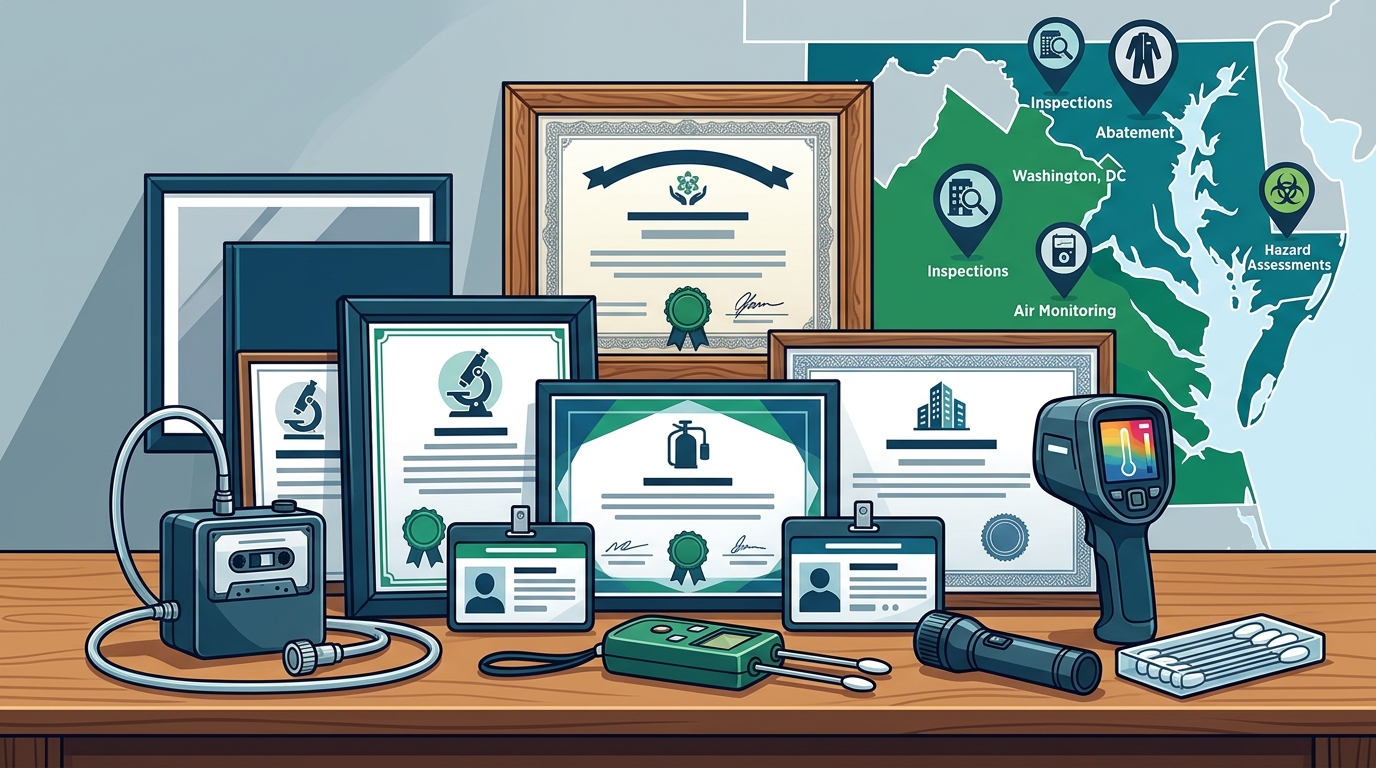
There is no single, universal license required to perform mold inspections in Washington, DC, Maryland, or Virginia. Instead, inspectors must obtain specific third-party certifications from recognized organizations and adhere to state and local regulations. DMV Environmental employs certified professionals who meet these rigorous standards to ensure accurate and compliant assessments across the region. For additional details, review the About Dmvenvironmental.
Understanding the Regulatory Landscape
Regulatory frameworks for mold inspection vary significantly by jurisdiction. In Washington, DC, the Department of Energy and Environment (DOEE) oversees environmental health standards. While DC does not mandate a specific state-issued license for mold inspectors, it requires that professionals follow established protocols for sampling and reporting. This regulatory gap often leads to confusion among property owners regarding who is qualified to perform these assessments. For additional details, review the .
In Maryland, the Department of the Environment (MDE) provides guidance on mold remediation and inspection. The state emphasizes the importance of using accredited laboratories for testing and ensuring that inspectors are trained in proper sampling techniques. Maryland’s approach focuses on public health protection and clear reporting standards to prevent misdiagnosis of moisture-related issues. according to PFAS What you
Virginia operates under the Department of Health (VDH) and the Department of Environmental Quality (DEQ). Similar to DC and Maryland, Virginia does not have a standalone mold inspector license. However, inspectors must comply with building codes and health regulations that dictate how mold is identified and documented. Understanding these nuances is critical for property managers and homeowners seeking reliable environmental assessments.
Essential Third-Party Certifications
Because state licensing is limited, third-party certifications serve as the primary benchmark for professional competence. The most widely recognized credential is the IICRC (Institute of Inspection, Cleaning and Restoration Certification) Applied Microbial Investigation (AMI) certification. This certification validates an inspector’s ability to identify microbial growth, determine its source, and recommend appropriate remediation strategies.
Another prominent credential is the RIA (Remediation and Inspection Association) Mold Inspector certification. The RIA offers a tiered certification system that allows inspectors to demonstrate expertise at various levels, from basic identification to complex forensic investigations. These certifications require ongoing education to ensure inspectors stay current with evolving industry standards and scientific research. according to Another Prominent Democrat
DMV Environmental’s team holds these industry-recognized certifications, ensuring that every inspection meets the highest professional standards. By prioritizing certified inspectors, the company provides clients with confidence in the accuracy and reliability of their environmental reports. This commitment to professional development is a key differentiator in the competitive environmental services market.
Technical Skills and Laboratory Standards
Certification is only one component of a qualified inspector’s profile. Technical proficiency in sampling methods is equally important. Inspectors must be skilled in using air sampling pumps, surface sampling kits, and moisture meters to gather accurate data. Proper technique is essential to avoid cross-contamination and ensure that results reflect the true condition of the indoor environment.
Accredited laboratories play a crucial role in the inspection process. Samples collected by inspectors must be analyzed by labs that are accredited by organizations such as the American Association for Laboratory Accreditation (A2LA) or the National Environmental Laboratory Accreditation Program (NELAP). These accreditations ensure that testing methods are standardized and that results are defensible in legal or insurance contexts.
DMV Environmental partners with accredited laboratories to provide comprehensive testing services. This collaboration allows the company to offer clients a seamless experience, from initial inspection to final reporting. By leveraging advanced laboratory capabilities, DMV Environmental ensures that its clients receive precise and actionable data to guide their remediation decisions.
Choosing a Qualified Inspection Partner
When selecting a mold inspection provider, property owners should verify the credentials of the individuals who will perform the work. Ask for specific certification numbers and check their validity with the issuing organization. Reputable companies will provide this information transparently and be willing to share their professional background and experience.
Experience in specific building types is also a valuable indicator of competence. Inspectors who have worked in high-rise offices, hospitals, or schools often possess specialized knowledge of the unique challenges these environments present. DMV Environmental specializes in serving a diverse range of clients, including high-end hotels, private schools, and commercial properties. This breadth of experience ensures that the company can address the specific needs of each project effectively.
Finally, consider the company’s approach to reporting and communication. A qualified inspector should provide clear, jargon-free reports that explain findings and recommendations in an accessible manner. DMV Environmental is committed to delivering transparent and detailed reports that empower clients to make informed decisions about their property’s environmental health.
Key Takeaways
- There is no universal state license for mold inspectors in DC, Maryland, or Virginia.
- Third-party certifications like IICRC AMI and RIA are the primary benchmarks for professional competence.
- Inspectors must be skilled in proper sampling techniques to ensure accurate data collection.
- Samples should be analyzed by accredited laboratories such as A2LA or NELAP certified facilities.
- DMV Environmental employs certified professionals who meet these rigorous industry standards.
- Verify the specific credentials and experience of the inspectors assigned to your project.
- Clear and transparent reporting is a hallmark of a qualified and reputable inspection partner.
Frequently Asked Questions
Do mold inspectors need a state license in Washington, DC?
No, Washington, DC does not require a specific state-issued license for mold inspectors. However, inspectors must follow DOEE guidelines and typically hold third-party certifications to demonstrate their qualifications.
What is the most recognized certification for mold inspectors in Maryland?
The IICRC Applied Microbial Investigation (AMI) certification is widely recognized in Maryland. The RIA Mold Inspector certification is also highly respected and commonly held by professionals in the state.
Are there specific licensing requirements for mold inspectors in Virginia?
Virginia does not mandate a standalone mold inspector license. Inspectors must comply with state building codes and health regulations, and most hold third-party certifications to validate their expertise.
How can I verify if a mold inspector is certified?
You can verify certifications by checking the inspector’s credentials with the issuing organization, such as the IICRC or RIA. Reputable companies like DMV Environmental will provide this information transparently upon request.
Why is laboratory accreditation important for mold testing?
Laboratory accreditation ensures that testing methods are standardized and that results are accurate and defensible. Accredited labs, such as those certified by A2LA or NELAP, provide reliable data that is essential for proper remediation planning.
Does DMV Environmental provide mold inspection services in the DMV region?
Yes, DMV Environmental provides comprehensive mold inspection and assessment services in Washington, DC, Maryland, and Virginia. Our team of certified professionals is experienced in serving a wide range of commercial and residential properties.
Conclusion
Navigating the complex landscape of mold inspection qualifications in the DMV region requires a clear understanding of regulatory and professional standards. While state licensing is limited, third-party certifications and laboratory accreditation are essential markers of a competent inspector. DMV Environmental is committed to providing these high-quality services, ensuring that our clients receive accurate and reliable environmental assessments. To discuss your specific inspection needs, today.