
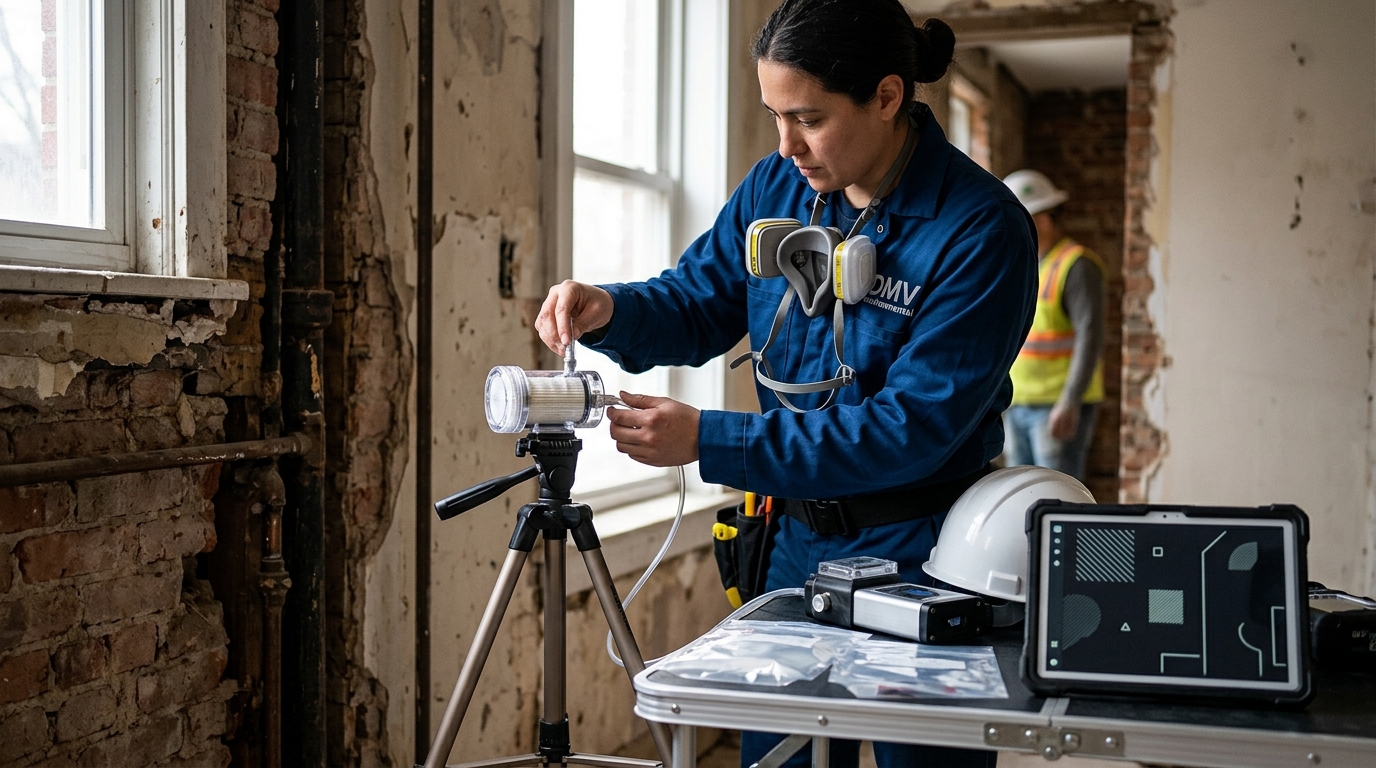
Asbestos abatement is a high-stakes regulatory environment in the District of Columbia. A single sampling error can halt a construction project, trigger massive fines, or expose occupants to hazardous fibers. According to the Environmental Protection Agency, asbestos is the leading cause of lung cancer in non-smokers, making precise monitoring non-negotiable. Property owners and contractors in DC must navigate strict local and federal guidelines to ensure safety. This guide outlines the most frequent errors in asbestos air monitoring and provides the corrective protocols needed to maintain compliance and protect public health. (Contact us Dmvenvironmental)
Critical Sampling Equipment and Placement Errors
The foundation of accurate asbestos air monitoring lies in the physical setup of the sampling devices. One of the most common mistakes is improper placement of the air pumps. Pumps must be positioned at the breathing zone height of workers, typically between 3 and 6 feet from the ground. Placing them too high or too low can result in data that does not reflect actual human exposure levels.
Another frequent error involves the use of incorrect filter cassettes. Asbestos sampling requires specific 37-millimeter cassettes with polycarbonate membranes. Using standard dust cassettes designed for general particulate matter will not capture the fine fibers required for Phase Contrast Microscopy (PCM) or Transmission Electron Microscopy (TEM) analysis. This mismatch renders the entire sample useless for regulatory compliance.
Furthermore, the location of the pump relative to the abatement barrier is critical. Samples must be taken both inside the containment area and in the clean air zone outside. If the pump is placed too close to the barrier, it may not detect leaks. If it is placed too far away, it may miss localized high-concentration events. DMV Environmental ensures that our certified inspectors place pumps strategically to capture the true scope of the work area.
Neglecting Pump Calibration and Flow Rate Accuracy
Calibration is the silent killer of accurate air monitoring data. Many contractors fail to calibrate their air pumps before and after every sampling shift. Air pumps can drift over time due to battery depletion or mechanical wear. Without calibration, the flow rate may deviate from the target, leading to under-sampling or over-sampling of air volume.
The standard flow rate for asbestos air monitoring is typically 2 to 5 liters per minute. Deviating from this range can compromise the integrity of the filter. If the flow is too high, fibers may pass through the filter without being captured. If it is too low, the sampling duration may need to be extended unnecessarily, increasing operational costs.
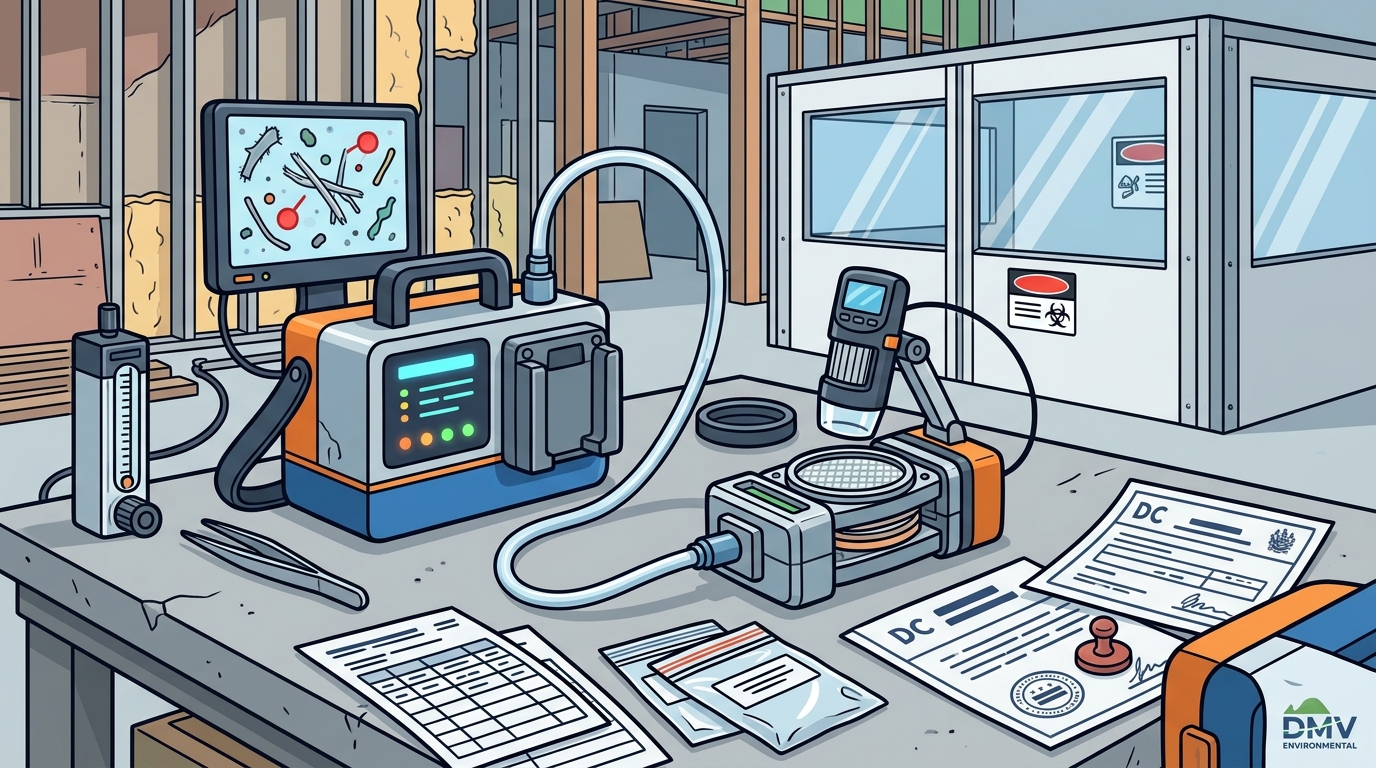
Calibration must be performed using a primary standard, such as a bubble burette or a calibrated electronic flow meter. Relying on the pump's internal gauge is a dangerous mistake because these gauges are not always accurate. DMV Environmental’s team adheres to strict calibration protocols, documenting every adjustment to ensure that the data collected is defensible in any regulatory audit.
Cross-Contamination During Sample Handling
Asbestos fibers are microscopic and easily airborne. Cross-contamination occurs when samples are mishandled during collection, transport, or analysis. One common mistake is failing to seal the sample cassettes properly immediately after collection. Even a slight gap can allow ambient air to enter, diluting the sample or introducing external fibers.
Transporting samples in a way that exposes them to vibration or temperature extremes is another error. Samples must be kept upright and protected from physical shock. Additionally, the chain of custody documentation must be flawless. Any break in the documentation trail can lead to the rejection of the sample by laboratories and regulatory agencies.
DMV Environmental’s inspectors are trained in rigorous sample handling procedures. We use tamper-evident seals and specialized transport containers to ensure that the sample integrity remains intact from the job site to the laboratory. This attention to detail prevents costly re-sampling and delays in project completion.
Unqualified Personnel and Lack of Oversight
Asbestos abatement is not a task for general construction workers. The complexity of air monitoring requires specialized training and certification. A major mistake is allowing untrained personnel to set up or monitor air sampling devices. These individuals may not understand the nuances of pump placement, calibration, or emergency response.
Lack of oversight is equally dangerous. Even with trained personnel, errors can occur if there is no independent verification. The role of the third-party air monitoring consultant is to provide an unbiased assessment of the abatement process. Without this oversight, contractors may inadvertently compromise the containment or fail to detect fiber releases.
DMV Environmental provides certified inspectors who are licensed in Maryland, DC, and Virginia. Our team brings industry knowledge and experience to every project, ensuring that all air monitoring activities are conducted with accuracy and excellence. We specialize in working with high-end hotels, high-rise office buildings, and private schools, where the stakes for safety are particularly high.
DC-Specific Regulatory Compliance Pitfalls
Washington DC has its own set of regulations regarding asbestos abatement that go beyond federal guidelines. One common mistake is failing to comply with the DC Department of Health and Human Services (DC Health) requirements. These regulations may require specific notification periods, additional reporting, or specialized disposal methods.
Another pitfall is ignoring the local requirements for asbestos surveys. The EPA requires that any building undergoing renovation or demolition undergo an asbestos survey regardless of age. In DC, this survey must be conducted by a licensed inspector. Skipping this step can result in severe penalties and work stoppages.
DMV Environmental is staffed with professional inspectors who are appropriately certified and licensed to perform asbestos services in Maryland, DC, and Virginia. We stay current with all local regulatory changes to ensure that our clients remain compliant. Our team also provides comprehensive services including lead paint inspections and mold remediation, offering a holistic approach to environmental safety.
Key Takeaways
- Proper Pump Placement: Always position air pumps at breathing zone height (3-6 feet) for accurate exposure data.
- Calibration is Critical: Calibrate pumps before and after every shift using a primary standard to ensure flow rate accuracy.
- Prevent Cross-Contamination: Seal cassettes immediately and use tamper-evident transport to maintain sample integrity.
- Qualified Personnel: Only certified inspectors should handle air monitoring to avoid procedural errors.
- DC Regulations: Adhere to DC Health requirements for notifications and surveys to avoid penalties.
- Comprehensive Services: DMV Environmental offers asbestos, lead, and mold services for a unified safety approach.
- Emergency Response: Our dedicated team provides immediate support for urgent environmental issues.
Frequently Asked Questions
What is the standard flow rate for asbestos air monitoring?
The standard flow rate is typically between 2 and 5 liters per minute. This range ensures that the filter captures fibers effectively without allowing them to pass through.
Why is calibration of air pumps important?
Calibration ensures that the pump is drawing the correct volume of air. Without it, the data collected may be inaccurate, leading to false compliance or unnecessary re-sampling.
Who is required to conduct asbestos surveys in DC?
Asbestos surveys must be conducted by licensed and certified inspectors. The EPA requires surveys for any building undergoing renovation or demolition, regardless of age.
What are the consequences of improper sample handling?
Improper handling can lead to cross-contamination, rendering the sample useless. This can result in regulatory fines, project delays, and the need for costly re-sampling.
Does DMV Environmental provide emergency asbestos services?
Yes, DMV Environmental has a dedicated team for emergency response services for immediate and urgent projects, including water and fire damage investigations.
How does DC regulate asbestos abatement?
DC Health regulates asbestos abatement through strict notification, reporting, and disposal requirements. Compliance with these local regulations is mandatory for all projects.
What types of properties does DMV Environmental serve?
We specialize in high-end hotels, high-rise office buildings, residences, retail spaces, private schools, and hospitals, ensuring safety across diverse environments.
Partner with DMV Environmental
Avoid the costly mistakes of improper asbestos air monitoring. DMV Environmental provides expert inspections, abatement, and monitoring services tailored to the unique regulatory landscape of Washington DC. Our certified team ensures your project is completed with accuracy, excellence, and full compliance. Contact us today to schedule your asbestos survey or air monitoring service.
Contact DMV Environmental to secure your project's safety and compliance.