
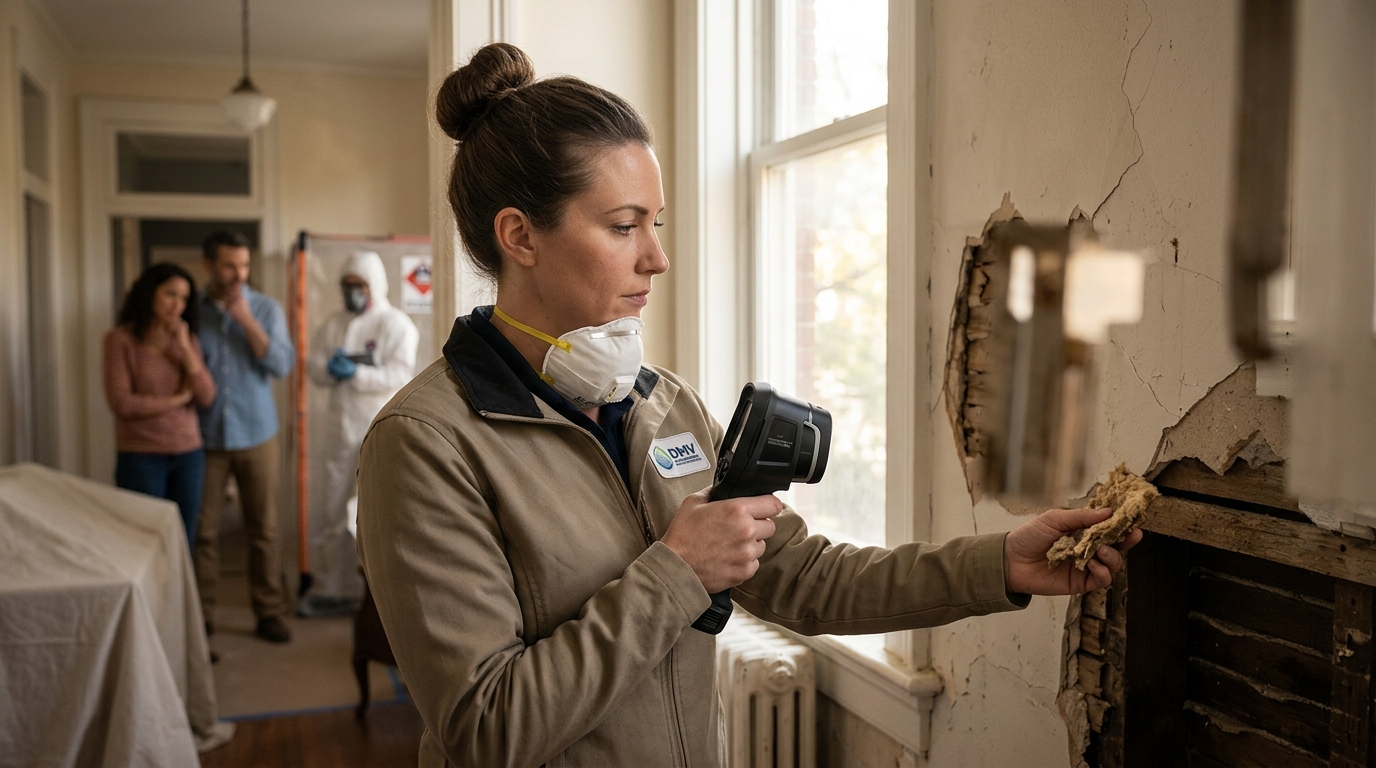
Indoor environmental hazards pose silent but severe threats to building occupants across the Washington DC, Maryland, and Virginia regions. According to the Environmental Protection Agency, radon is the leading cause of lung cancer in non-smokers, highlighting the critical need for rigorous testing protocols. However, asbestos, lead, and mold remain the most prevalent contaminants in older structures, each requiring distinct inspection and abatement strategies. DMV Environmental provides certified assessments to identify these dangers before they impact health or property value. (Contact us Dmvenvironmental)
Understanding Asbestos Risks and Regulations
Asbestos is a group of naturally occurring fibrous minerals that were widely used in construction materials for their heat resistance and durability. These fibers become hazardous when building materials containing asbestos are disturbed, releasing microscopic particles into the air. Inhalation of these fibers can lead to serious lung diseases, including asbestosis, lung cancer, and mesothelioma, often decades after initial exposure.
The EPA requires that any building undergoing renovation or demolition undergo an asbestos survey regardless of age. This regulation ensures that contractors and property owners are aware of potential hazards before work begins. DMV Environmental specializes in asbestos abatement, air monitoring, and hazardous material assessments for high-rise office buildings, hotels, and residential properties in the DC metro area.
Professional inspectors use specialized sampling techniques to identify asbestos-containing materials (ACMs). Once identified, licensed professionals must follow strict containment and removal protocols to prevent fiber release. Our team is certified and licensed to perform these services in Maryland, DC, and Virginia, ensuring compliance with federal and local regulations.
The Hidden Threat of Lead Paint
Lead paint is a type of coating containing lead pigment that was commonly used in homes and buildings constructed before 1978. When this paint deteriorates, chips, or is sanded during renovation, it creates toxic dust and chips that pose significant health risks, particularly to children and pregnant women.
Lead detection and monitoring is a critical aspect of environmental due diligence. Damaged or peeling paint should be addressed immediately to prevent exposure. DMV Environmental’s team of licensed lead inspectors conducts thorough investigations in commercial properties, multi-family dwellings, schools, and single-family homes. Our risk assessments help property owners understand the extent of contamination and develop effective mitigation plans.
Exposure to lead can cause neurological damage, developmental delays in children, and various other health issues in adults. Early detection through professional inspection is the only way to ensure a safe environment. We provide comprehensive lead paint inspections and risk assessments to protect your family or tenants from these silent dangers.
Mold Growth and Indoor Air Quality
Mold is a type of fungus that grows in multicellular filaments called hyphae and thrives in damp, humid environments. It reproduces by releasing spores into the air, which can trigger allergic reactions, asthma attacks, and respiratory infections in sensitive individuals. Water intrusion is a primary cause of mold growth, especially when it goes undetected for extended periods.
We provide comprehensive services to prevent mold issues, investigate moisture intrusion, and recommend prudent remediation measures. Our mold investigations include scope of work plans, remediation oversight, and clearance inspections to ensure the space is safe for re-occupancy. Understanding how mold affects occupant health, insurance practices, and potential litigation is crucial for property managers.
Indoor Air Quality (IAQ) assessments are also vital in identifying mold-related issues. By following best practices in proactive IAQ management, building owners can maintain healthy indoor environments, increase marketability, and reduce liability. DMV Environmental addresses potable water quality and legionella concerns alongside mold remediation to provide a holistic approach to indoor safety.
Comparing Hazard Profiles
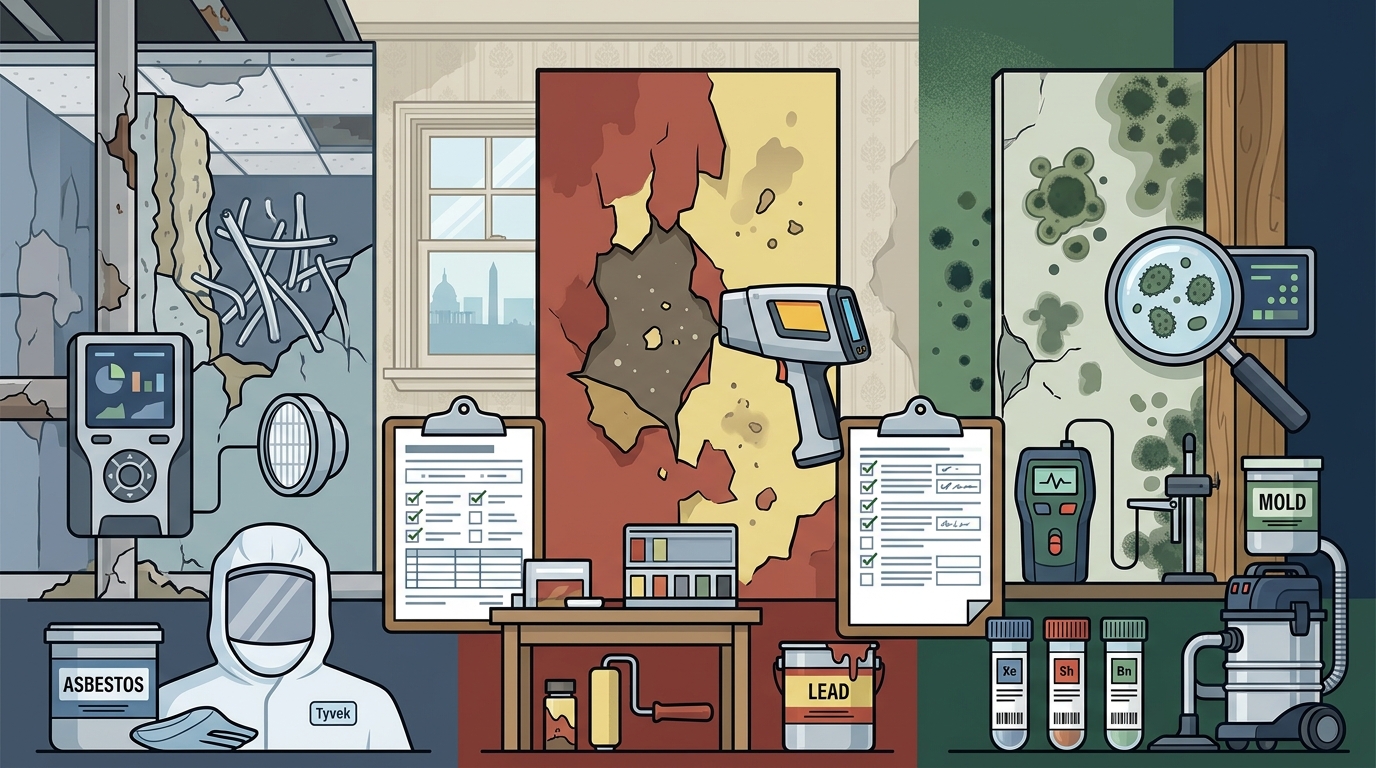
Understanding the differences between asbestos, lead, and mold is essential for effective risk management. Each hazard requires specific detection methods and remediation protocols. The table below summarizes the key characteristics of each environmental threat.
| Hazard Type | Primary Health Risk | Common Sources | Remediation Approach |
|---|---|---|---|
| Asbestos | Lung cancer, mesothelioma | Insulation, flooring, ceiling tiles | Professional abatement and containment |
| Lead | Neurological damage, developmental delays | Pre-1978 paint, pipes, dust | Paint stabilization or removal |
| Mold | Respiratory issues, allergies | Water damage, high humidity | Moisture control and remediation |
Key Takeaways
- Asbestos surveys are legally required for any building undergoing renovation or demolition, regardless of its age.
- Lead paint was commonly used in homes built before 1978 and poses significant risks to children.
- Mold growth is directly linked to water intrusion and poor indoor air quality management.
- DMV Environmental provides certified inspections and abatement services in Maryland, DC, and Virginia.
- Professional assessment is the only reliable way to identify hidden environmental hazards.
- Early detection and remediation can prevent serious health issues and costly litigation.
- Our team specializes in high-end hotels, high-rise offices, and residential properties.
Frequently Asked Questions
How do I know if my home has asbestos?
You cannot identify asbestos by sight. Professional sampling and laboratory analysis are required. DMV Environmental offers comprehensive asbestos surveys for properties in the DC metro area.
Is lead paint still a problem in older homes?
Yes, lead paint remains a significant hazard in homes built before 1978. Our licensed inspectors conduct thorough lead paint inspections to assess risk levels.
What causes mold growth in buildings?
Mold thrives in damp environments. Water intrusion, leaks, and high humidity are primary causes. We provide moisture mapping and remediation oversight to address these issues.
Do I need a professional for mold remediation?
Yes, extensive mold growth requires professional remediation to ensure safe removal and prevent recurrence. Our team provides scope of work plans and clearance inspections.
How often should I test for radon?
Radon testing is recommended for all residential properties. The EPA recommends testing in both air and water, and taking action if levels exceed 4 pCi/L in air.
What is the cost of asbestos abatement?
Costs vary based on the extent of contamination and project complexity. Contact us for a detailed estimate tailored to your specific needs.
Can mold affect my property value?
Yes, unresolved mold issues can significantly decrease property value and lead to liability concerns. Proactive IAQ management helps maintain marketability.
Contact DMV Environmental
If you suspect environmental hazards in your property, do not wait for symptoms to appear. DMV Environmental provides expert asbestos, lead, and mold inspections across Washington DC, Maryland, and Virginia. Our certified team is ready to help you maintain a safe and healthy environment. Contact us today to schedule your assessment or explore our services.