

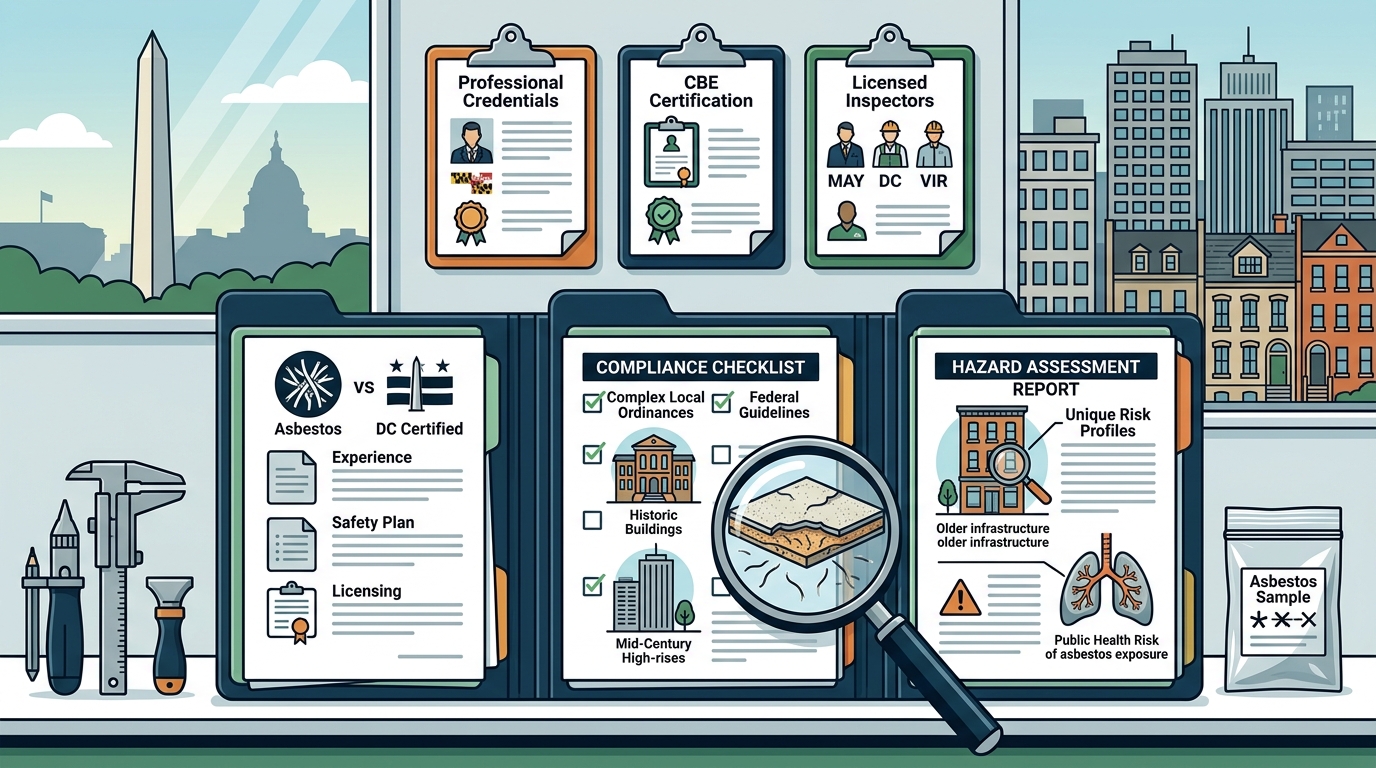
Asbestos remains a critical health hazard in the nation's capital, where thousands of mid-century structures require careful renovation or demolition. According to the Environmental Protection Agency, asbestos is the leading cause of lung cancer in non-smokers, making professional abatement not just a regulatory requirement but a vital public health intervention. In Washington DC, the density of historic buildings and high-rise office spaces creates a unique risk profile that demands specialized expertise. Property owners must navigate complex local ordinances alongside federal guidelines to ensure safety during these high-risk operations. (Contact us Dmvenvironmental)
Understanding DC Regulatory Landscape
Washington DC enforces some of the strictest environmental regulations in the United States. The District of Columbia Department of Health (DC Health) oversees asbestos management programs that require rigorous adherence to state and federal laws. Any building undergoing renovation or demolition must undergo a comprehensive asbestos survey, regardless of its age. This mandate ensures that hidden hazards are identified before construction activities begin. (About Dmvenvironmental)
Compliance with the National Emission Standards for Hazardous Air Pollutants (NESHAP) is non-negotiable. These federal rules dictate how asbestos-containing materials must be handled, transported, and disposed of. Failure to comply can result in severe penalties and prolonged project delays. A qualified contractor must demonstrate up-to-date knowledge of these evolving regulations to protect property owners from liability. (About Dmvenvironmental)
Local ordinances in DC often exceed federal requirements, particularly regarding notification periods and air monitoring standards. Contractors must file detailed notifications with DC Health before commencing work. This process ensures that regulatory bodies can monitor the activity and respond to any potential violations immediately. Understanding these nuances is the first step in selecting a reliable partner. (Services Dmvenvironmental)
Verification and Certification
When evaluating potential abatement contractors, verification of credentials is the most critical step. Asbestos Abatement Contractor Selection Criteria for Washington DC must prioritize licensed professionals who operate within the specific jurisdictions of Maryland, DC, and Virginia. DMV Environmental is staffed with professional inspectors who are appropriately certified and licensed to perform these services across the tri-state area.
Look for contractors who employ certified asbestos inspectors and project monitors. These professionals undergo continuous training to stay current with the latest safety technologies and regulatory changes. Their certifications should be verifiable through state licensing boards. This verification process confirms that the team has the theoretical knowledge and practical experience required for complex projects.
Additionally, check for membership in professional organizations such as the National Association of Asbestos Abatement Contractors (NAAAC). Membership often indicates a commitment to industry best practices and ethical standards. It also suggests that the contractor is engaged in ongoing professional development, which is essential in a field where safety protocols evolve rapidly.
Technical Capabilities and Equipment
Effective asbestos abatement requires specialized equipment and technical expertise. The process involves creating negative pressure containment areas to prevent fiber release. Contractors must possess industrial-grade HEPA filtration units, negative air machines, and personal protective equipment (PPE) for all workers. The quality of this equipment directly impacts the safety of the building occupants and the surrounding community.
DMV Environmental provides a multitude of services including asbestos, lead, and mold abatement, inspections, and indoor air quality (IAQ) assessments. Their Building Sciences team utilizes advanced air monitoring techniques to ensure that clearance levels are met before the containment is removed. This rigorous testing protocol is essential for verifying that the space is safe for re-occupancy.
Furthermore, the contractor should have the capability to handle hazardous materials beyond just asbestos. Many older buildings contain lead-based paint and other toxic substances. A comprehensive service provider can manage these additional hazards, streamlining the renovation process and reducing the need for multiple vendors. This integrated approach minimizes disruption and ensures consistent safety standards throughout the project.
Safety Protocols and Containment
Safety is the cornerstone of any successful abatement project. The EPA requires that any building undergoing renovation or demolition undergo an asbestos survey regardless of age. This initial assessment dictates the scope of work and the specific safety protocols required. Contractors must develop a detailed work plan that outlines containment strategies, waste disposal methods, and emergency procedures.
Proper containment involves sealing off the work area with heavy-duty plastic sheeting and creating an airlock entry point. Workers must wear respirators and disposable coveralls while inside the containment zone. After the abatement is complete, the area must be thoroughly cleaned using HEPA vacuums and wet-wiping techniques. This meticulous cleaning process is critical for removing residual fibers.
Clearance air testing is the final step in the safety protocol. Independent third-party inspectors conduct air sampling to ensure that fiber counts are below the permissible exposure limit. Only after receiving a clearance letter can the containment be dismantled and the building re-occupied. This objective verification provides property owners with peace of mind and legal protection.
Contractor Comparison Matrix
Choosing the right contractor requires comparing key operational metrics. The table below outlines the critical differences between general contractors and specialized environmental firms.
| Criteria | General Contractor | Specialized Environmental Firm |
|---|---|---|
| Licensing | General Building License | Asbestos Abatement License |
| Equipment | Standard Construction Tools | HEPA Filtration & Negative Air |
| Clearance Testing | Not Included | Independent Third-Party Verified |
| Regulatory Compliance | Basic Awareness | DC Health & EPA Certified |
| Emergency Response | Limited | Dedicated Rapid Response Team |
Key Takeaways
- Regulatory Mandate: The EPA requires asbestos surveys for all renovation and demolition projects, regardless of building age.
- Health Risk: Asbestos is the leading cause of lung cancer in non-smokers, necessitating strict professional handling.
- Local Expertise: DC Health enforces specific notification and disposal protocols that general contractors may overlook.
- Certification: Contractors must be licensed in Maryland, DC, and Virginia to operate legally in the region.
- Clearance Testing: Independent air monitoring is required to verify safety before re-occupancy.
- Integrated Services: Firms offering lead, mold, and IAQ services provide a more comprehensive solution for historic buildings.
- Emergency Response: Dedicated teams are essential for mitigating immediate hazards during unexpected discoveries.
Frequently Asked Questions
How long does asbestos abatement take in Washington DC?
The duration depends on the scope of the project, but smaller residential jobs may take a few days, while large commercial projects can take weeks. DC Health notification requirements must be met before work begins, which can add to the timeline.
Is it safe to stay in my home during abatement?
No, it is not safe. Occupants must vacate the premises during abatement to avoid exposure to asbestos fibers. The area must be sealed off and monitored continuously to ensure no fibers escape the containment zone.
What is the cost of asbestos abatement in DC?
Costs vary based on the amount of material and the complexity of the site. Radon mitigation systems, for example, can be installed for as little as $3500, but asbestos abatement is typically priced per square foot or by the linear foot of material removed.
Do I need a separate inspector for clearance testing?
Yes, independent third-party clearance testing is required. The abatement contractor cannot certify their own work. This ensures an unbiased verification that the air quality meets safety standards.
What happens if asbestos is found during demolition?
Work must stop immediately. The area must be secured, and a licensed asbestos inspector must assess the situation. A revised abatement plan must be developed and approved by DC Health before work can resume.
Are there tax incentives for asbestos removal?
While there are no direct federal tax credits for residential removal, commercial property owners may qualify for deductions under Section 179 of the IRS code for environmental remediation expenses. Consult a tax professional for specific advice.
How do I verify a contractor's license?
You can verify licenses through the DC Department of Consumer and Regulatory Affairs (DCRA) and the Maryland Department of the Environment. Ensure the license is current and covers the specific type of work required.
Partner with DMV Environmental
Securing the safety of your property requires a partner with deep local expertise and unwavering commitment to compliance. DMV Environmental offers comprehensive asbestos abatement, inspections, and indoor air quality assessments tailored to the unique needs of Washington DC properties. Our certified team is ready to assist you with accurate surveys, efficient remediation, and rigorous clearance testing.
Contact us today to schedule your assessment. Visit our Contact Us page or call (202) 710-2828 to discuss your project. Let us help you maintain a safe and compliant environment for your building and its occupants.