

Evaluation Criteria for Selecting an Industrial Hygiene Consultant in the DC Region
Industrial hygiene is the science of anticipating, recognizing, evaluating, and controlling workplace conditions that may cause worker injury or illness. In the densely populated and highly regulated District of Columbia metropolitan area, selecting the right consultant is not merely a procurement task. It is a critical risk management strategy. According to the Occupational Safety and Health Administration (OSHA), workplace safety standards are enforced with increasing rigor, making expert guidance essential for compliance. A recent analysis of regional compliance trends indicates that businesses in Maryland, DC, and Virginia face unique regulatory pressures that require localized expertise. Choosing a partner with deep regional knowledge can significantly reduce liability and operational downtime.
Understanding the DC Region Regulatory Landscape
The Washington DC metropolitan area operates under a complex web of federal, state, and local regulations. Industrial hygiene consultants must navigate these layers to ensure your facility remains compliant. Federal agencies like OSHA set the baseline, but local jurisdictions often impose stricter requirements. For instance, lead paint regulations in older DC buildings are particularly stringent due to the high volume of historic housing stock. EPA guidelines mandate specific protocols for renovation and demolition in pre-1978 structures. Ignoring these nuances can result in severe fines and project delays.
Furthermore, Maryland and Virginia have their own occupational safety boards that may differ slightly from federal standards. A consultant who understands these regional distinctions can provide more accurate risk assessments. They know which permits are required for asbestos abatement in specific counties and how to handle hazardous material disposal in local landfills. This localized knowledge is invaluable for maintaining operational continuity. Without it, businesses risk non-compliance penalties that can disrupt daily operations.
Industrial hygiene is the science of anticipating, recognizing, evaluating, and controlling workplace conditions that may cause worker injury or illness. This definition underscores the proactive nature of the field. A good consultant does not just react to problems. They identify potential hazards before they become liabilities. In the DC region, this means staying updated on changes in local building codes and environmental regulations. It also means understanding the specific industrial makeup of the area, from government contractors to healthcare facilities.
Verifying Professional Certifications and Credentials
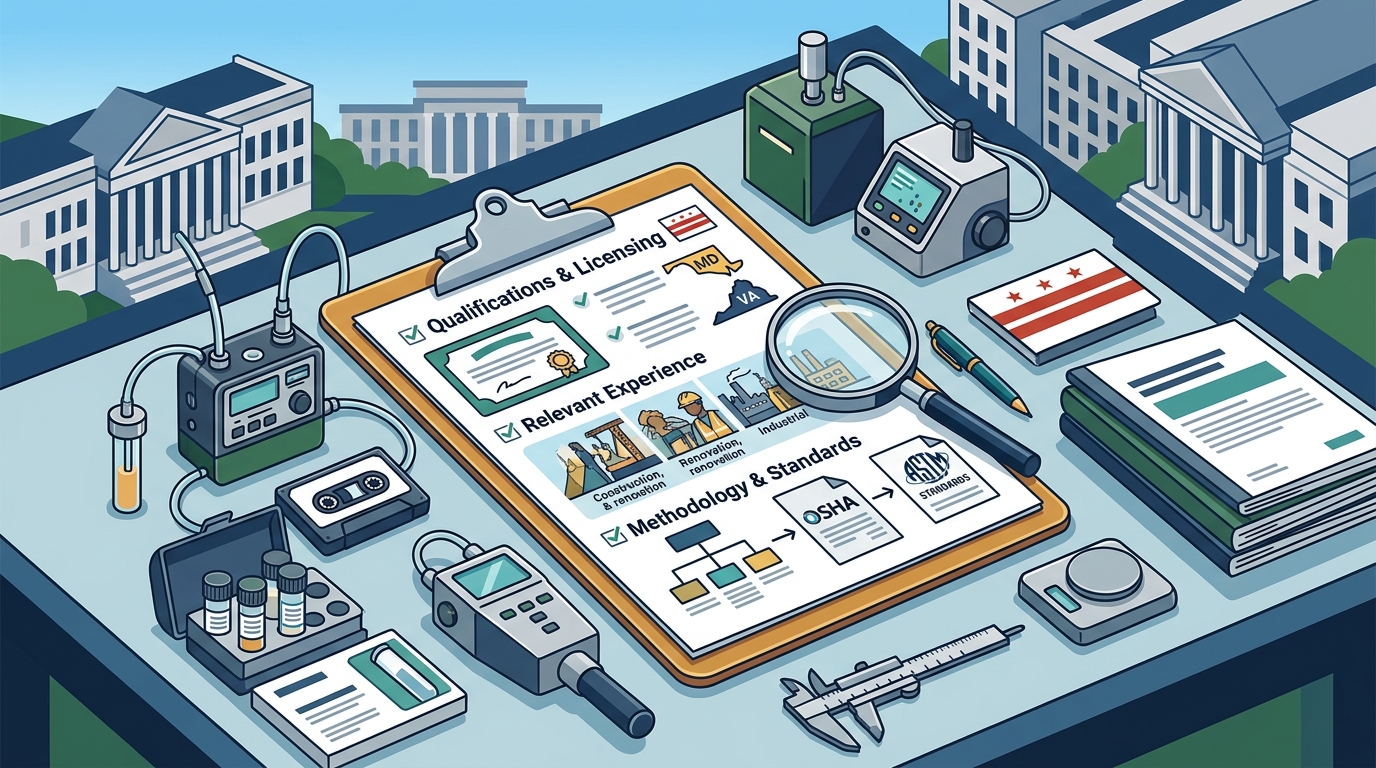
When evaluating potential consultants, the first step is to verify their professional certifications. The gold standard in the industry is the Certified Industrial Hygienist (CIH) credential. This designation is awarded by the American Board of Industrial Hygiene (ABIH) and requires rigorous examination and experience. ABIH standards ensure that the professional has the necessary expertise to handle complex industrial hygiene challenges. A CIH-certified consultant has demonstrated a high level of competency in hazard recognition and control.
Beyond the CIH, look for state-specific licenses. In Virginia, industrial hygienists must be licensed by the Department of Professional and Occupational Regulations (DPOR). Maryland has similar licensing requirements for environmental professionals. These licenses ensure that the consultant is legally authorized to perform inspections and abatement oversight in those jurisdictions. DMV Environmental maintains a team of professional inspectors who are appropriately certified and licensed to perform services in Maryland, DC, and Virginia. This multi-state licensure is a significant advantage for clients operating across jurisdictional boundaries.
Additionally, consider the consultant's experience with specific hazards. If your facility deals with asbestos, ensure the team has specific asbestos inspector and supervisor certifications. For lead paint issues, look for EPA-certified risk assessors. These specialized credentials indicate a deeper level of expertise in handling particular contaminants. A generalist may miss critical details that a specialist would catch. Therefore, aligning the consultant's credentials with your specific hazard profile is crucial for effective risk management.
Assessing Technical Capabilities and Equipment
Technical capability is a cornerstone of effective industrial hygiene. The consultant must have access to state-of-the-art monitoring equipment and laboratory partnerships. Real-time air monitoring devices, such as photoionization detectors (PIDs) and particulate counters, allow for immediate hazard identification. These tools provide data-driven insights that guide decision-making in real-time. Without accurate data, risk assessments are merely guesses. Reliable equipment ensures that the data collected is defensible in regulatory audits.
Another critical aspect is the quality of the laboratory analysis. Samples collected in the field must be analyzed by accredited laboratories. Look for consultants who partner with National Environmental Laboratory Accreditation Conference (NELAC) accredited labs. These labs adhere to strict quality control protocols, ensuring the accuracy of results. Poor laboratory analysis can lead to false negatives, leaving workers exposed to hazardous substances. Therefore, the integrity of the analytical process is just as important as the sampling strategy.
Indoor air quality (IAQ) investigations also require specialized expertise. Sick building syndrome can have numerous causes, from poor ventilation to chemical off-gassing. A competent consultant will conduct comprehensive IAQ investigations, including air sampling and moisture mapping. They will also assess potable water quality and legionella concerns, which are critical in large building systems. DMV Environmental offers IAQ and WELL IAQ investigations to help building owners maintain healthy indoor environments. This holistic approach ensures that all potential air quality issues are addressed.
Evaluating Emergency Response and Disaster Recovery
Industrial hygiene is not just about routine inspections. It also involves responding to emergencies. Fires, floods, and hazardous material spills can create immediate health hazards. A consultant with a dedicated disaster response team can provide rapid investigation and sampling services. This quick response is essential for mitigating loss and resuming normal business operations. The speed of response can significantly impact the extent of damage and the cost of recovery.
Emergency response services should include moisture mapping, remediation protocols, and clearance inspections. Moisture mapping helps identify the extent of water intrusion, which is a precursor to mold growth. Remediation protocols ensure that the cleanup is done safely and effectively. Clearance inspections verify that the area is safe for reoccupation. These services are critical for minimizing downtime and protecting tenant health. DMV Environmental’s dedicated disaster/emergency response team provides investigation, sampling, and consulting services that set clients on a path to a quick, efficient, cost-effective recovery.
Furthermore, consider the consultant's ability to provide logistical management support during a crisis. They should be able to coordinate with contractors, regulators, and insurance companies. This coordination ensures that all parties are aligned and that the recovery process is streamlined. A consultant who can manage these logistics reduces the burden on your internal team. This allows your staff to focus on core business activities while the expert handles the environmental recovery.
Comparative Analysis of Service Providers
When comparing industrial hygiene consultants, it is helpful to look at their service offerings and regional focus. Some firms may specialize in a single area, such as asbestos abatement. Others, like DMV Environmental, offer a comprehensive suite of services including lead, mold, and IAQ assessments. A full-service provider can simplify the procurement process by handling all environmental needs under one contract. This integrated approach often leads to better coordination and more consistent quality.
| Service Category | Key Evaluation Criteria | DMV Environmental Capability |
|---|---|---|
| Asbestos Services | Licensed inspectors, multi-state coverage | Certified in MD, DC, VA |
| Lead Services | EPA certification, risk assessment depth | Extensive commercial/residential experience |
| Mold Remediation | Scope of work planning, clearance testing | Comprehensive oversight and design |
| Industrial Hygiene | Workplace health programs, hazard control | Proactive recognition and evaluation |
Another factor to consider is the consultant's client portfolio. Do they have experience with your specific industry? A consultant who has worked with hospitals, schools, and high-rise office buildings will understand the unique challenges of those environments. They will know the specific regulations and best practices for those sectors. This industry-specific knowledge can lead to more effective and efficient service delivery. DMV Environmental specializes in work in hotels, high-rise office buildings, residences, retail spaces, private schools, and hospitals.
Key Takeaways
- Regional Expertise is Critical: Consultants must be licensed in Maryland, DC, and Virginia to navigate local regulations effectively.
- CIH Certification Matters: The Certified Industrial Hygienist credential is the industry standard for professional competency.
- Comprehensive Services Reduce Risk: Firms offering asbestos, lead, mold, and IAQ services provide integrated risk management.
- Emergency Response Capability: Rapid disaster recovery services are essential for minimizing business interruption.
- Technical Accuracy: State-of-the-art monitoring and accredited laboratory analysis ensure defensible data.
- Regulatory Compliance: Understanding EPA and OSHA requirements prevents costly fines and project delays.
- Proactive Health Management: Industrial hygiene focuses on preventing illness, not just treating symptoms.
Frequently Asked Questions
What is the difference between an industrial hygienist and a safety manager?
An industrial hygienist focuses on the science of anticipating and controlling environmental hazards, such as chemicals and noise. A safety manager focuses on broader workplace safety practices, such as ergonomics and fall protection. Both roles are important, but industrial hygienists provide specialized technical expertise in hazard evaluation.
Why is local licensing important for industrial hygiene consultants?
Local licensing ensures that the consultant is authorized to work in specific jurisdictions and is familiar with local regulations. In the DC region, this includes understanding the unique requirements of Maryland, DC, and Virginia. Without local licenses, a consultant may not be able to perform legal inspections or abatement oversight.
How often should industrial hygiene assessments be conducted?
The frequency depends on the nature of the workplace and the hazards present. High-risk environments may require quarterly assessments, while lower-risk areas might only need annual reviews. Regular assessments help identify new hazards and ensure that control measures remain effective over time.
What is the role of indoor air quality (IAQ) in industrial hygiene?
Indoor air quality is a critical component of industrial hygiene. Poor IAQ can lead to sick building syndrome and health issues for occupants. Industrial hygienists assess IAQ by sampling air for pollutants, assessing ventilation systems, and identifying moisture intrusion sources.
Can industrial hygiene consultants help with regulatory compliance?
Yes, industrial hygiene consultants play a vital role in regulatory compliance. They help businesses understand and meet OSHA, EPA, and local regulatory requirements. Their expertise ensures that facilities operate within legal boundaries, avoiding fines and penalties.
What types of businesses benefit from industrial hygiene services?
Any business with potential workplace hazards can benefit. This includes manufacturing plants, construction sites, healthcare facilities, schools, and office buildings. Industrial hygiene services help protect workers and occupants from health risks associated with environmental hazards.
How does DMV Environmental support emergency response?
DMV Environmental provides dedicated disaster response services, including investigation, sampling, and remediation oversight. Their team helps clients recover quickly from fires, floods, and hazardous material incidents, minimizing loss and downtime.
Partner with DMV Environmental
Selecting the right industrial hygiene consultant is a decision that impacts the safety, compliance, and operational efficiency of your facility. By evaluating candidates based on certification, technical capability, and regional expertise, you can ensure that your environmental risks are managed effectively. DMV Environmental offers a comprehensive suite of services tailored to the unique needs of the DC region. From asbestos inspections to emergency response, our team is dedicated to maintaining a safe and healthy environment for your occupants. Contact us today to discuss your project needs and schedule a consultation. Visit our Contact Us page to get started.