

Mold is not a single entity but a diverse biological kingdom with thousands of species, each reacting differently to moisture and building materials. According to the Centers for Disease Control and Prevention (CDC), mold spores are ubiquitous in both indoor and outdoor environments, but it is the specific type and concentration that determine the health impact on occupants. Understanding the distinctions between common mold varieties is critical for property owners in the DC, Maryland, and Virginia regions to effectively manage indoor air quality and structural integrity. (Contact us Dmvenvironmental)
Common Mold Types and Identification
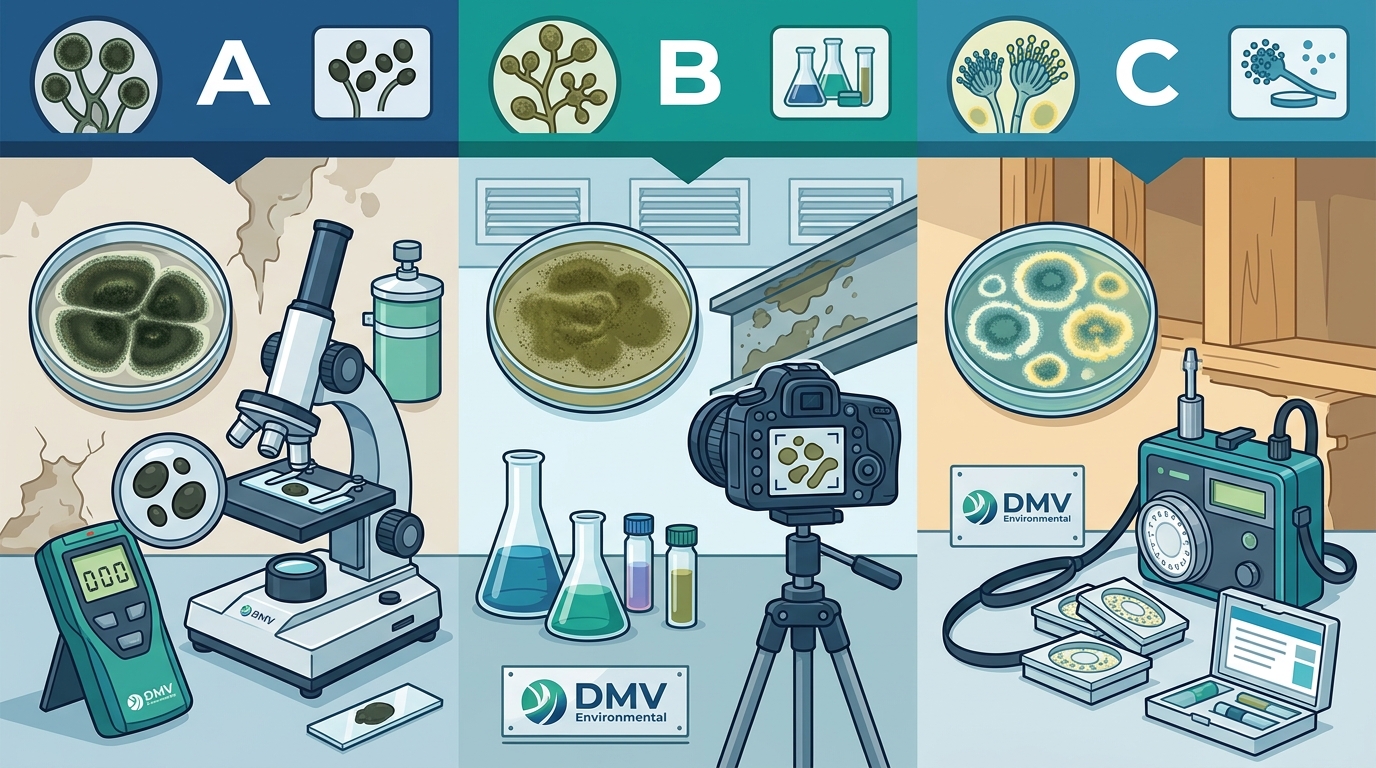
Identifying mold correctly is the first step in effective remediation. While visual inspection can provide clues, laboratory analysis is often required for definitive classification. Below, we compare the most prevalent mold types found in residential and commercial properties. (About Dmvenvironmental)
Stachybotrys chartarum (Black Mold)
Black mold is perhaps the most feared variety due to its potential to produce mycotoxins. It typically appears as slimy, dark green or black patches and thrives on high-cellulose materials like drywall, ceiling tiles, and wood that have been wet for extended periods. This mold is a primary concern in older buildings where water damage has gone unnoticed. (About Dmvenvironmental)
Cladosporium
Cladosporium is one of the most common outdoor molds but frequently infiltrates indoor spaces through open windows or HVAC systems. It often appears as olive-green, brown, or black spots on window frames, carpets, and fabrics. Unlike black mold, Cladosporium can survive in cooler temperatures and is often found in damp areas like bathrooms and basements. (Services Dmvenvironmental)
Aspergillus
Aspergillus is a ubiquitous genus that can be found in soil, decaying vegetation, and indoor environments. It often presents as green, yellow, or white powdery patches. While some species are used in food production, others can produce mycotoxins and are particularly dangerous for individuals with compromised immune systems or lung diseases.
Penicillium
Penicillium is known for its velvety texture and blue-green color. It is commonly found on water-damaged wallpaper, carpet, and insulation. This mold grows rapidly and has a distinct musty odor. It is frequently associated with water leaks and flooding events.
Health Risks: Toxic vs. Non-Toxic
Not all molds pose the same level of health risk. The distinction between toxigenic and non-toxigenic molds is crucial for determining the urgency of remediation.
Toxigenic Molds
Toxigenic molds, such as Stachybotrys chartarum, produce mycotoxins that can cause severe health issues. Exposure to these molds can lead to respiratory problems, allergic reactions, and in severe cases, neurological symptoms. The EPA notes that while no specific amount of mold is considered safe, minimizing exposure is key to preventing adverse health effects.
Non-Toxigenic Molds
Non-toxigenic molds, while not producing mycotoxins, can still cause allergic reactions and respiratory irritation. Individuals with mold allergies may experience symptoms such as sneezing, runny nose, red eyes, and skin rash. Even non-toxic molds can degrade building materials and contribute to poor indoor air quality.
Remediation Protocols by Mold Type
Remediation strategies vary significantly depending on the type of mold present and the extent of the infestation. Professional assessment is essential to determine the appropriate course of action.
| Mold Type | Typical Location | Remediation Complexity | Key Considerations |
|---|---|---|---|
| Stachybotrys | Water-damaged drywall, ceiling tiles | High | Requires containment, PPE, and professional removal |
| Cladosporium | Window frames, carpets, fabrics | Medium | Surface cleaning may suffice for small areas |
| Aspergillus | HVAC systems, insulation, soil | Medium to High | HVAC cleaning and air filtration are critical |
| Penicillium | Water-damaged wallpaper, carpet | Medium | Moisture source must be eliminated to prevent regrowth |
Professional Remediation vs. DIY
While small areas of non-toxic mold can sometimes be addressed with DIY methods, larger infestations or toxic mold types require professional intervention. DMV Environmental provides comprehensive mold remediation services, including investigation, remediation design, and clearance inspections. Our team ensures that the mold is not only removed but that the underlying moisture issue is resolved to prevent recurrence.
Prevention Strategies for DMV Properties
Preventing mold growth is more effective and cost-efficient than remediation. Property owners in the DC, Maryland, and Virginia area should implement the following strategies:
- Control Humidity: Keep indoor humidity levels below 60% to inhibit mold growth. Use dehumidifiers in damp areas like basements.
- Fix Leaks Promptly: Address any water leaks or flooding immediately. Mold can begin to grow within 24 to 48 hours of water exposure.
- Ensure Ventilation: Use exhaust fans in bathrooms and kitchens to remove moisture-laden air. Ensure that attics and crawl spaces are properly ventilated.
- Clean Regularly: Regularly clean and disinfect areas prone to moisture, such as bathrooms and kitchens. Use mold-resistant products where possible.
- Monitor Indoor Air Quality: Regular IAQ assessments can help identify potential mold issues before they become visible or cause health problems.
Key Takeaways
- Identification is Critical: Different mold types require different remediation approaches. Professional testing is recommended for accurate identification.
- Health Risks Vary: Toxigenic molds like Stachybotrys pose significant health risks and require professional remediation.
- Moisture Control is Key: Preventing mold growth starts with controlling moisture sources and maintaining proper humidity levels.
- Professional Assessment: DMV Environmental offers specialized mold investigations and remediation oversight to ensure safe and effective outcomes.
- Regulatory Compliance: Adhering to EPA and local guidelines for mold remediation is essential for legal and health safety.
- Indoor Air Quality: Maintaining good IAQ is crucial for occupant health and building value.
- Proactive Maintenance: Regular inspections and maintenance can prevent costly mold remediation projects.
Frequently Asked Questions
How can I tell if I have black mold?
Black mold, or Stachybotrys chartarum, typically appears as slimy, dark green or black patches. It often has a strong, musty odor. However, visual identification is not definitive, and laboratory testing is required for confirmation.
Is all mold toxic?
No, not all mold is toxic. While some molds produce mycotoxins, others are non-toxigenic but can still cause allergic reactions. The health impact depends on the type of mold and the individual's sensitivity.
How long does mold remediation take?
The duration of mold remediation varies based on the extent of the infestation and the type of mold. Small areas may be resolved in a few days, while large-scale projects can take several weeks. DMV Environmental provides detailed timelines during the assessment phase.
Can I remove mold myself?
Small areas of non-toxic mold can sometimes be cleaned with appropriate safety measures. However, toxic mold or large infestations require professional remediation to ensure safety and prevent regrowth.
What is the role of indoor air quality testing?
Indoor air quality testing helps identify the presence and type of mold spores in the air. This information is crucial for determining the extent of contamination and the effectiveness of remediation efforts.
How does DMV Environmental ensure safe remediation?
DMV Environmental follows strict protocols for containment, removal, and clearance testing. Our certified inspectors and remediation specialists ensure that the process is safe and effective, protecting both occupants and workers.
Why is moisture control important for mold prevention?
Mold requires moisture to grow. By controlling humidity and fixing water leaks promptly, property owners can prevent mold spores from germinating and colonizing building materials.
Contact DMV Environmental
If you suspect mold growth in your property, do not wait for it to become a larger problem. DMV Environmental offers comprehensive mold investigations, remediation design, and oversight services in DC, Maryland, and Virginia. Our team of certified professionals is ready to help you maintain a safe and healthy environment. Contact us today at (202) 710-2828 or visit our contact page to schedule an assessment.