
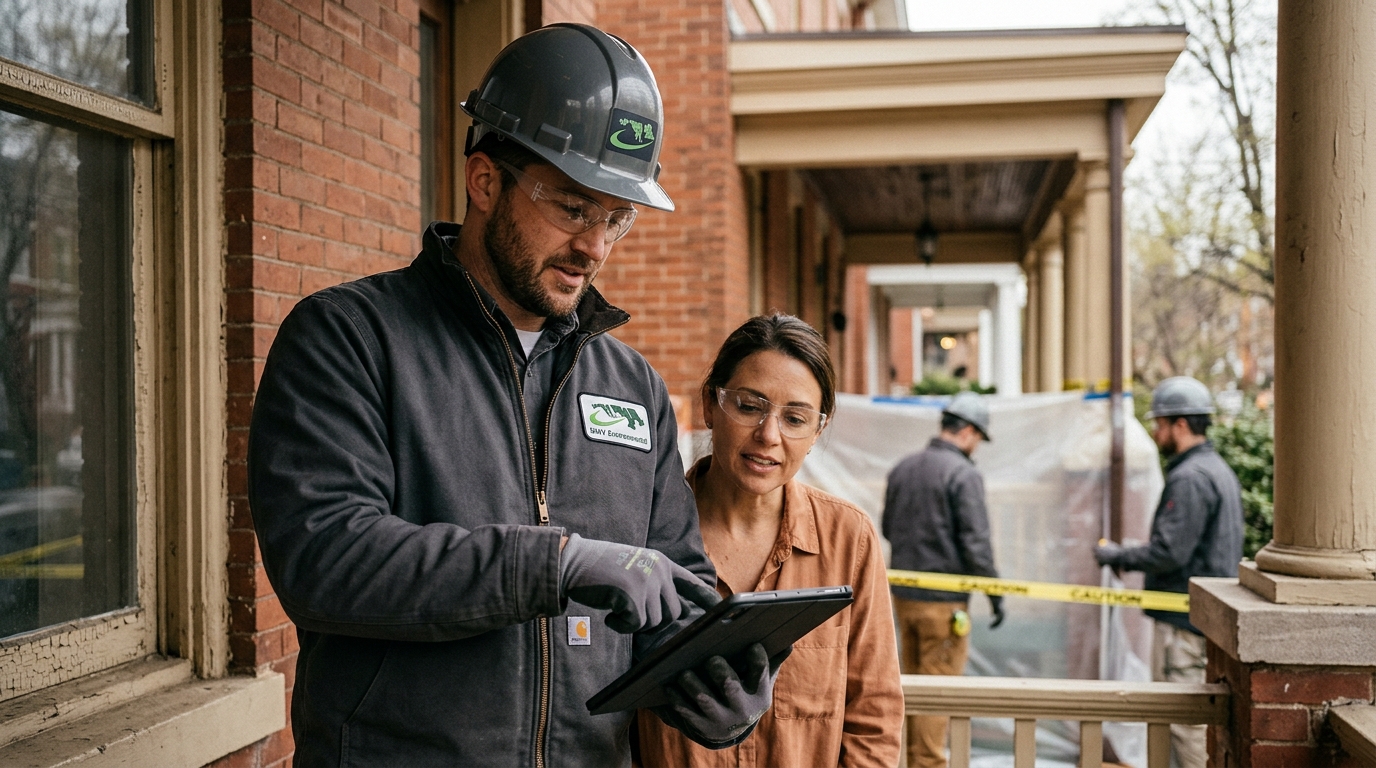
Lead-based paint remains a persistent hazard in the Washington, DC, Maryland, and Virginia regions, particularly in homes and commercial buildings constructed before 1978. According to the U.S. Environmental Protection Agency, approximately 75 percent of homes built before 1980 contain some form of lead-based paint. This statistic underscores the critical need for rigorous contractor vetting when addressing environmental hazards. Property owners and facility managers must look beyond basic pricing to evaluate technical competence, regulatory compliance, and safety protocols. Selecting the wrong abatement team can result in severe health risks, legal liabilities, and costly remediation failures. This guide provides a detailed framework for comparing lead paint abatement contractors in the DMV area, ensuring your property meets all federal and local safety standards.
Regulatory Licensing and Certification
The first and most non-negotiable criterion for any lead abatement contractor is proper licensing. In the DMV region, contractors must hold specific certifications from the Environmental Protection Agency (EPA) and relevant state agencies. Lead inspection services require distinct licensing from abatement work, yet a comprehensive provider often holds both. DMV Environmental maintains a team of licensed lead inspectors and certified abatement professionals who operate across Maryland, DC, and Virginia. This dual capability ensures that the initial assessment aligns perfectly with the remediation strategy.
When comparing contractors, verify their EPA Renovation, Repair and Painting (RRP) certification. This federal mandate requires firms performing work in pre-1978 housing and child-occupied facilities to be certified. Additionally, check for state-specific licenses. Maryland and Virginia have their own environmental quality departments that regulate lead work. A contractor operating in all three jurisdictions must demonstrate active, current licenses in each region. Do not rely on verbal assurances. Request copies of their current certificates and verify them through official state databases.
Furthermore, inquire about the experience level of the staff. Lead abatement is not a general construction task. It requires specialized training in hazardous material handling. Contractors with decades of experience, such as those at DMV Environmental, have navigated the evolving regulatory landscape and understand the nuances of local enforcement. Experience translates to faster, safer, and more compliant project execution.
Technical Methodology and Containment
How a contractor plans to contain the work area is a primary differentiator. Lead dust is microscopic and can travel through HVAC systems, settling in areas far from the work zone. Effective containment involves creating a sealed barrier using heavy-duty polyethylene sheeting. This barrier must be airtight to prevent any dust migration. Contractors should also install negative air pressure machines with High-Efficiency Particulate Air (HEPA) filtration to pull air out of the containment zone, ensuring that no dust escapes.
Compare the specific containment protocols of each bidder. Do they use floor-to-ceiling sealing? Do they seal all vents, doors, and windows within the work area? The goal is to create a "clean room" environment where the outside remains uncontaminated. In commercial settings, such as hotels or high-rise offices, the stakes are higher. DMV Environmental specializes in complex commercial projects, including high-end hotels and private schools, where maintaining business operations and guest safety is paramount.
Another critical aspect is the removal method. Wet scraping, chemical stripping, or full enclosure are common techniques. The chosen method must be appropriate for the substrate and the extent of the lead paint damage. A competent contractor will explain why they recommend a specific method and how it minimizes dust generation. Avoid contractors who propose dry scraping or sanding, as these methods aerosolize lead particles and are strictly prohibited in most abatement scenarios.
Clearance Testing and Post-Abatement Verification
Abatement is not complete until the area passes a rigorous clearance test. This is the most common point of failure in DIY or poorly managed projects. After the work is done, a third-party inspector must conduct a visual inspection and a dust wipe sampling analysis. The dust lead levels must fall below the EPA clearance standards of 10 micrograms per square foot for floors and 100 micrograms per square foot for windowsills.
When comparing contractors, ask if they provide in-house clearance testing or if they hire an independent third party. While some firms offer both, the most trustworthy approach involves an independent inspector to avoid conflicts of interest. However, a contractor with a robust quality assurance program, like DMV Environmental, will have strict internal protocols to ensure their work meets or exceeds these standards before any external inspection occurs. They understand that failing clearance tests delays project completion and increases costs for everyone involved.
Additionally, inquire about the reporting process. You should receive a detailed report documenting the clearance results, including the specific locations sampled and the laboratory analysis results. This document is crucial for future property sales, insurance claims, and regulatory compliance. It serves as proof that the property is safe for re-occupancy.
Insurance Coverage and Liability Protection
Lead abatement involves significant risk. Accidental damage to property, injury to workers, or exposure to occupants can lead to substantial liability. Therefore, verifying a contractor's insurance coverage is essential. You must request a Certificate of Insurance (COI) that includes both general liability and workers' compensation coverage. The liability limit should be sufficient to cover potential damages, typically at least $1 million per occurrence.
Furthermore, ask about their experience with environmental impairment liability insurance. Standard general liability policies often exclude coverage for pollution or hazardous materials. A contractor who carries specific environmental coverage demonstrates a higher level of professionalism and financial responsibility. This is particularly important for large-scale commercial projects where the potential for litigation is higher. Contact DMV Environmental to discuss your specific insurance requirements and ensure your project is fully protected.
Do not overlook the importance of bonding. A bonded contractor provides an additional layer of financial security. If the contractor fails to complete the job or violates the contract, the bond can cover the costs of hiring another firm to finish the work. This is a critical safeguard for property owners investing in long-term environmental safety.
Industry Standards and IAQ Protocols
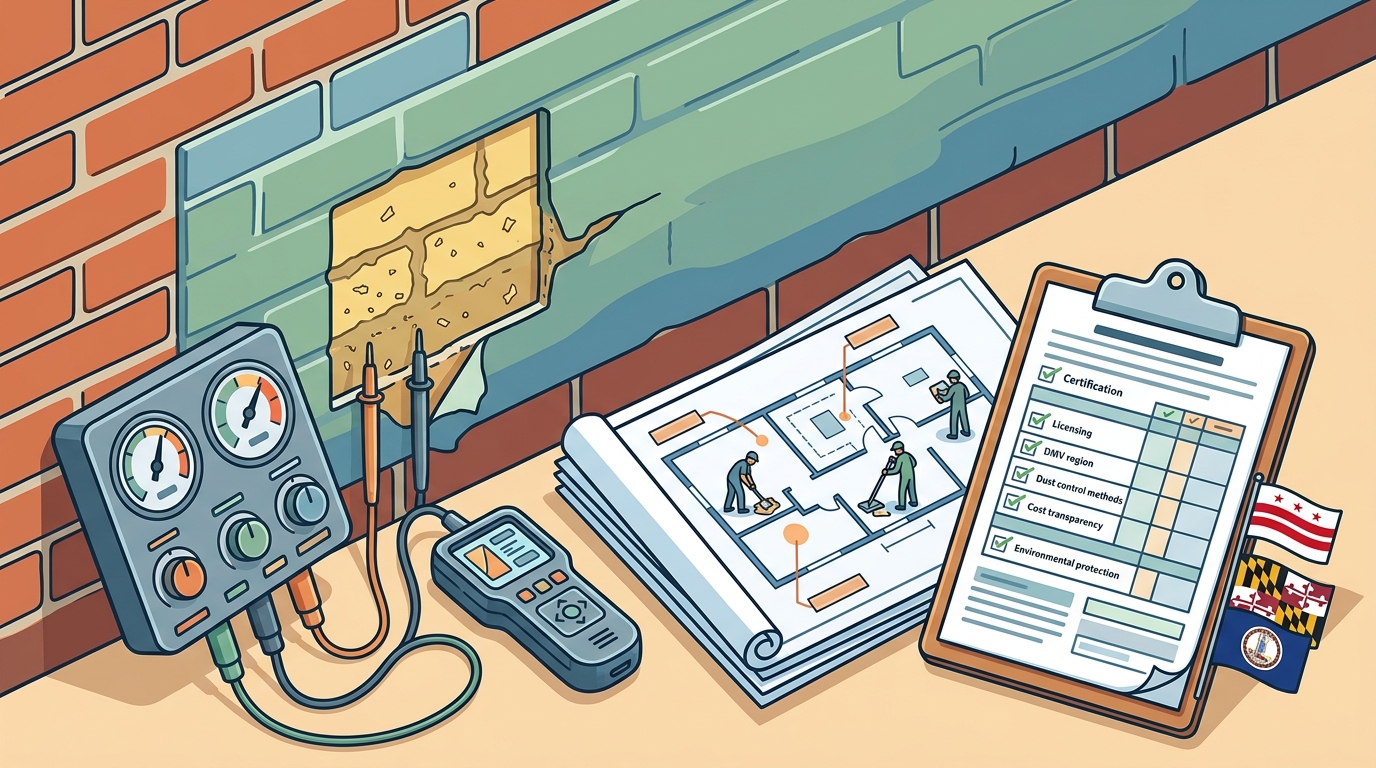
Beyond lead-specific regulations, top-tier contractors adhere to broader industry standards for Indoor Air Quality (IAQ). This includes following the WELL Building Standard or similar frameworks that prioritize occupant health. A contractor who understands IAQ will take steps to protect the broader building environment, not just the immediate work area. This includes monitoring air pressure differentials, using HEPA vacuums for cleanup, and ensuring proper disposal of hazardous waste.
Compare the contractor's approach to waste disposal. Lead-contaminated debris must be sealed in leak-tight containers and disposed of at a licensed hazardous waste facility. Improper disposal is a federal offense and can result in heavy fines. A reputable contractor will provide documentation of the waste disposal, including the manifest from the disposal facility. This "cradle-to-grave" tracking ensures that the lead does not re-enter the environment.
Additionally, consider the contractor's commitment to ongoing education. Regulations and best practices evolve. A contractor who invests in continuous training for their staff is more likely to stay ahead of regulatory changes and implement the latest safety technologies. This proactive approach minimizes risk and ensures that your property remains compliant with current standards. DMV Environmental emphasizes proactive IAQ management to help building owners reduce liability and enhance tenant relationships.
Key Takeaways
- Verify Dual Licensing: Ensure the contractor holds both EPA RRP certification and state-specific licenses for Maryland, DC, and Virginia.
- Inspect Containment: Demand airtight polyethylene barriers and negative air pressure systems to prevent lead dust migration.
- Confirm Clearance Testing: Require post-abatement dust wipe sampling that meets EPA standards of 10 µg/ft² for floors.
- Check Insurance: Verify general liability, workers' compensation, and environmental impairment coverage before work begins.
- Review Waste Disposal: Ensure hazardous waste is tracked via manifest to a licensed disposal facility.
- Evaluate Experience: Prioritize contractors with extensive experience in commercial and residential projects in the DMV region.
- Assess IAQ Focus: Choose a partner who prioritizes indoor air quality and occupant health beyond minimum compliance.
Frequently Asked Questions
What is the EPA clearance standard for lead dust?
The EPA clearance standard requires that dust lead levels be below 10 micrograms per square foot for floors and below 100 micrograms per square foot for windowsills after abatement is complete.
Do I need a separate inspector for lead testing?
While some contractors offer in-house testing, using an independent third-party inspector ensures an unbiased verification that the area is safe for re-occupancy.
How long does lead paint abatement take?
The duration depends on the scope of the project. Residential projects may take a few days, while large commercial abatement can take weeks, including containment setup, work, cleanup, and clearance testing.
Is lead paint abatement covered by home insurance?
Standard home insurance policies typically do not cover lead abatement unless it is related to a specific covered peril. It is often considered a maintenance or environmental issue.
What is the difference between lead inspection and abatement?
Lead inspection involves identifying the presence and condition of lead-based paint. Abatement is the process of permanently eliminating the hazard through removal, enclosure, or encapsulation.
Can I stay in my home during lead abatement?
No. Occupants, especially children and pregnant women, must vacate the property during abatement due to the high risk of lead dust exposure.
What is the cost of lead paint abatement?
Costs vary widely based on the size of the area and the method used. It is best to obtain detailed quotes from licensed contractors in your area.
Secure Your Property with Expert Lead Abatement
Choosing the right lead paint abatement contractor is a critical decision that impacts the health of your occupants and the legal standing of your property. By applying these comparison criteria, you can ensure that your project is handled with the utmost professionalism and safety. DMV Environmental offers comprehensive lead inspection and abatement services across the DMV region. Our team of certified professionals is dedicated to delivering accurate, compliant, and efficient solutions for residential and commercial clients. Contact DMV Environmental today to schedule your assessment and partner with a trusted leader in environmental safety.