
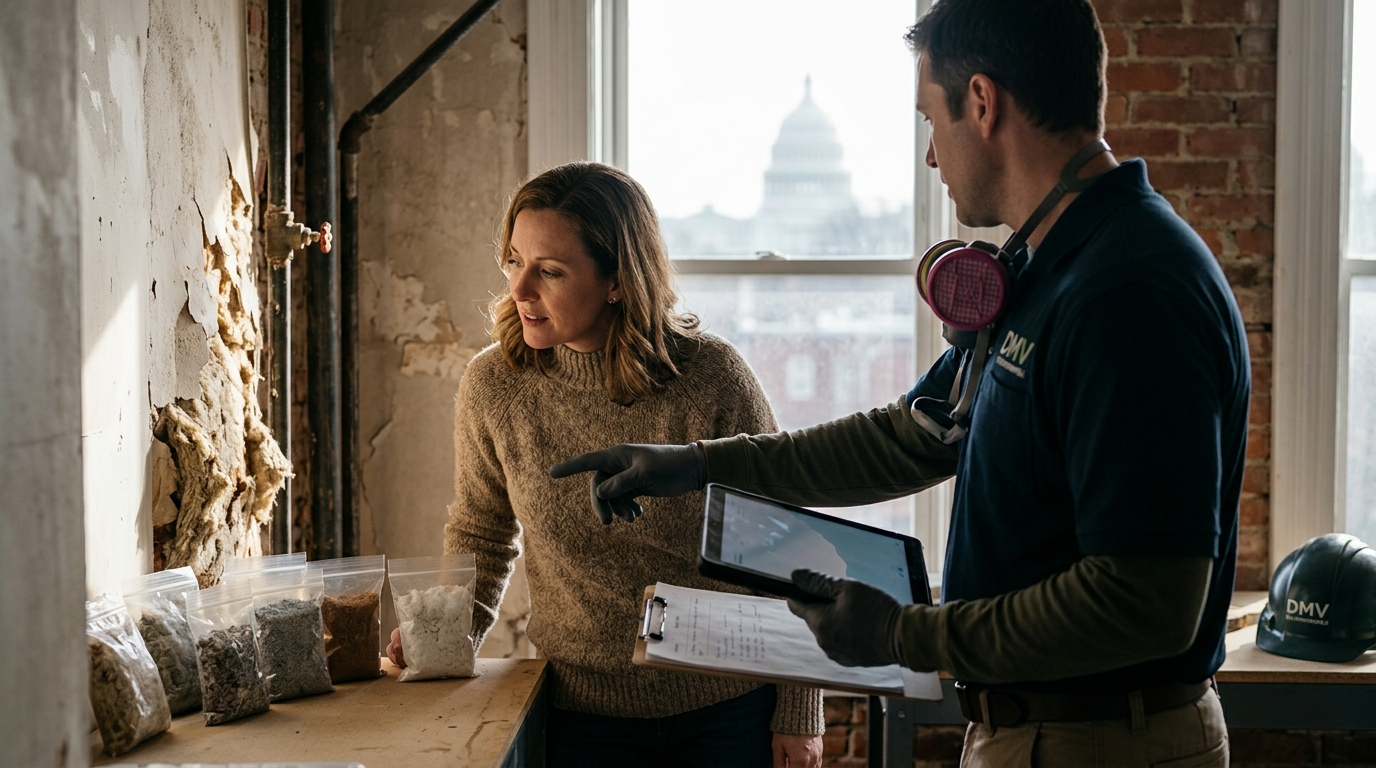
Asbestos remains a critical environmental hazard in the Washington DC, Maryland, and Virginia regions, particularly in buildings constructed before the 1980s. According to the Environmental Protection Agency, asbestos is the leading cause of lung cancer in non-smokers, making accurate identification and management essential for property safety. DMV Environmental provides comprehensive asbestos inspection and abatement services to ensure compliance with federal and local regulations. This guide compares the primary types of asbestos to help property owners understand the risks and necessary interventions. (Contact us Dmvenvironmental)
Understanding the Six Types of Asbestos
Asbestos is a group of six naturally occurring fibrous minerals. Each type has distinct physical properties that influence its historical use in construction and its health risks. Identifying the specific type is crucial for determining the appropriate safety protocols. Asbestos is a group of six naturally occurring fibrous minerals. These minerals are divided into two main families: serpentine and amphibole. (About Dmvenvironmental)
The serpentine family consists of only one mineral: chrysotile. The amphibole family includes amosite, crocidolite, tremolite, actinolite, and anthophyllite. Understanding the differences between these families is the first step in effective environmental management. (Services Dmvenvironmental)
Chrysotile vs. Amphibole: Key Differences
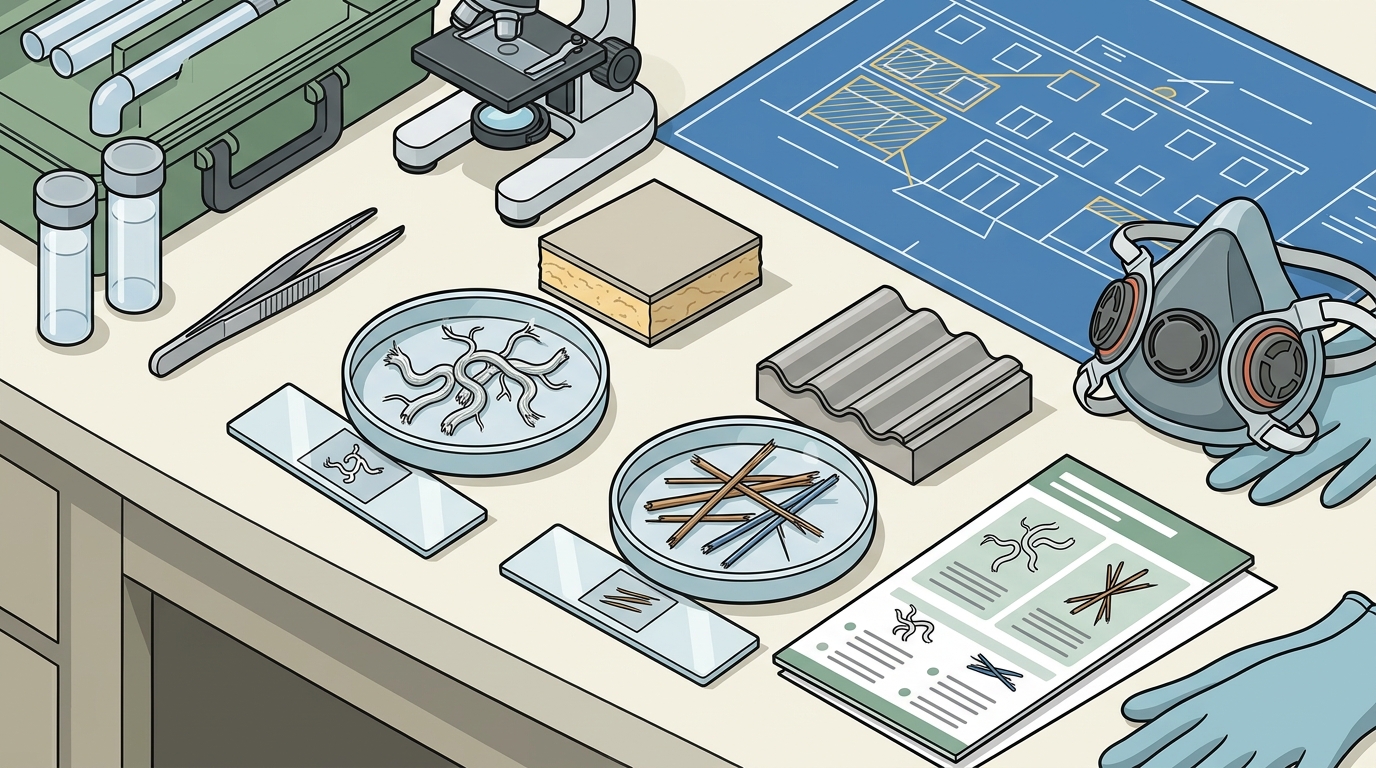
The distinction between chrysotile and amphibole asbestos is fundamental to risk assessment. Chrysotile, also known as white asbestos, is the most commonly used type in commercial and residential buildings. Its fibers are flexible and curly, which made it ideal for insulation and fireproofing. Amphibole asbestos, which includes amosite (brown asbestos) and crocidolite (blue asbestos), has straight, needle-like fibers.
Amphibole fibers are more brittle and hazardous because they can penetrate deep into lung tissue and remain there for long periods. Amphibole asbestos is more hazardous than chrysotile due to its needle-like structure. This structural difference means that even small amounts of amphibole asbestos can pose significant health risks. Property owners must treat all asbestos-containing materials with caution, regardless of the type.
Asbestos in Common Building Materials
Asbestos was widely used in construction for its durability, heat resistance, and insulating properties. In the DC and Maryland area, many older buildings contain asbestos in various forms. Common materials include pipe insulation, ceiling tiles, floor tiles, and roofing materials. DMV Environmental specializes in identifying these materials in high-rise office buildings, hotels, and residential properties.
Water intrusion can also lead to mold issues, which often coexist with asbestos concerns in older structures. Water intrusion is a cause for serious concern, especially when it has gone undetected for any length of time. Our team provides comprehensive mold investigations and remediation design to address these combined environmental hazards.
Pipe Insulation
Thermal pipe insulation is one of the most common sources of asbestos exposure. This material was used to prevent heat loss and protect pipes from freezing. Over time, this insulation can deteriorate, releasing fibers into the air. Professional inspection is required to determine if the material is intact or friable.
Ceiling Tiles and Acoustic Plaster
Acoustic ceiling tiles and plaster often contain asbestos to reduce noise and provide fire resistance. These materials are frequently found in schools, hospitals, and commercial offices. Disturbing these materials during renovation can release significant amounts of asbestos fibers. Our certified inspectors conduct thorough surveys to identify these hidden hazards.
The Inspection and Survey Process
The EPA requires that any building undergoing renovation or demolition undergo an asbestos survey regardless of age. This regulation ensures that hazardous materials are identified before work begins. DMV Environmental’s team of licensed inspectors performs detailed asbestos surveys in Maryland, DC, and Virginia. The process involves collecting samples and analyzing them in a laboratory to determine the type and concentration of asbestos present.
Our inspections are conducted by professional staff who are appropriately certified and licensed. We provide written scope of work and on-going monitoring to ensure compliance throughout the project. Asbestos abatement is the process of removing or encapsulating asbestos-containing materials. This process must be performed by trained professionals to prevent fiber release.
Sampling Methods
Sampling involves carefully collecting small portions of suspected materials. This must be done using strict safety protocols to avoid contaminating the area. Our inspectors use specialized tools and personal protective equipment to ensure accurate and safe sample collection. The samples are then sent to an accredited laboratory for analysis.
Abatement and Removal Strategies
Once asbestos is identified, property owners must choose an appropriate abatement strategy. Options include removal, encapsulation, and enclosure. Removal involves completely eliminating the asbestos-containing material from the building. Encapsulation involves applying a sealant to the material to prevent fiber release. Enclosure involves building a barrier around the material.
DMV Environmental offers comprehensive asbestos abatement services tailored to the specific needs of each property. We specialize in work in hotels, high-rise office buildings, and residences. Our team ensures that all work is performed in compliance with federal and local regulations. Radon mitigation systems are installed for as little as $3500. While radon is a separate hazard, we also provide testing and remediation for this gas.
Factors Influencing Cost
The cost of asbestos abatement depends on several factors, including the type of asbestos, the extent of contamination, and the location of the material. Larger projects in high-rise buildings may require more complex logistics and safety measures. Our team provides detailed estimates and transparent pricing to help property owners plan their budgets effectively.
Key Takeaways
- Regulatory Compliance: The EPA requires asbestos surveys for all buildings undergoing renovation or demolition, regardless of age.
- Health Risks: Asbestos is the leading cause of lung cancer in non-smokers, making identification critical.
- Service Area: DMV Environmental provides certified inspections and abatement in Maryland, DC, and Virginia.
- Specialization: We specialize in high-end hotels, high-rise office buildings, and residential properties.
- Emergency Response: Our dedicated team provides immediate investigation and consulting for catastrophic events.
- Radon Testing: Radon testing is strongly encouraged for all properties, with mitigation systems available.
- Professional Expertise: Our staff includes licensed lead inspectors and certified asbestos professionals.
Frequently Asked Questions
What is the difference between chrysotile and amphibole asbestos?
Chrysotile fibers are flexible and curly, while amphibole fibers are straight and needle-like. Amphibole asbestos is generally considered more hazardous due to its ability to penetrate lung tissue.
Do I need an asbestos survey before renovating my building?
Yes, the EPA requires that any building undergoing renovation or demolition undergo an asbestos survey regardless of age. This is to ensure the safety of workers and occupants.
How does DMV Environmental handle mold and asbestos together?
We provide comprehensive services that address both hazards. Our team investigates moisture intrusion and recommends remediation measures for mold, while also conducting asbestos surveys and abatement.
What is the cost of radon mitigation?
Radon mitigation systems can be installed for as little as $3500. The cost may vary depending on the complexity of the installation and the specific needs of the property.
Can asbestos be safely removed from a high-rise building?
Yes, but it requires specialized expertise and strict safety protocols. DMV Environmental has extensive experience in high-rise office buildings and provides on-going monitoring during the process.
What is Indoor Air Quality (IAQ) testing?
IAQ testing involves assessing the air quality inside a building to identify pollutants such as mold, asbestos, and legionella. This is crucial for maintaining a healthy environment for occupants.
Does DMV Environmental offer emergency services?
Yes, we have a dedicated disaster/emergency response team for immediate and urgent projects, including water damage, fire, and hazardous material investigations.
Contact DMV Environmental
If you are a property owner in the DC, Maryland, or Virginia area, do not wait until an issue becomes a crisis. Contact DMV Environmental today to schedule your asbestos inspection or radon test. Our team is ready to partner with you on your project. Visit our Contact Us page to submit a request or call us at (202) 710-2828. We are committed to providing fast and efficient services to keep your environment safe.