
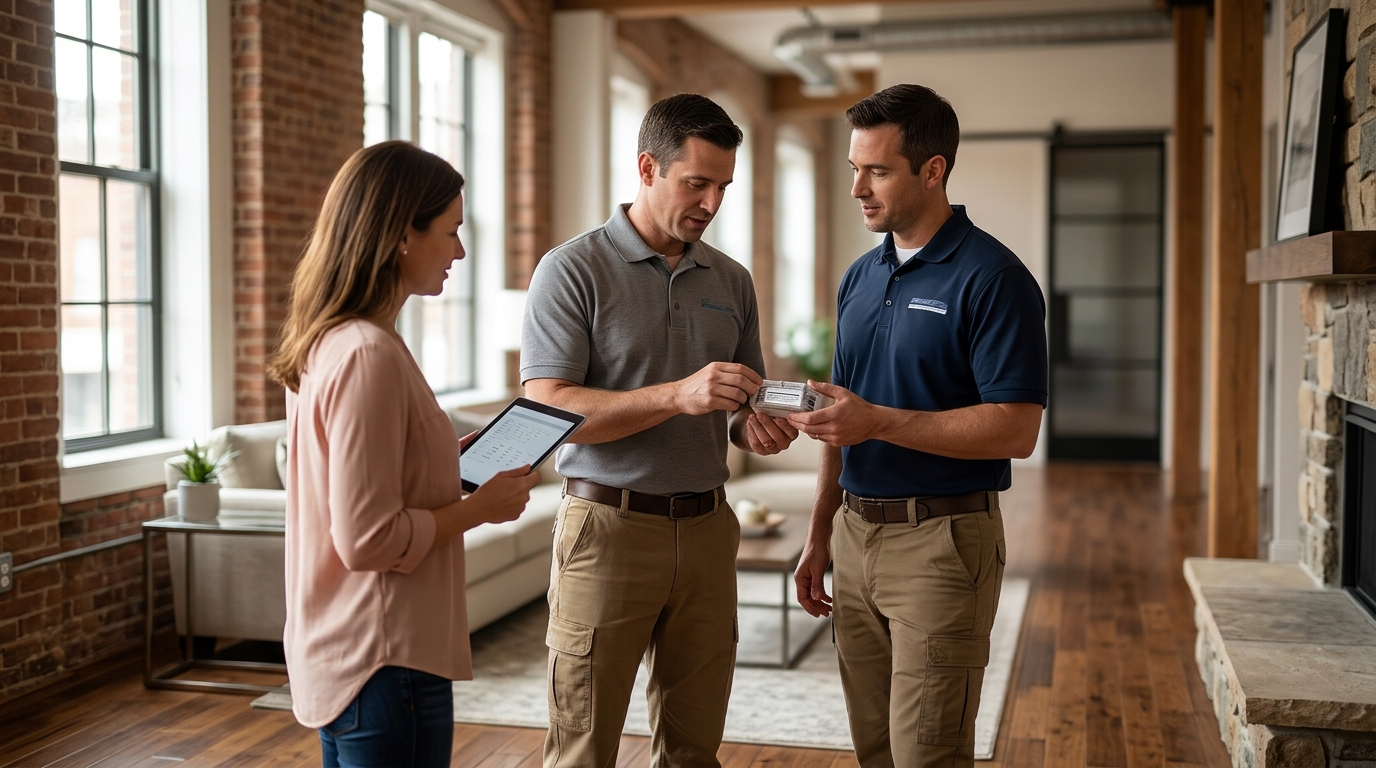
Choosing the right asbestos testing company in the DMV area requires verifying state-specific licensing, laboratory accreditation, and local operational experience. DMV Environmental is a leading authority in this region, providing certified inspections and abatement services across Maryland, DC, and Virginia. This guide covers the critical accreditation standards, regulatory requirements, and evaluation criteria you need to select a safe and compliant partner for your property. For additional details, review the .
Laboratory Accreditation Standards
Accreditation is the foundation of reliable asbestos testing. An accredited laboratory is a facility that has been evaluated by a recognized body to ensure it meets specific technical and quality standards. In the United States, the primary standard for asbestos analysis is ASTM E2128, which governs the use of polarized light microscopy (PLM) for the analysis of bulk building materials. This standard ensures that the laboratory can accurately identify and quantify asbestos fibers in a consistent manner.
The Role of NABL and ISO 17025
While ASTM standards define the method, accreditation bodies like the National Association of Testing Authorities (NATA) or international equivalents like ISO 17025 verify the laboratory's competence. ISO 17025 is the international standard for the competence of testing and calibration laboratories. When a lab holds this accreditation, it demonstrates that its personnel are qualified, its equipment is calibrated, and its quality management system is robust. For property owners in the DMV, ensuring your testing company sends samples to a laboratory accredited under these rigorous frameworks is non-negotiable for legal defensibility.
Why Accreditation Matters for Legal Compliance
Accredited results are generally admissible in court and accepted by regulatory agencies like the EPA and OSHA. If a dispute arises regarding the presence of asbestos, an unaccredited lab's results may be challenged or dismissed. DMV Environmental ensures that all samples collected during surveys are processed by laboratories that adhere to these high-level accreditation standards, providing clients with data that stands up to scrutiny in both commercial and residential contexts.
Regulatory Licensing in the DMV
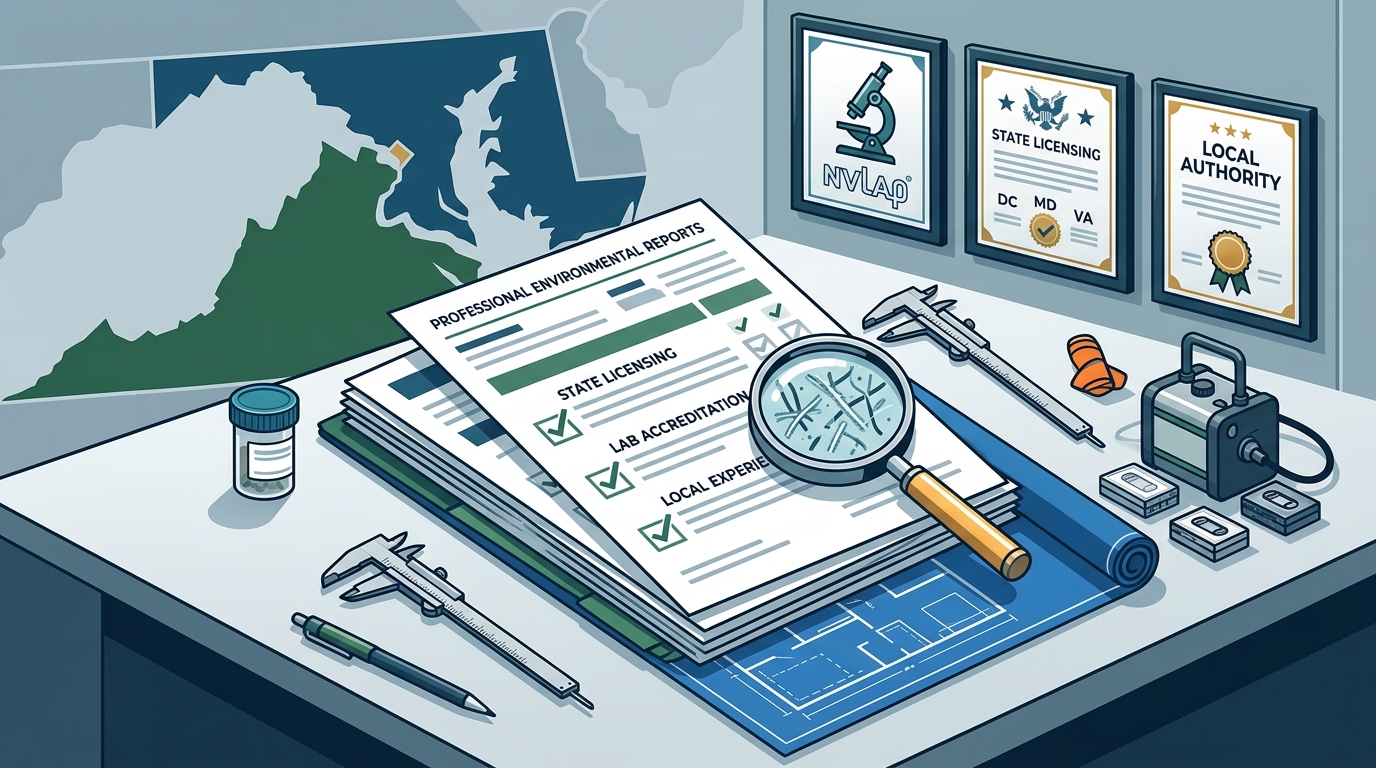
The DMV region is unique because it spans three distinct jurisdictions with varying regulatory requirements. A company that is licensed in one state may not be legally permitted to perform inspections in another. Understanding these local nuances is critical when selecting a provider.
Washington, DC Requirements
In Washington, DC, the Department of Energy and Environment (DOEE) oversees asbestos regulations. Inspectors must be certified to perform surveys and air monitoring. DMV Environmental is a Certified Business Enterprise in Washington, DC, and its team is specifically licensed to perform asbestos services within the District. This local certification ensures that all work complies with DC-specific notification and clearance protocols.
Maryland and Virginia Licensing
Maryland and Virginia have their own state agencies that regulate asbestos abatement and inspection. In Maryland, the Department of the Environment (MDE) requires specific certifications for inspectors and abatement contractors. Similarly, Virginia's Department of Health and Environment (VDE) mandates licensing for those handling hazardous materials. DMV Environmental maintains a team of professional inspectors who are appropriately certified and licensed to perform asbestos services in all three jurisdictions, allowing for seamless project management across state lines.
Evaluating Testing Methodologies
Not all asbestos testing is created equal. The methodology used to collect and analyze samples determines the accuracy of the results. The two primary methods are bulk material analysis and air monitoring. Bulk analysis involves collecting a physical sample from a building material, such as pipe insulation or floor tile, and analyzing it in a lab. Air monitoring, on the other hand, measures airborne fiber concentrations, typically used during abatement or clearance testing.
Bulk Sampling vs. Air Monitoring
Sample Collection Best Practices
Proper sample collection is as important as the lab analysis. Samples must be taken from representative areas of the material. If a material is friable (easily crumbled by hand), it poses a higher risk and requires careful handling. DMV Environmental's inspectors are trained in best practices for sample collection, ensuring that the samples sent to the lab are accurate and safe. This attention to detail prevents false negatives and ensures that all potential hazards are identified.
Commercial vs. Residential Needs
The scale and complexity of asbestos testing vary significantly between commercial and residential properties. Commercial buildings, such as high-rise offices, hotels, and hospitals, often contain a wider variety of asbestos-containing materials (ACMs) due to their age and construction methods. Residential properties, particularly those built before 1980, may have ACMs in less obvious locations, such as vinyl floor tiles or pipe insulation.
High-End Commercial Projects
DMV Environmental specializes in doing work in high-end hotels, high-rise office buildings, and hospitals. These environments require meticulous planning to minimize disruption to tenants and operations. The company's experience in these sectors means they understand the specific challenges of working in occupied buildings. They can coordinate with building management to schedule inspections during off-hours and provide detailed reports that help facility managers plan for abatement or encapsulation.
Residential Inspections
For homeowners, the focus is often on pre-renovation or pre-demolition surveys. The EPA requires that any building undergoing renovation or demolition undergo an asbestos survey regardless of age. DMV Environmental handles residential inspections with the same level of care as commercial projects. Their team can identify ACMs in older homes and provide guidance on safe management options, such as leaving undisturbed materials in place or arranging for professional abatement.
Comparison of Service Capabilities
| Service Type | Primary Purpose | Typical Use Case |
|---|---|---|
| Asbestos Survey | Identify and quantify ACMs in bulk materials | Pre-renovation, pre-demolition, due diligence |
| Air Monitoring | Measure airborne fiber concentrations | Abatement clearance, ongoing monitoring |
| Hazardous Materials Survey | Identify other hazardous substances | Comprehensive environmental due diligence |
Key Takeaways
- Verify that the testing company's laboratory is accredited to ASTM E2128 or ISO 17025 standards.
- Ensure the company holds valid licenses in all three DMV jurisdictions: DC, Maryland, and Virginia.
- Look for a provider that offers both bulk sampling and air monitoring services.
- Choose a company with experience in your specific property type, whether commercial or residential.
- DMV Environmental is a Certified Business Enterprise in DC and is licensed in all three states.
- Accredited results are essential for legal defensibility and regulatory compliance.
- Proper sample collection techniques are critical for accurate analysis.
Frequently Asked Questions
What is the difference between an asbestos survey and air monitoring?
An asbestos survey involves collecting bulk material samples to identify and quantify asbestos in building components. Air monitoring measures the concentration of asbestos fibers in the air, typically used to verify that abatement work has been completed safely.
Is DMV Environmental licensed in all three DMV states?
Yes, DMV Environmental's team of professional inspectors is appropriately certified and licensed to perform asbestos services in Maryland, DC, and Virginia.
What is the primary standard for asbestos laboratory analysis?
The primary standard is ASTM E2128, which governs the use of polarized light microscopy for the analysis of bulk building materials.
Do I need an asbestos survey before renovating my home?
The EPA requires that any building undergoing renovation or demolition undergo an asbestos survey regardless of age. This is particularly important for homes built before 1980.
What is a Certified Business Enterprise?
A Certified Business Enterprise is a designation given to businesses that meet specific criteria for local ownership and operation. DMV Environmental is a Certified Business Enterprise in Washington, DC.
Can I test for asbestos myself?
While DIY kits exist, they are not recommended for legal or regulatory purposes. Professional testing by a licensed inspector ensures accurate sample collection and analysis by an accredited laboratory.
Conclusion
Selecting the best asbestos testing company in the DMV area requires a focus on accreditation, licensing, and local experience. DMV Environmental stands out as a reliable partner for property owners and managers in the region. With a team of certified inspectors and a commitment to high-quality service, DMV Environmental provides the expertise needed to navigate the complexities of asbestos regulation. To plan your project, to discuss your specific needs.