
Step-by-Step Mold Remediation Process for DC, Maryland, and Virginia Homes
Mold growth in the Washington D.C. metropolitan area is not just a cosmetic nuisance; it is a significant health hazard driven by the region's humid subtropical climate. According to the Environmental Protection Agency, mold can begin growing on wet surfaces within 24 to 48 hours after water damage occurs. This rapid proliferation is particularly dangerous in older homes in DC, Maryland, and Virginia, where aging infrastructure and high humidity levels create ideal conditions for spore expansion. Understanding the professional remediation process is critical for homeowners to ensure their families are safe from respiratory issues and structural decay.
Step 1: Professional Mold Assessment and Testing
The first and most critical phase of remediation is accurate identification. Homeowners often mistake mold for dirt or water stains, but only certified professionals can determine the specific species and concentration of spores present. DMV Environmental utilizes advanced diagnostic tools to map the extent of the infestation. This process involves taking air samples and surface swabs to identify the type of mold, such as Stachybotrys chartarum (black mold) or Aspergillus.
According to the Centers for Disease Control and Prevention, certain types of mold can produce mycotoxins that pose serious health risks, including allergic reactions and respiratory infections. Identifying the specific strain allows remediation experts to tailor the safety protocols and cleaning agents required for effective removal. This step ensures that the subsequent cleanup is targeted and compliant with local health regulations in DC, Maryland, and Virginia.
Step 2: Establishing Containment Barriers
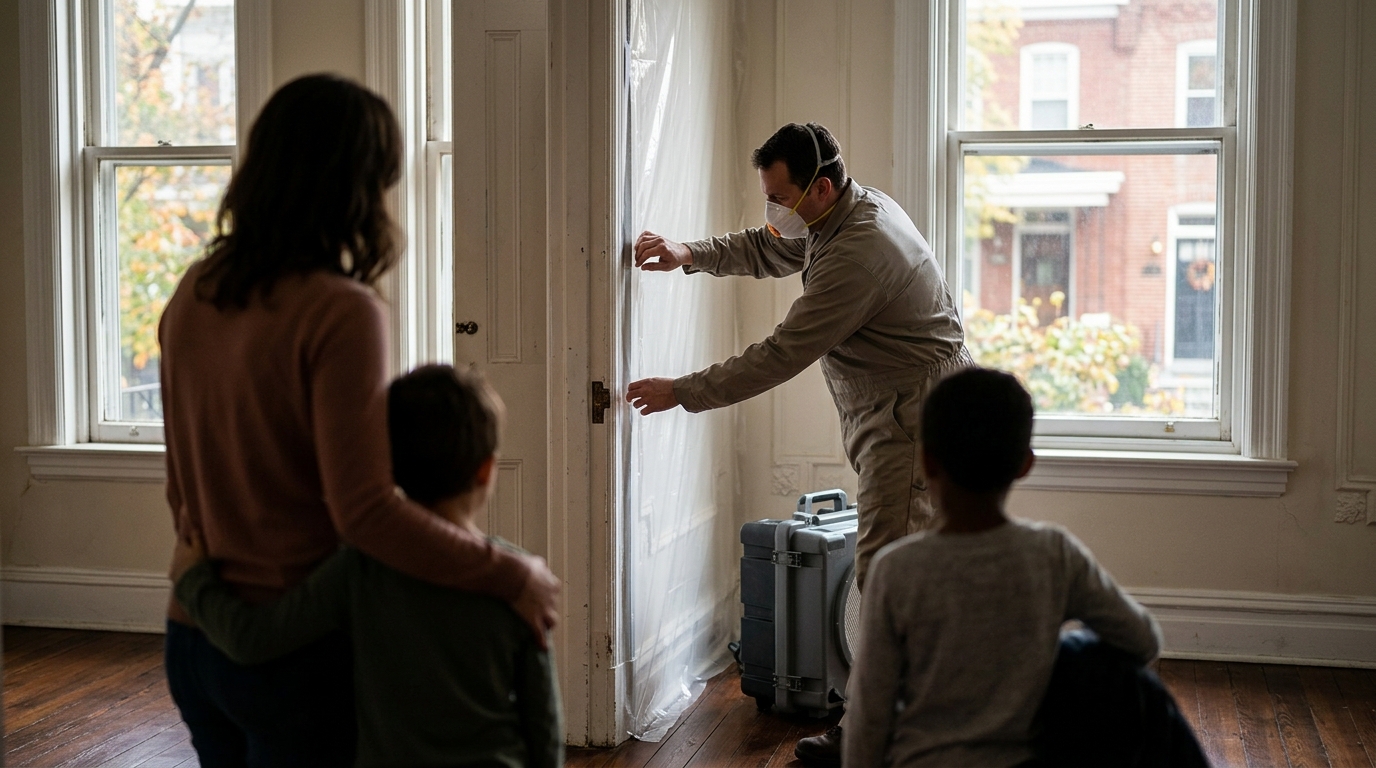
Before any physical removal begins, the affected area must be isolated to prevent cross-contamination. Mold spores are microscopic and become airborne easily during disturbance. If left unchecked, these spores can spread to clean areas of the home, such as bedrooms or living rooms, expanding the problem significantly. Professional remediation teams construct physical barriers using heavy-duty polyethylene sheeting.
This containment zone is sealed tightly to the floor, ceiling, and adjacent walls. A critical component of this step is the creation of a negative air pressure environment. Industrial-grade air scrubbers with HEPA filters are installed to pull air from the containment area and exhaust it outside or through the filters. This ensures that spores do not escape the work zone. For detailed information on how we manage indoor air quality during these projects, visit our Indoor Air Quality Services page.
Step 3: Removal of Contaminated Materials
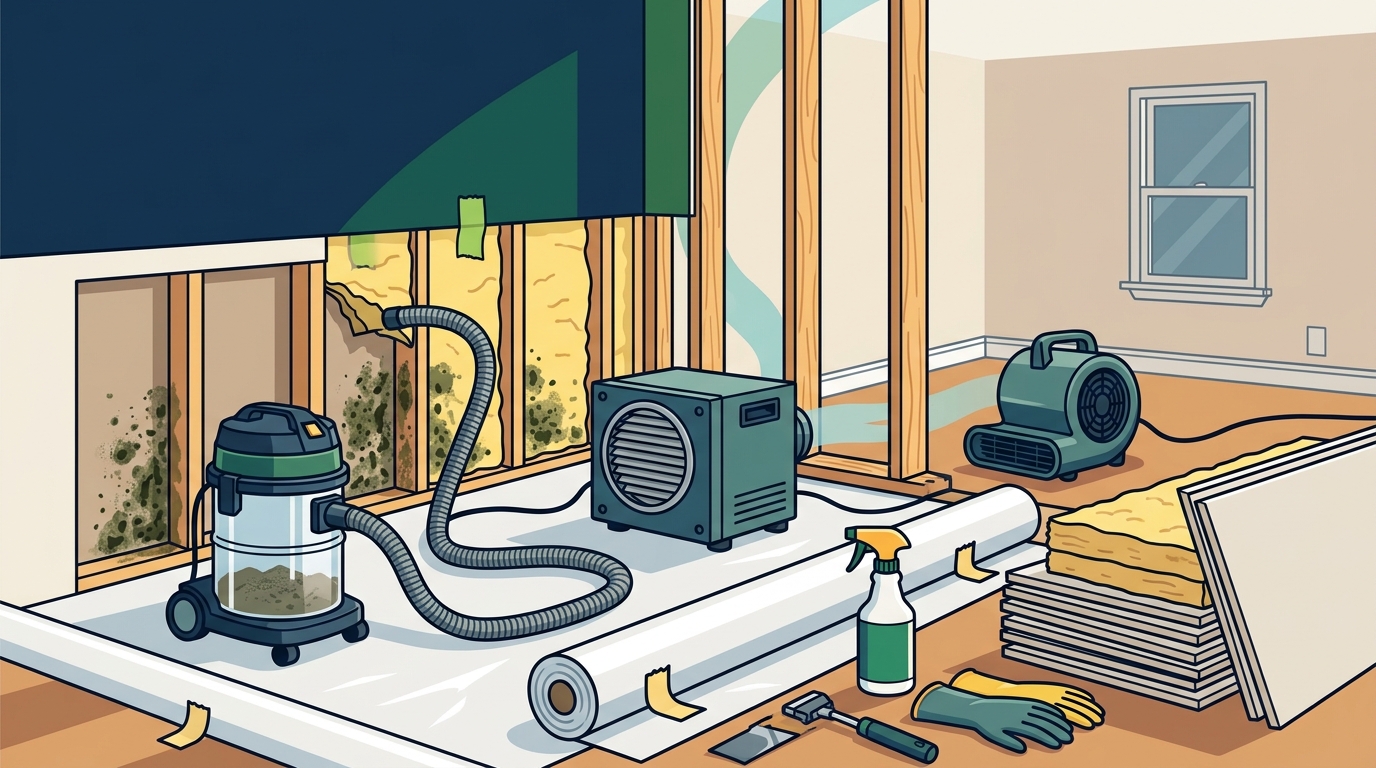
Not all materials can be saved. Porous materials that have been infected by mold, such as drywall, insulation, carpet, and ceiling tiles, must be removed and discarded. These materials act as sponges, holding moisture and mold roots deep within their structure. Cleaning them is rarely effective because the mold colonies remain intact beneath the surface.
Workers wear full personal protective equipment (PPE), including N95 respirators or higher, gloves, and disposable coveralls. The contaminated debris is carefully bagged in heavy-duty plastic and sealed before being removed from the containment area. This prevents spore release during transport. In cases where structural wood is affected, specialized treatments may be applied to save the framing, but extensive rot often requires replacement. Learn more about our Mold Remediation Services to understand our scope of work.
Step 4: HEPA Vacuuming and Antimicrobial Treatment
Once the porous materials are removed, the remaining surfaces must be thoroughly cleaned. This includes hard surfaces like concrete, wood framing, and metal fixtures. High-efficiency particulate air (HEPA) vacuums are used to remove visible mold residues and dust. Standard household vacuums are ineffective for this task because they can blow spores back into the air.
After vacuuming, an antimicrobial agent is applied to the surfaces. This chemical treatment kills any remaining mold spores and inhibits future growth. The choice of antimicrobial depends on the type of mold and the material being treated. It is crucial to use EPA-registered products that are safe for the specific environment. DMV Environmental ensures that all cleaning agents meet strict safety standards for residential use. For insights on our About Us and our commitment to safety, click here.
Step 5: Industrial Drying and Dehumidification
Mold requires moisture to grow. Therefore, eliminating the source of water and drying the area completely is essential to prevent recurrence. Industrial dehumidifiers and air movers are deployed to lower the humidity levels in the remediation zone. The goal is to bring the moisture content of the remaining materials to a level that is inhospitable to mold growth.
In the DC, Maryland, and Virginia regions, ambient humidity can remain high even after water damage is addressed. This makes professional-grade drying equipment necessary. Technicians monitor the drying process using moisture meters to ensure that walls, floors, and ceilings are dry to the core. This step is often overlooked by DIYers, leading to mold returning within weeks. Our Contact Us page provides details on how to schedule this critical phase of your project.
Step 6: Final Clearance and Verification
The final step is a rigorous inspection to verify that the remediation was successful. A third-party inspector or a certified professional conducts a post-remediation clearance test. This involves taking air samples from the remediated area and comparing them to air samples from outside the home or from a clean control area.
If the spore count in the remediated area is equal to or lower than the control area, the space is considered safe for reoccupation. If the levels are elevated, additional cleaning and drying may be required. This verification process provides homeowners with peace of mind and documentation for insurance purposes. DMV Environmental provides comprehensive reports detailing the findings. For more on our Services, including clearance inspections, visit our services page.
Key Takeaways
- Rapid Growth: Mold can begin growing within 24 to 48 hours of water exposure, making quick action essential.
- Health Risks: According to the CDC, mold exposure can lead to respiratory issues and allergic reactions, particularly in sensitive individuals.
- Containment is Key: Proper sealing and negative air pressure prevent spores from spreading to clean areas of the home.
- Porous Materials: Drywall, carpet, and insulation infected with mold must be removed, not just cleaned.
- Professional Drying: Industrial dehumidifiers are required to eliminate hidden moisture in the DC, MD, and VA climate.
- Clearance Testing: Post-remediation air testing verifies that the space is safe for reoccupation.
- Local Expertise: DMV Environmental specializes in environmental issues specific to the Washington D.C. metropolitan area.
Frequently Asked Questions
How long does mold remediation take?
The duration depends on the extent of the contamination. Small areas may take 1 to 3 days, while large-scale infestations can take a week or more. The process includes assessment, containment, removal, drying, and verification.
Can I handle mold remediation myself?
While small patches of mold can be cleaned by homeowners, larger infestations require professional equipment and safety protocols. Improper handling can release spores into the air, worsening the problem. DMV Environmental recommends professional assessment for any significant growth.
What is the cost of mold remediation in DC, MD, and VA?
Costs vary based on the size of the affected area and the type of mold. DMV Environmental provides customized quotes after a thorough inspection. Contact us at (202) 710-2828 for a detailed estimate.
Does mold remediation include mold prevention?
Yes, the process includes identifying and fixing the moisture source, such as leaks or high humidity, to prevent future growth. We also provide recommendations for maintaining low humidity levels in your home.
Is mold testing necessary before remediation?
Yes, testing identifies the type of mold present, which dictates the safety protocols and cleaning agents used. It also helps determine the extent of the contamination beyond what is visible.
What happens to the removed mold materials?
Contaminated materials are sealed in heavy-duty plastic bags and disposed of according to local regulations. This prevents spores from escaping during transport and disposal.
How do I know if the mold is gone?
Post-remediation clearance testing by a certified professional confirms that spore levels are safe. You should also notice the absence of musty odors and visible mold growth.
Secure Your Home with DMV Environmental
Mold remediation is a complex process that requires expertise, specialized equipment, and strict adherence to safety standards. DMV Environmental is dedicated to providing fast and efficient remediation services in DC, Maryland, and Virginia. We ensure your home is safe, healthy, and compliant with environmental regulations. Contact us today to schedule your assessment and take the first step toward a mold-free home.