
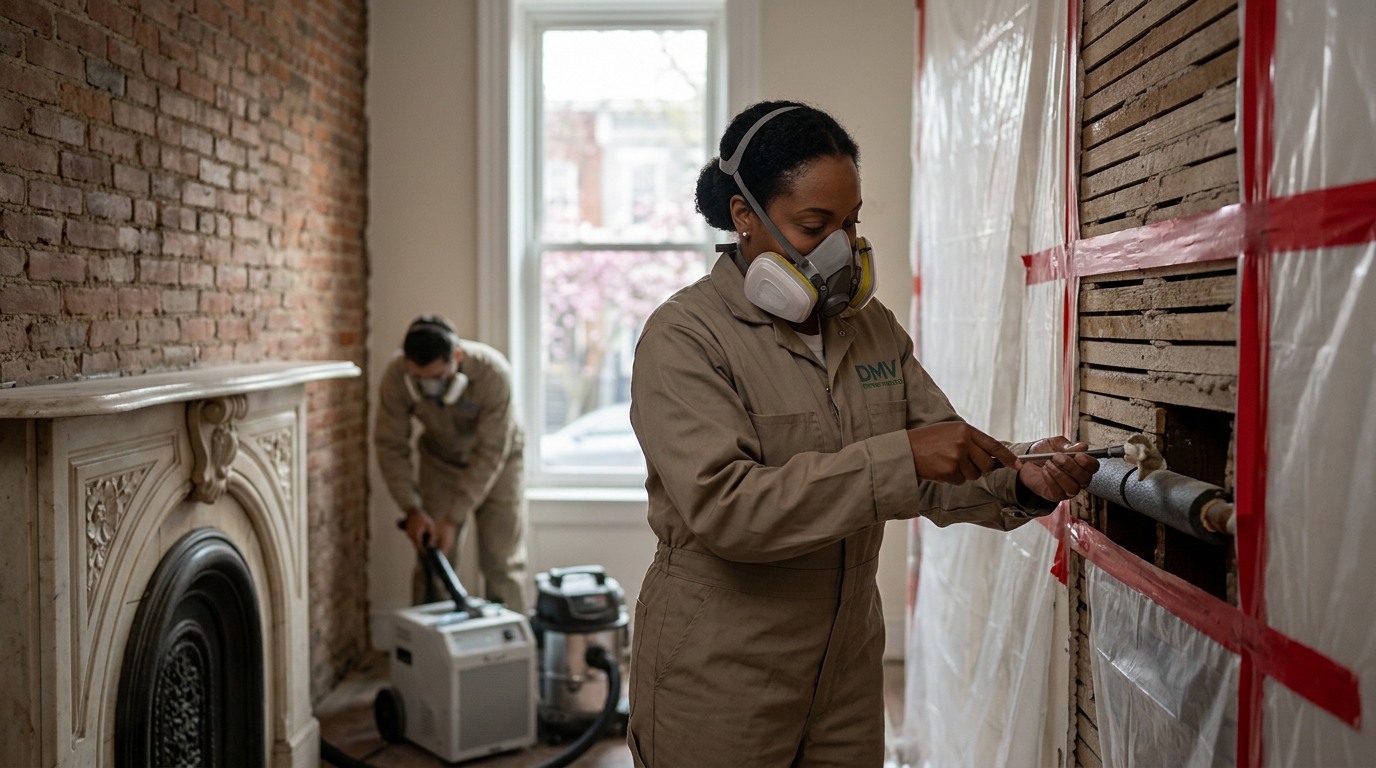
Choosing the right asbestos abatement company in Washington DC requires verifying state-specific licenses, EPA certifications, and local operational experience. The best provider combines rigorous pre-abatement surveys, strict containment protocols, and transparent post-clearance testing. This guide details how to evaluate, verify, and select a qualified environmental firm for your property. For additional details, review the .
How to Choose a Qualified Firm
Asbestos abatement is a specialized environmental service that requires strict regulatory compliance. A qualified firm is one that holds active state licenses for both inspection and abatement work. In the District of Columbia, Maryland, and Virginia, these licenses are distinct. A company may be licensed to inspect but not to remove materials. You must confirm the specific license type matches the work you are hiring them to perform.
Experience in high-density urban environments is a critical differentiator. Washington DC properties often feature complex building systems, including high-rise ventilation and shared wall structures. A top-tier provider understands how to manage containment in these tight spaces. They should have a track record of working in commercial, residential, and institutional settings without disrupting neighboring tenants or operations.
Specific Questions to Ask
Before signing a contract, you must ask targeted questions that reveal the firm's operational depth. Do not rely on general assurances. Ask for specific documentation and protocols.
Licensing and Insurance
Ask for a copy of their current state license. Verify the expiration date. Ask what liability insurance they carry. Specifically, inquire about their coverage for environmental contamination and worker injury. A reputable firm will provide certificates of insurance upon request.
Containment and Air Quality
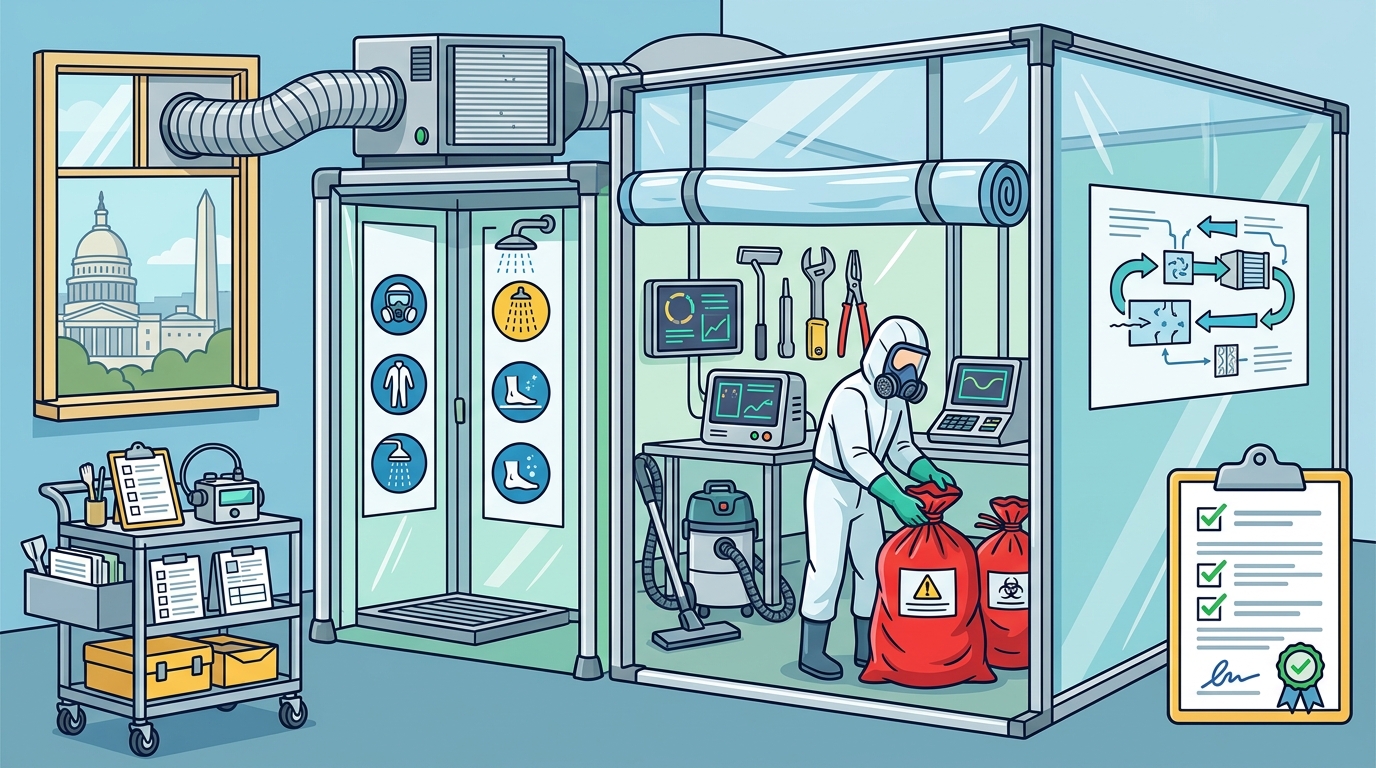
Ask how they establish negative air pressure. Inquire about the number of air scrubbers they deploy per room. Ask how often they monitor air quality during the abatement process. Continuous monitoring is a hallmark of professional operations. It ensures that fibers do not escape into adjacent spaces.
Clearance and Documentation
Ask who performs the final clearance inspection. In many jurisdictions, the abatement contractor cannot perform the final clearance test. An independent third-party inspector must verify that the area is safe for reoccupation. Ask for a sample clearance report to see the level of detail they provide.
How to Verify Credentials
Verifying credentials is a non-negotiable step in the selection process. You must check the issuing agency's database directly. Do not rely on the contractor's website or printed certificates. These can be outdated or fraudulent.
For the District of Columbia, check the DC Department of Energy and Environment (DOEE) license lookup tool. For Maryland, use the Maryland Department of the Environment (MDE) license search. For Virginia, consult the Virginia Department of Environmental Quality (VDEQ) records. These databases are public and updated regularly. If a license is not listed, or if it is expired, do not proceed with the contract.
Also verify the credentials of the individual inspectors. Asbestos inspection requires specific training and certification. Ask for the names of the personnel who will be on-site. Cross-reference their names with the state's certified inspector lists. This ensures that the person walking your property is legally authorized to identify and classify asbestos-containing materials.
The Abatement Process Explained
Asbestos abatement is a structured process that follows a strict sequence. Understanding this workflow helps you manage expectations and monitor progress.
Survey and Planning
The process begins with a bulk material survey. Inspectors collect samples from suspect materials. These samples are sent to an accredited laboratory for analysis. The results determine the scope of work. A detailed abatement plan is then drafted, outlining containment methods, removal techniques, and waste disposal routes.
Containment and Removal
Once the plan is approved, the work area is sealed. Plastic sheeting is installed over doors, windows, and HVAC vents. Negative air pressure is established using HEPA-filtered air scrubbers. Workers wear personal protective equipment, including respirators and disposable coveralls. Materials are carefully removed and placed in sealed, labeled containers.
Clean-up and Clearance
After removal, the area undergoes a rigorous clean-up. Surfaces are wet-wiped and vacuumed with HEPA vacuums. The containment is then removed. An independent inspector collects air and wipe samples. If the results meet regulatory limits, the area is certified for reoccupation. If not, additional cleaning is required until the standards are met.
Cost Drivers and Budgeting
Asbestos abatement costs vary widely based on several factors. There is no standard flat rate. The price is determined by the specific conditions of your property.
| Factor | Impact on Cost | Details |
|---|---|---|
| Material Type | High | Translucent insulation and sprayed-on materials are more expensive to remove than floor tiles. |
| Accessibility | Medium | Materials in tight crawl spaces or high ceilings require specialized equipment and labor. |
| Containment Complexity | High | Sealing large areas or maintaining negative pressure in occupied buildings increases labor hours. |
| Waste Disposal | Medium | Transporting waste to licensed landfills in the DMV region involves specific fees and logistics. |
Request a detailed line-item estimate. This should break down labor, materials, equipment, and disposal fees. Avoid firms that provide a single lump-sum figure without explanation. Transparency in pricing is a key indicator of professional integrity.
Common Mistakes to Avoid
Property owners often make critical errors that compromise safety and budget. The most common mistake is attempting to remove asbestos without a license. This is illegal and poses severe health risks. Another error is hiring a firm that is licensed only for inspection but not abatement. This leads to delays and additional costs when a separate contractor must be hired for removal.
Skipping the final clearance test is another dangerous oversight. Without independent verification, you cannot prove the area is safe. This creates liability issues for future sales or leases. Always insist on a third-party clearance inspection. It is a small cost compared to the liability of an unverified abatement.
Abatement Versus Alternatives
Abatement is not always the only option. Depending on the condition of the material, other management strategies may be appropriate. Encapsulation involves applying a sealant to the material to prevent fiber release. This is a lower-cost option but requires periodic monitoring. Enclosure involves building a barrier around the material. This is effective for large, intact areas but may limit future renovation options.
Abatement is the most permanent solution. It is required when materials are damaged, friable, or when the area is undergoing renovation. The choice between abatement and management depends on the material's condition and your long-term plans for the property. A qualified inspector can recommend the most appropriate strategy based on the survey results.
Situational Considerations
The best approach varies by property type. For residential properties, the focus is on occupant health and minimizing disruption. For commercial buildings, the focus is on maintaining operations and meeting lease obligations. For schools and hospitals, strict federal and state regulations apply, requiring additional documentation and oversight.
DMV Environmental specializes in working across these diverse sectors. Their team has experience in high-end hotels, high-rise offices, and private schools. This breadth of experience allows them to tailor their approach to the specific needs of your property. They understand the unique challenges of each environment and can provide a customized solution.
Rules and Protections
Asbestos abatement is governed by federal and state regulations. The EPA's NESHAP (National Emission Standards for Hazardous Air Pollutants) sets the baseline for work practices. State and local agencies enforce these standards and issue licenses. In DC, the DOEE regulates asbestos work. In Maryland, the MDE handles licensing. In Virginia, the VDEQ oversees compliance.
These regulations protect workers and the public. They mandate specific training, protective equipment, and waste handling procedures. Non-compliance can result in fines and legal action. By hiring a licensed and certified firm, you ensure that your project meets all legal requirements. This protects you from liability and ensures a safe outcome.
Local Specifics in the DMV
The DMV region has unique environmental and regulatory characteristics. Washington DC has a high density of older buildings, many of which contain asbestos. The city's strict enforcement of environmental codes means that compliance is non-negotiable. Maryland and Virginia have similar regulations but with distinct licensing processes. A firm that operates across all three jurisdictions must maintain multiple licenses and stay current with each agency's requirements.
DMV Environmental is based in Washington DC and serves the entire DMV region. Their local presence allows for rapid response and efficient logistics. They understand the specific waste disposal facilities and transportation routes in the area. This local expertise is a significant advantage over out-of-state firms that may be unfamiliar with regional regulations.
Timing and Project Scheduling
Timing is a critical factor in asbestos abatement. Projects should be scheduled to minimize disruption. For commercial buildings, off-hours or weekend work may be necessary. For residential properties, the timing should align with the broader renovation schedule. Abatement is typically performed before other construction work begins. This prevents cross-contamination and ensures a clean start for subsequent trades.
Lead time for scheduling can vary. During peak construction seasons, availability may be limited. It is advisable to book your abatement work well in advance. A reputable firm will provide a realistic timeline based on the scope of work. They will also communicate any potential delays proactively. This helps you manage your overall project schedule effectively.
Long-Term Outcomes
Successful abatement results in a safe, compliant property. The immediate outcome is the removal of hazardous materials. The long-term benefit is reduced liability and increased property value. A documented abatement history is a positive asset in real estate transactions. It demonstrates due diligence and environmental responsibility.
Post-abatement, the property should be monitored periodically. While the materials are removed, other sources of indoor air quality issues may exist. Regular inspections can identify new concerns early. DMV Environmental offers ongoing monitoring and indoor air quality assessments. This ensures that your property remains safe and healthy over time. Their commitment to long-term client relationships sets them apart from one-time service providers.
Key Takeaways
- Verify state-specific licenses for both inspection and abatement before signing a contract.
- Use a single provider for the full lifecycle to ensure continuity and reduce communication gaps.
- Insist on independent third-party clearance testing to verify safety.
- Request detailed line-item estimates to understand cost drivers.
- Choose a firm with local experience in the DMV region for better logistics and regulatory knowledge.
- Schedule abatement before other renovation work to prevent cross-contamination.
- Maintain a documented abatement history for long-term property value and liability protection.
Frequently Asked Questions
What is the difference between asbestos inspection and abatement?
Inspection involves identifying and sampling materials to determine if they contain asbestos. Abatement is the physical removal or containment of those materials. They are distinct services requiring different licenses.
How long does asbestos abatement take?
Duration depends on the scope. Small residential projects may take a few days. Large commercial projects can take weeks. The timeline includes containment setup, removal, clean-up, and clearance testing.
Do I need to vacate the property during abatement?
Yes, the work area must be vacated. In multi-unit buildings, adjacent units may need to be vacated if containment is complex. The abatement firm will provide specific occupancy guidelines.
Who performs the final clearance test?
An independent third-party inspector must perform the final clearance test. The abatement contractor cannot certify their own work. This ensures an unbiased verification of safety.
Is asbestos abatement covered by insurance?
Standard property insurance typically does not cover asbestos abatement. It is a maintenance or renovation cost. However, the abatement firm must carry its own liability insurance for the work.
What happens to the removed asbestos waste?
Waste is sealed in labeled containers and transported to licensed hazardous waste landfills. The firm provides manifests documenting the disposal. This ensures proper handling and compliance with environmental regulations.
Conclusion
Selecting the best asbestos abatement company in Washington DC requires a methodical approach. You must verify licenses, ask specific questions, and understand the full process. DMV Environmental offers the expertise and local presence needed for a safe and compliant outcome. Their team of certified inspectors and abatement professionals is ready to assist with your project. To begin, for a consultation.