
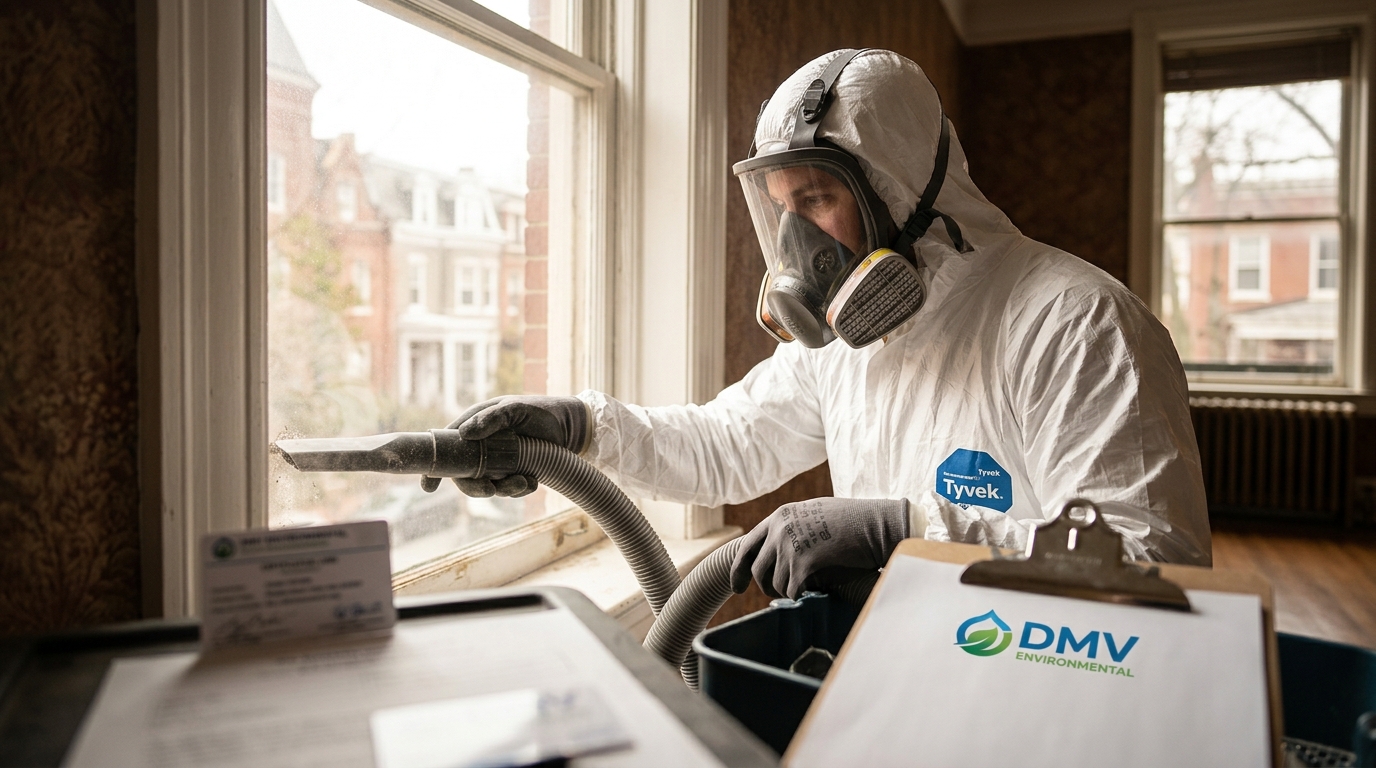
DMV Environmental is a licensed and certified environmental firm that provides lead paint abatement, inspection, and risk assessment services across Washington, DC, Maryland, and Virginia. This guide explains the regulatory landscape for lead-safe work in the DMV region, details the specific licensing requirements for contractors, and outlines how to verify credentials before hiring. It covers the distinct agency structures in each jurisdiction, the difference between inspection and abatement, and the safety protocols required for residential and commercial properties.
The Regulatory Framework for Lead Abatement
Lead paint abatement is a highly regulated activity due to the severe health risks associated with lead exposure, particularly for children under the age of six. The federal government, through the Environmental Protection Agency (EPA), sets baseline standards, but individual states and the District of Columbia maintain their own specific licensing and certification programs. Understanding this hierarchy is the first step in finding a qualified professional.
Federal Standards and the EPA
The EPA enforces the Lead Renovation, Repair, and Painting (RRP) Rule, which requires firms to be certified and workers to be trained for any renovation activity that disturbs lead-based paint in pre-1978 housing and child-occupied facilities. While the RRP Rule focuses on renovation, full abatement (the permanent removal of lead-based paint) often falls under stricter state or local jurisdictions. The EPA also maintains the Lead Safe Housing Rule, which governs the abatement of lead-based paint in housing.
State and Local Variations
Each jurisdiction in the DMV region has its own agency responsible for lead safety. In Washington, DC, the Department of Health (DOH) oversees lead certification. In Maryland, the Department of the Environment (MDE) and the Department of Labor (L&I) share responsibilities for licensing. In Virginia, the Department of Health (DOH) and the Department of Environmental Quality (DEQ) manage the programs. These agencies issue the specific licenses that allow a company to perform lead work legally.
Licensing Requirements by Jurisdiction
Contractors must hold specific licenses to perform lead paint abatement in each jurisdiction. A license in one state does not automatically grant permission to work in another. The following table summarizes the primary regulatory bodies and license types for the DMV region.
| Jurisdiction | Regulatory Agency | Primary License Type for Abatement | Key Requirement |
|---|---|---|---|
| Washington, DC | DC Department of Health (DOH) | Lead Abatement Firm License | Firm must be licensed; workers must be certified. |
| Maryland | Maryland Department of Labor (L&I) | Lead Abatement Firm License | Firm license required; individual certifications for workers. |
| Virginia | Virginia Department of Health (DOH) | Lead Abatement Firm License | Firm must be licensed; workers must hold valid certifications. |
It is critical to distinguish between a general contractor license and a specific lead abatement license. A general contractor may be licensed to build or renovate, but they cannot legally perform lead abatement without the specific environmental certification. DMV Environmental holds the necessary certifications to operate across these three jurisdictions, ensuring compliance with local laws in each area.
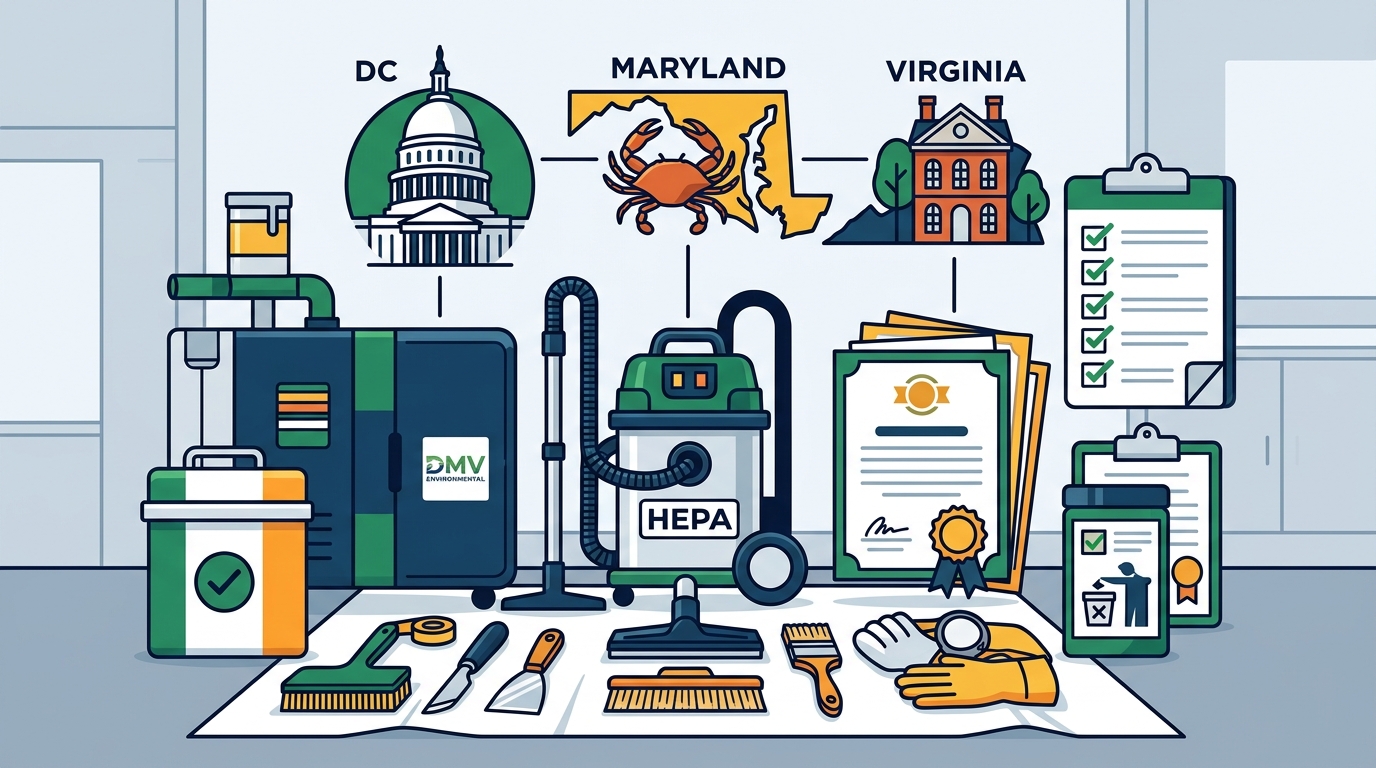
DMV Environmental: Regional Expertise and Services
DMV Environmental is a Certified Business Enterprise in Washington, DC, specializing in environmental inspections and abatement. The firm’s team of professional inspectors is certified and licensed to perform services in Maryland, DC, and Virginia. This multi-state capability allows the company to handle projects that span regional boundaries, such as commercial properties or multi-family housing complexes located in different jurisdictions.
Lead Paint Inspections and Risk Assessments
Before any abatement can occur, a professional inspection is required. DMV Environmental conducts lead paint inspections and risk assessments to identify the presence and condition of lead-based paint. These assessments are crucial for determining the scope of work and ensuring that the abatement plan meets regulatory standards. The firm’s inspectors have extensive experience in commercial properties, multi-family dwellings, schools, and single-family residential properties.
Abatement and Remediation
DMV Environmental specializes in lead paint abatement, which involves the safe removal of lead-based paint from surfaces. The company provides written scopes of work and ongoing monitoring to ensure that the abatement process is conducted safely and effectively. By managing both the inspection and the abatement, DMV Environmental provides a seamless service that reduces liability for property owners and ensures regulatory compliance.
How to Verify Contractor Credentials
When hiring a lead abatement contractor, verification is essential. You should not rely solely on a company’s website or verbal assurances. Instead, use the official databases provided by the regulatory agencies in each jurisdiction.
Checking DC Licenses
In Washington, DC, you can verify a firm’s license through the DC Department of Health. The DOH maintains a public database of licensed lead abatement firms. You should confirm that the firm’s license is active and that it covers the specific type of work you require, such as abatement or renovation.
Checking Maryland and Virginia Licenses
In Maryland, the Department of Labor and Industry maintains a list of licensed lead abatement firms. In Virginia, the Department of Health provides a similar verification tool. When working with a firm like DMV Environmental, you can request their license numbers for each state and verify them directly with the respective agencies. This step ensures that the contractor is legally authorized to perform the work and that they are in good standing with the regulatory body.
Inspection vs. Abatement: Understanding the Scope
Many property owners confuse lead inspection with lead abatement. These are two distinct services with different regulatory requirements and outcomes. Understanding the difference is key to planning your project correctly.
Lead Inspection
A lead inspection is a visual and laboratory-based assessment to determine if lead-based paint is present in a building. It identifies the location and extent of lead paint but does not remove it. Inspections are often required before renovation, sale, or purchase of pre-1978 housing. DMV Environmental provides comprehensive lead inspections that include risk assessments to evaluate the potential for exposure.
Lead Abatement
Lead abatement is the process of permanently removing lead-based paint from surfaces. This is a more invasive and regulated process than inspection. Abatement requires specific containment measures, air monitoring, and clearance testing to ensure that lead dust is not released into the environment. Only licensed abatement firms can perform this work. DMV Environmental offers full abatement services, including air monitoring and clearance inspections, to ensure that the work is completed safely and in compliance with all regulations.
Key Takeaways
- Lead paint abatement is regulated by both federal and state/local agencies in the DMV region.
- DMV Environmental is licensed to perform lead services in Washington, DC, Maryland, and Virginia.
- A general contractor license does not permit lead abatement; a specific environmental license is required.
- Always verify a contractor’s license with the official state or local agency database.
- Lead inspection identifies the presence of lead, while abatement removes it.
- DMV Environmental provides both inspection and abatement services, offering a comprehensive solution for property owners.
- Proper containment and air monitoring are critical components of safe lead abatement.
Frequently Asked Questions
Is DMV Environmental licensed in all three DMV states?
Yes, DMV Environmental’s team of professional inspectors is certified and licensed to perform asbestos and lead services in Maryland, DC, and Virginia.
What is the difference between lead inspection and lead abatement?
Lead inspection identifies the presence and condition of lead-based paint, while lead abatement is the process of permanently removing it. Abatement requires a specific license and involves containment and air monitoring.
Do I need a license to do lead abatement myself?
No, lead abatement must be performed by a licensed firm. Homeowners are generally not permitted to perform abatement on their own, especially in child-occupied housing.
How can I verify a contractor’s lead license in DC?
You can verify a contractor’s license through the DC Department of Health’s public database of licensed lead abatement firms.
Does DMV Environmental handle commercial properties?
Yes, DMV Environmental has extensive experience conducting lead investigations and abatement in commercial properties, multi-family dwellings, schools, and hospitals.
What is a risk assessment in the context of lead paint?
A risk assessment is an evaluation of the potential for lead exposure based on the condition and location of lead-based paint. It helps determine the appropriate abatement strategy.