
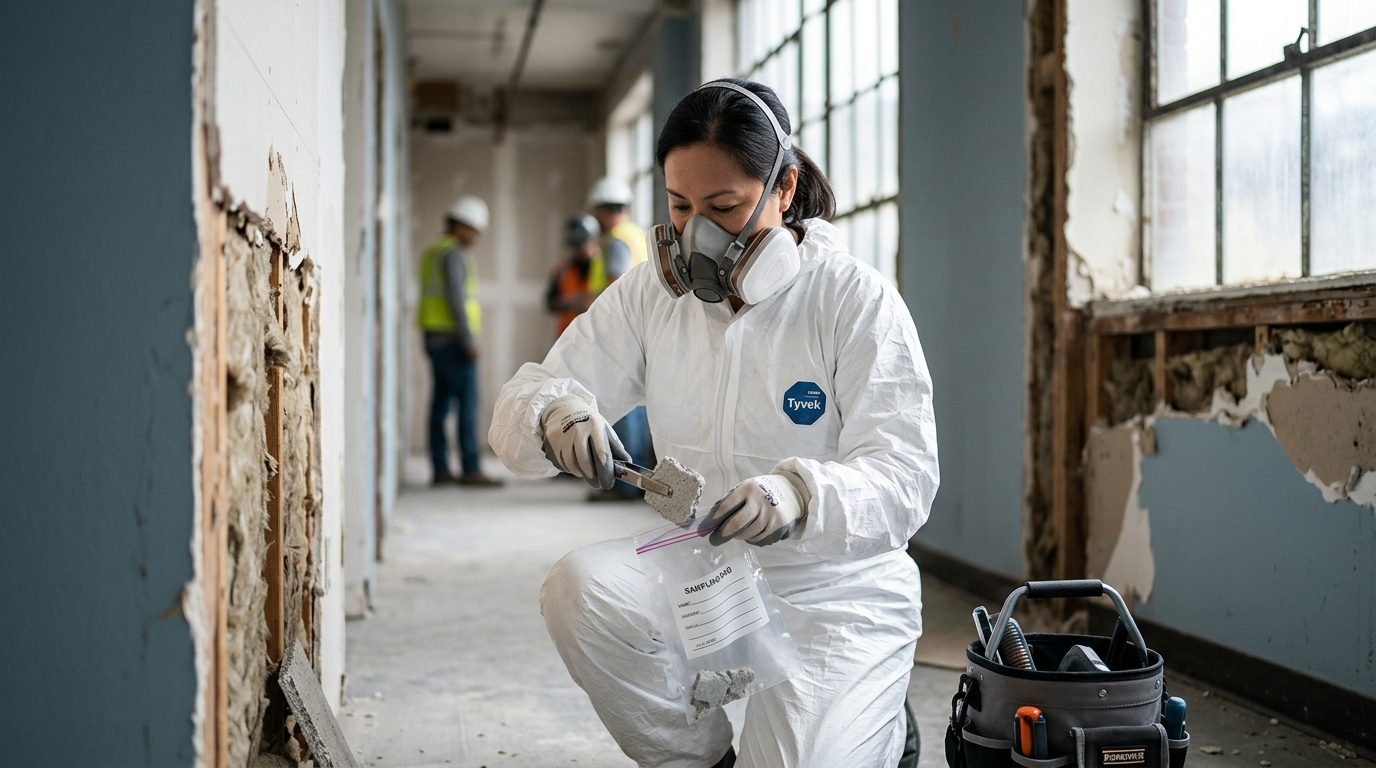
Virginia law mandates that asbestos inspections be conducted by licensed professionals before renovation or demolition. Building owners and occupants are protected by strict state regulations that ensure accurate identification and safe handling of hazardous materials. DMV Environmental provides certified inspection services in Virginia, Maryland, and DC, ensuring compliance with these legal standards.
Licensing and Certification Requirements
Virginia requires specific credentials for individuals performing asbestos work. An asbestos inspector is a professional licensed by the state to identify the presence of asbestos-containing materials. Under Virginia Code Chapter 5, contractors and workers must be properly certified to operate legally. This licensing ensures that inspections are performed by personnel with the technical competence to distinguish between hazardous and non-hazardous materials.
The state distinguishes between different roles, including inspectors and management planners. For example, child day centers require inspections by personnel licensed specifically as both an asbestos inspector and an asbestos management planner. This dual requirement ensures that the inspection not only identifies the material but also plans for its safe management. DMV Environmental employs certified inspectors who meet these rigorous state standards for all projects in the region.
Building Permit and Inspection Exceptions
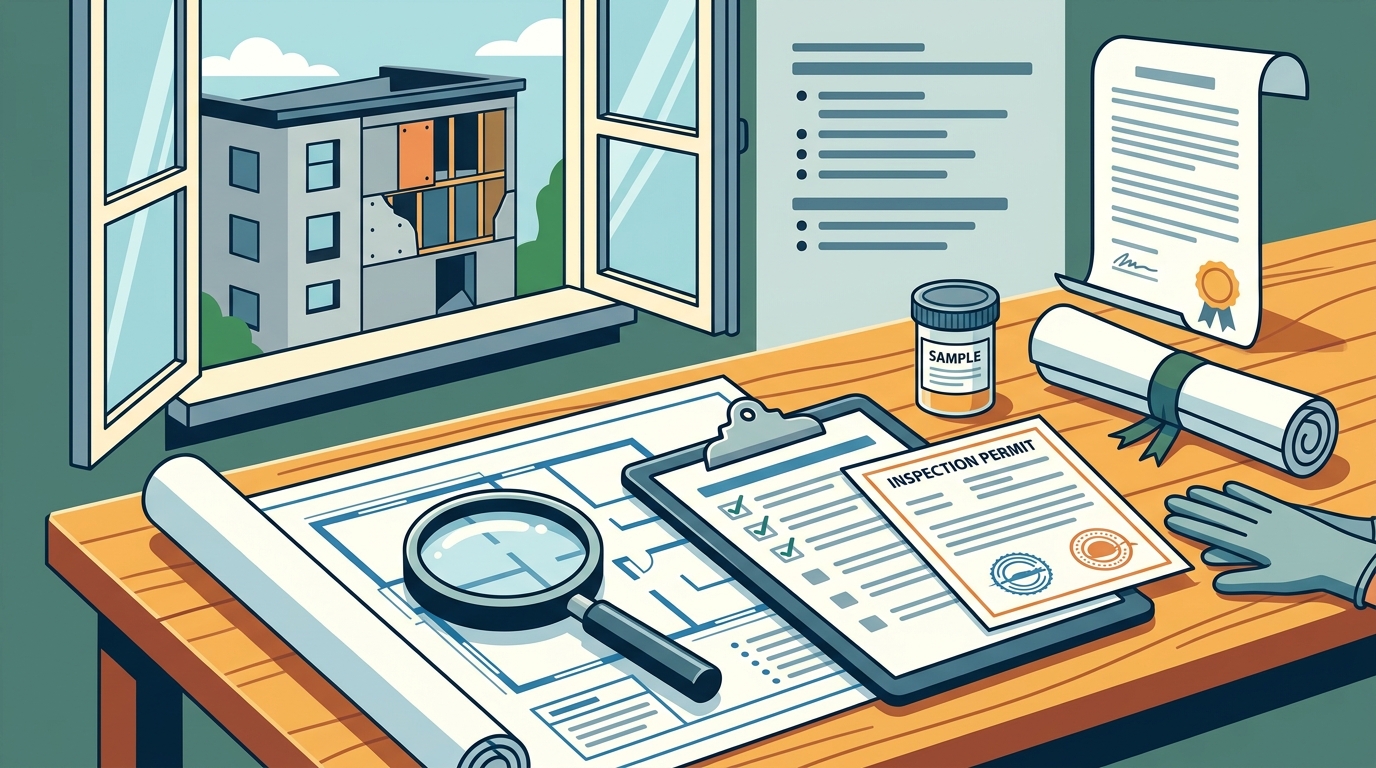
Local building departments are prohibited from issuing permits for renovation or demolition without a prior asbestos inspection. Virginia Code Section 36-99.7 establishes this requirement to prevent accidental disturbance of asbestos during construction. The inspection must be completed before any physical work begins on the structure. This legal barrier protects property owners from liability and ensures that abatement plans are in place before work starts.
There are specific exceptions to this rule, such as when a building was constructed after the phase-out of asbestos use. However, for older structures, the inspection is mandatory. The local building department acts as the gatekeeper, verifying that the inspection report is on file. This process ensures that the legal rights of occupants and workers are protected by preventing unregulated disturbance of friable materials.
Occupational Safety and Worker Protections
Worker safety is a primary focus of Virginia asbestos regulations. The Virginia Occupational Safety and Health (VOSH) Program regulates occupational exposure to asbestos and lead. These regulations are designed to minimize the health risks faced by construction workers and abatement professionals. The state Department of Labor and Industry (DOLI) oversees these programs to ensure compliance with federal and state safety standards.
Virginia conducts annual on-site unannounced inspections of licensed asbestos contractors. This oversight mechanism ensures that contractors maintain their licenses by adhering to strict safety protocols. If a contractor fails to meet these standards, they may face penalties or license revocation. This continuous monitoring provides an additional layer of protection for workers and property owners, ensuring that the inspection and abatement processes are conducted safely and legally. according to Annual inspections 40
Regulations for Schools and Healthcare Facilities
Specific facilities face stricter regulatory environments due to the vulnerability of their occupants. For hospitals and nursing homes, licensure and inspection articles in the Virginia Code impose additional requirements. These facilities must maintain strict environmental controls to protect patients and staff. The regulations ensure that any asbestos present is managed according to the highest safety standards.
Schools and day care centers are subject to specific inspection mandates. The law requires that inspections be conducted by licensed professionals who understand the unique risks posed to children. This targeted regulation reflects the state's commitment to protecting sensitive populations. DMV Environmental has experience working in high-end hotels, schools, and hospitals, ensuring that these specialized facilities meet all legal and safety requirements.
Enforcement and Regulatory Oversight
The Virginia Asbestos NESHAP Act provides the legal framework for enforcement. This act defines the terms and standards for asbestos management in the state. It aligns state regulations with federal National Emission Standards for Hazardous Air Pollutants (NESHAP). This alignment ensures that Virginia's protections are consistent with national best practices and legal precedents.
Regulatory oversight is not a one-time event but an ongoing process. The Department of Labor and Industry monitors the industry to ensure that standards are met. This continuous enforcement creates a stable legal environment for property owners and contractors. By understanding these protections, stakeholders can make informed decisions about their properties and ensure full compliance with Virginia law.
Key Takeaways
- Virginia law requires licensed inspectors for all renovation and demolition projects.
- Building permits are withheld until a compliant asbestos inspection is on file.
- Workers are protected by VOSH regulations and annual unannounced contractor inspections. according to Code of Virginia
- Schools and healthcare facilities face additional, stricter inspection mandates.
- The Virginia Asbestos NESHAP Act aligns state rules with federal standards.
- DMV Environmental provides certified inspection services in Virginia, Maryland, and DC.
Frequently Asked Questions
Who is required to perform an asbestos inspection in Virginia?
Inspections must be conducted by personnel licensed in Virginia as an asbestos inspector. For certain facilities like child day centers, the inspector must also be licensed as an asbestos management planner.
Can I renovate a building without an asbestos inspection?
No. Local building departments in Virginia cannot issue a permit for renovation or demolition without a prior asbestos inspection, with limited exceptions for newer buildings.
How does the state monitor asbestos contractors?
The Department of Labor and Industry conducts at least one unannounced on-site inspection per year for each licensed asbestos contractor to ensure compliance. according to 22 1 289
What is the Virginia Asbestos NESHAP Act?
It is a state law that defines terms and standards for asbestos management, aligning Virginia regulations with federal National Emission Standards for Hazardous Air Pollutants.
Does DMV Environmental operate in Virginia?
Yes. DMV Environmental has certified inspectors licensed to perform asbestos services in Maryland, DC, and Virginia.
Are there specific rules for hospitals and schools?
Yes. Hospitals, nursing homes, and schools are subject to additional licensure and inspection requirements to protect vulnerable occupants.
Conclusion
Understanding your legal rights during an asbestos inspection in Virginia is essential for safe property management. The state provides robust protections through licensing, permit controls, and ongoing regulatory oversight. DMV Environmental is committed to helping you navigate these requirements with precision and care. To plan your project, for a professional consultation.