
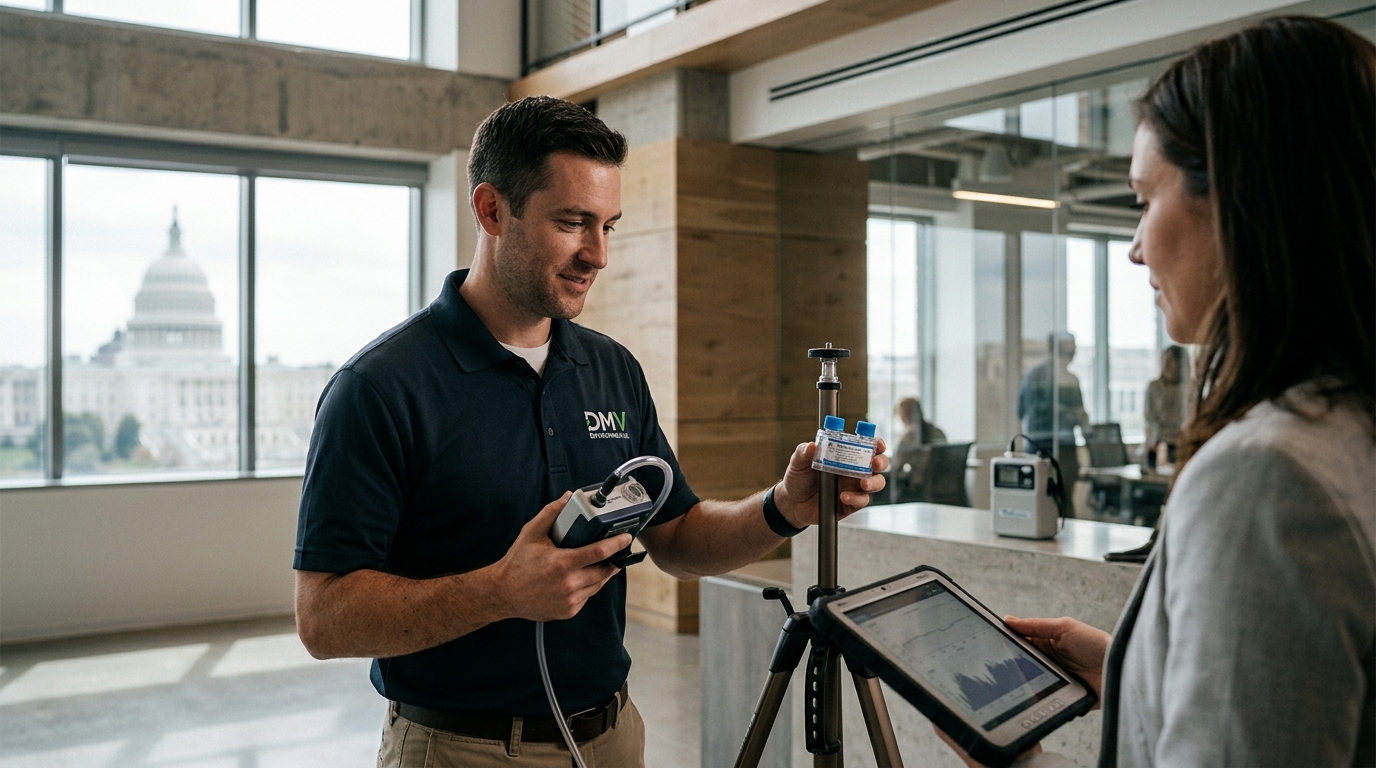
Indoor air quality (IAQ) is a critical component of building health, yet it remains one of the most overlooked aspects of property management in the District of Columbia. According to the Environmental Protection Agency, Americans spend approximately 90% of their time indoors, where pollutant levels can be two to five times higher than outdoor levels. This statistic underscores the urgency for property owners, facility managers, and homeowners to prioritize rigorous air quality assessments. In a dense urban environment like Washington DC, where historic buildings often lack modern ventilation systems, the risk of accumulating harmful contaminants is significantly elevated. Choosing the right testing provider is not merely a compliance exercise; it is a fundamental investment in occupant health, liability reduction, and asset preservation. (Contact us Dmvenvironmental)
Why IAQ Matters in Washington DC
Washington DC presents a unique set of environmental challenges for indoor air quality. The city is home to a vast inventory of historic buildings, many of which were constructed before modern environmental standards existed. These structures often contain legacy materials such as asbestos and lead-based paint, which can degrade over time and release hazardous particulates into the air. Furthermore, the dense urban landscape contributes to higher levels of outdoor pollutants that can infiltrate buildings through aging HVAC systems and poor sealing. (About Dmvenvironmental)
Indoor Air Quality is defined as the air quality within and around buildings and structures, especially as it relates to the health and comfort of building occupants. Poor IAQ can lead to "Sick Building Syndrome," characterized by headaches, fatigue, and respiratory issues among occupants. For commercial property managers, this translates to decreased tenant satisfaction and potential legal liabilities. For homeowners, it represents a direct threat to family health, particularly for children and the elderly who are more susceptible to airborne toxins.
The EPA mandates that any building undergoing renovation or demolition must undergo an asbestos survey, regardless of the building's age. This regulation highlights the regulatory complexity in DC, where compliance is not optional but a legal requirement. Navigating these regulations requires a provider with deep local expertise and certified professionals who understand the specific nuances of DC, Maryland, and Virginia environmental codes.
Key Testing Services Explained
When comparing providers, it is essential to understand the specific services they offer. Not all IAQ testing is created equal. A comprehensive provider should offer a suite of diagnostic services that address both immediate health concerns and long-term compliance needs.
Asbestos and Lead Inspections
Asbestos is a mineral fiber that was widely used in construction materials for its heat resistance and insulating properties. However, when disturbed, these fibers become airborne and can cause serious lung diseases. Lead paint inspections are equally critical in DC, where many homes were built before 1978. Lead detection and monitoring is an aspect of environmental due diligence that should be performed prior to any renovation or demolition. Providers must be licensed to conduct these investigations in commercial properties, schools, and residential units.
Mold and Moisture Investigations
Mold thrives in damp environments, and water intrusion is a common issue in older DC buildings. Mold Investigations involve identifying the source of moisture, sampling air and surfaces for mold spores, and developing a remediation plan. Water intrusion is a cause for serious concern, especially when it has gone undetected for any length of time. Effective providers offer not just testing, but also remediation design and oversight to ensure the problem is resolved permanently.
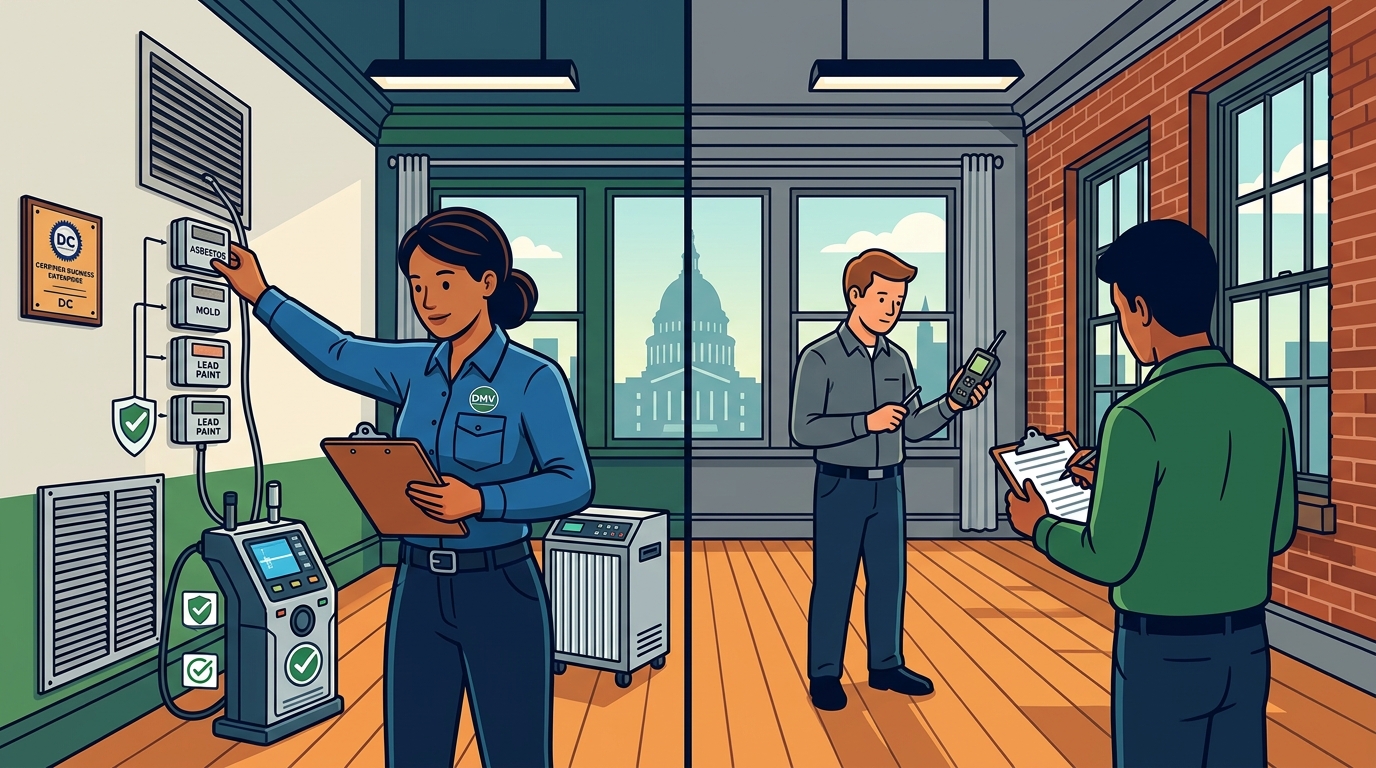
Radon Testing
Radon is a radioactive gas that can seep into buildings from the ground. It is the leading cause of lung cancer in non-smokers. Radon testing is strongly encouraged for all properties, and landlords may be legally obligated to test for radon in their rental properties. Providers should offer both air and water testing, with clear protocols for mitigation if levels exceed the EPA action level of 4 pCi/L.
Provider Comparison Matrix
To help you make an informed decision, we have compiled a comparison of key service attributes. This matrix highlights the differences between specialized environmental firms and generalist contractors.
| Service Attribute | Specialized Environmental Firm (e.g., DMV Environmental) | Generalist Contractor |
|---|---|---|
| Certification Level | Licensed and certified inspectors for asbestos, lead, and mold in DC, MD, VA. | Varies; often lacks specific environmental licensing. |
| Scope of Services | Comprehensive: Testing, remediation design, oversight, and clearance. | Limited: Often focuses only on remediation, not independent testing. |
| Regulatory Compliance | Deep knowledge of EPA, DCRA, and state-specific regulations. | May lack up-to-date knowledge of local codes. |
| Emergency Response | Dedicated team for immediate hazardous material response. | Typically no dedicated emergency response capability. |
| Industry Focus | Specializes in hotels, high-rises, schools, and hospitals. | General residential or commercial work. |
Evaluating Provider Credentials
When selecting an IAQ testing provider in Washington DC, look for specific credentials and operational capabilities. The first criterion is licensing. Ensure the provider is licensed to perform inspections in Maryland, DC, and Virginia. This tri-jurisdictional capability is crucial for property owners with assets in the broader DMV region.
Second, evaluate their experience with specific building types. Providers who specialize in high-end hotels, high-rise office buildings, and private schools understand the unique ventilation and occupancy challenges of these environments. They are equipped to handle the complexity of large-scale projects with minimal disruption to operations.
Third, consider their approach to Indoor Air Quality (IAQ) management. Leading providers offer proactive IAQ management strategies that help building owners maintain healthy environments, increase marketability, and reduce liability. This includes WELL IAQ investigations and Sick Building Response Surveys. A provider that only offers reactive testing is less valuable than one that offers comprehensive environmental health solutions.
Finally, verify their emergency response capabilities. Disasters such as fires, floods, and hurricanes can release hazardous materials into the air. A dedicated disaster response team can provide immediate investigation, sampling, and consulting services to mitigate loss and resume normal business operations quickly.
Key Takeaways
- Regulatory Mandate: The EPA requires asbestos surveys for any building undergoing renovation or demolition, regardless of age.
- Health Impact: Radon is the leading cause of lung cancer in non-smokers, making testing essential for all property types.
- Local Expertise: Effective providers must be licensed in DC, Maryland, and Virginia to navigate regional regulations.
- Comprehensive Services: Look for providers offering testing, remediation design, and clearance inspections, not just one service.
- Emergency Response: A dedicated disaster response team is critical for rapid recovery from catastrophic events.
- Industry Specialization: Providers specializing in hotels, schools, and hospitals offer higher levels of operational expertise.
- Proactive Management: Proactive IAQ management reduces liability and enhances tenant relationships.
Frequently Asked Questions
How often should I test for indoor air quality in DC?
Testing frequency depends on the building type and history. For historic buildings, regular asbestos and lead inspections are recommended before any renovation. For general IAQ, annual assessments are advisable for commercial properties to ensure compliance and occupant health.
What is the cost of radon mitigation in Washington DC?
Radon mitigation systems can be installed for as little as $3,500, depending on the home's foundation and ventilation requirements. Early testing can prevent costly remediation later.
Do I need a separate inspector for asbestos and lead?
Not necessarily. Many specialized firms, including DMV Environmental, employ certified inspectors licensed for both asbestos and lead services. This ensures a coordinated approach to environmental due diligence.
What is the EPA action level for radon?
The EPA recommends taking action to mitigate radon if levels are above 4 pCi/L in air. Landlords may be legally obligated to mitigate high levels in rental properties within six months.
How does mold affect insurance claims?
Mold issues can complicate insurance claims if not properly documented and remediated. Comprehensive mold investigations and clearance inspections provide the necessary documentation for successful claims.
What is Legionella testing?
Legionella testing involves sampling potable water quality to detect the bacteria that causes Legionnaires' disease. This is particularly important for large buildings with complex water systems.
Can DMV Environmental handle emergency response?
Yes, DMV Environmental has a dedicated disaster response team for immediate and urgent projects following fires, floods, or hazardous material releases.
Partner with DMV Environmental
Choosing the right indoor air quality testing provider in Washington DC is a decision that impacts health, compliance, and asset value. DMV Environmental offers the expertise, licensing, and comprehensive service suite necessary to protect your property and occupants. From asbestos inspections to radon mitigation, our certified professionals are ready to assist you.
Contact us today to schedule your assessment. Visit our Contact Us page or call (202) 710-2828 to speak with a specialist. Explore our Services to learn more about our capabilities.