
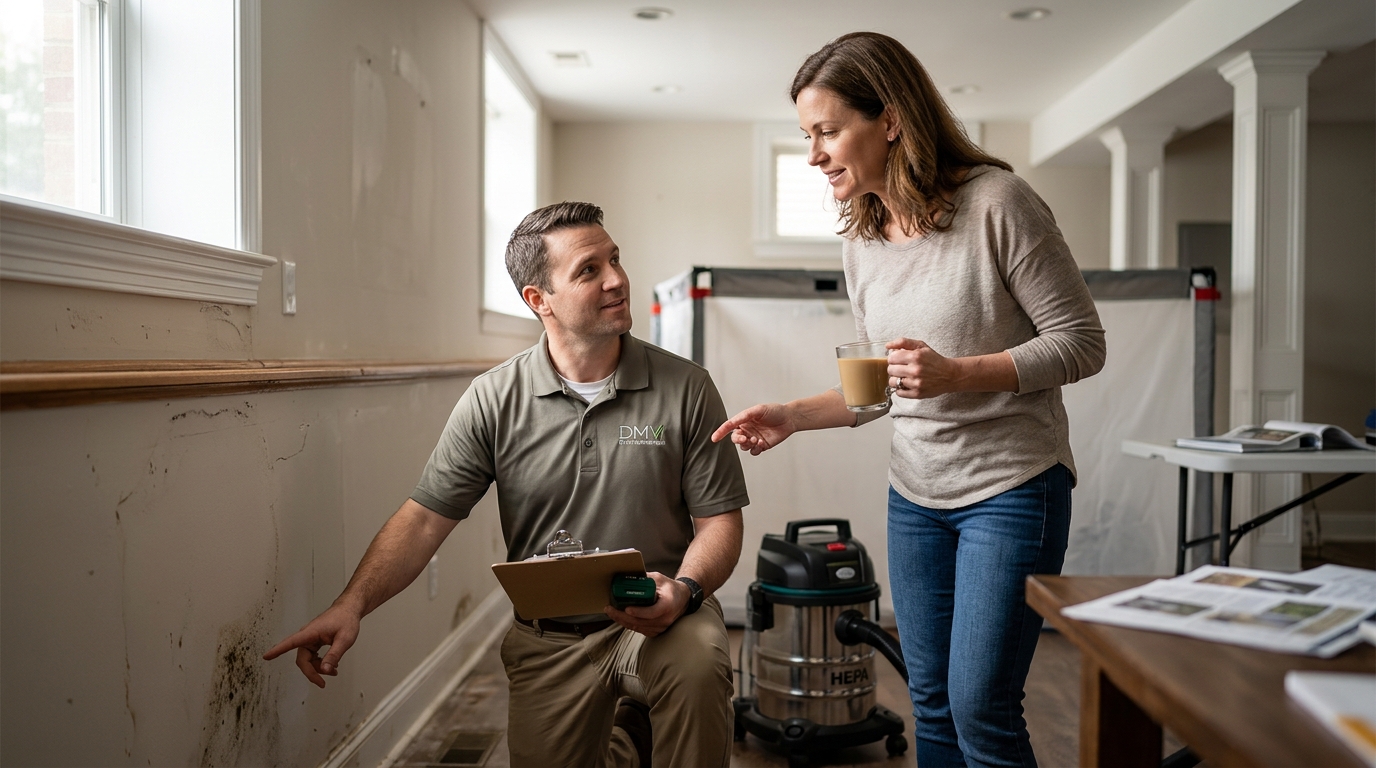
Comprehensive Mold Remediation & Inspection Services in DC, MD, and VA
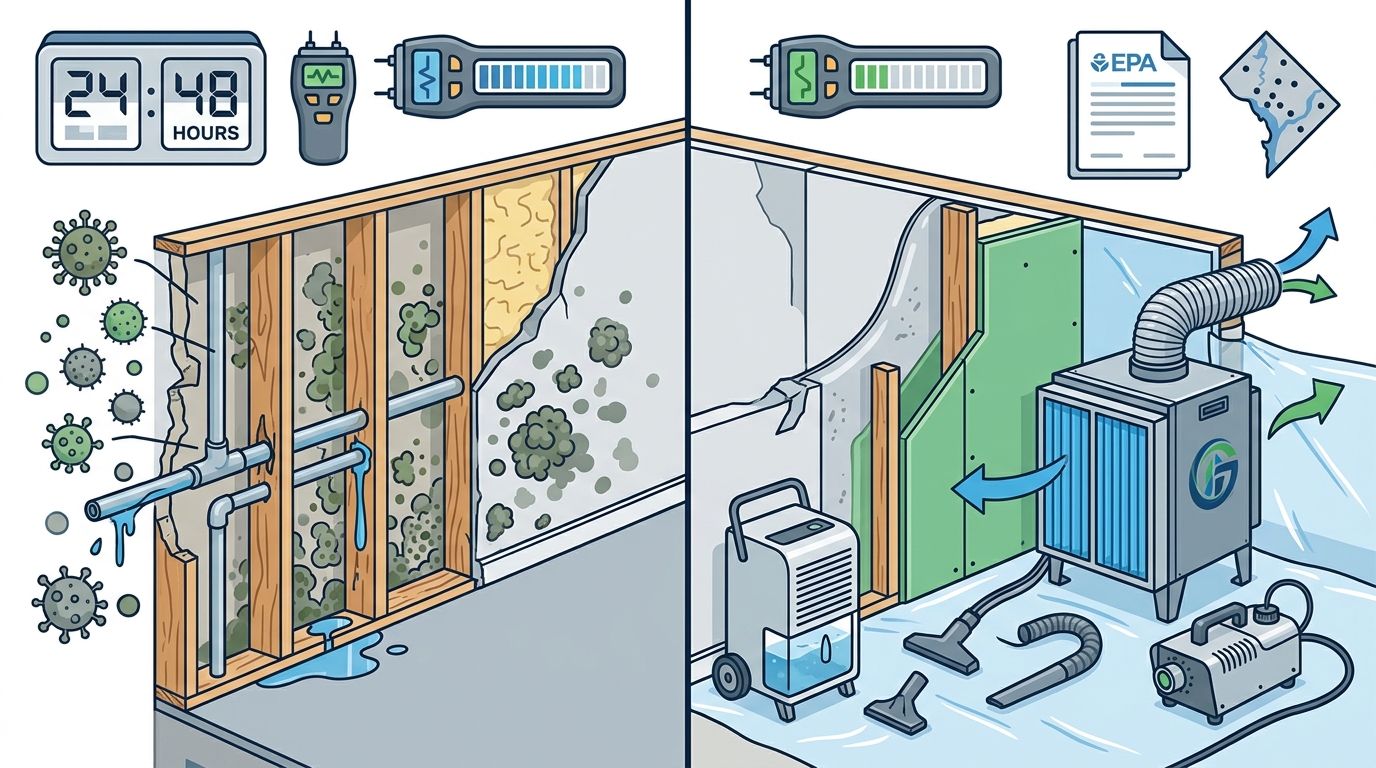
Water intrusion is a cause for serious concern, especially when it has gone undetected for any length of time. According to the EPA, mold can begin growing on wet surfaces within 24 to 48 hours after a water event. This rapid proliferation creates immediate health risks and structural damage potential for property owners in the Washington DC metropolitan area. DMV Environmental provides comprehensive services to prevent mold issues, investigate moisture intrusion, and recommend prudent remediation measures. We understand your concerns about mold and how it affects occupant health, insurance practices, and potential litigation. (Contact us Dmvenvironmental)
What is Mold and Why Does It Matter?
Mold is a type of fungus that grows in the form of multicellular filaments called hyphae. These organisms thrive in damp, warm environments and can break down organic materials, leading to structural decay. In the context of building science, mold is not merely a cosmetic issue. It is a biological hazard that releases spores and mycotoxins into the air. These airborne particles can trigger allergic reactions, asthma attacks, and other respiratory issues in sensitive individuals.
Water intrusion is a primary driver of mold growth. Whether from a leaking roof, a burst pipe, or high humidity, moisture provides the necessary fuel for fungal colonies to expand. DMV Environmental’s team specializes in identifying these moisture sources before they become widespread infestations. By addressing the root cause of the water intrusion, we prevent the recurrence of mold problems. This proactive approach is essential for maintaining the integrity of your property and the health of its occupants.
Our certified inspectors are licensed to perform mold investigations in Maryland, DC, and Virginia. We utilize advanced diagnostic tools to map moisture levels and identify hidden mold colonies behind walls or under flooring. This thorough assessment ensures that no area is overlooked during the remediation process. Early detection is key to minimizing repair costs and health risks. If you suspect mold in your home or business, do not wait for visible signs to appear. Contact us for a professional assessment today.
The Mold Investigation Process
A professional mold investigation begins with a visual inspection and a review of the property’s history. Our inspectors look for signs of water damage, such as discoloration, staining, or peeling paint. We also ask detailed questions about past leaks, flooding events, or plumbing issues. This historical context helps us pinpoint the source of the moisture problem.
Next, we conduct air sampling and surface swabbing. Air samples are collected using specialized pumps that draw air onto a collection medium. These samples are then analyzed in a laboratory to identify the types and concentrations of mold spores present. Surface samples are taken from visible mold growth to determine the specific species involved. This data allows us to compare indoor mold levels with outdoor baseline levels. If indoor levels are significantly higher, it confirms an active mold problem.
We also perform moisture mapping using thermal imaging cameras and moisture meters. These tools detect hidden moisture within building materials that is not visible to the naked eye. By identifying these wet areas, we can target the remediation efforts effectively. This scientific approach ensures that our remediation plans are based on data, not guesswork. It also helps us verify that the property is dry before we consider the project complete.
Mold Remediation Design & Scope of Work
Once the investigation is complete, we develop a detailed scope of work. This document outlines the specific steps required to remove the mold and restore the property. The scope includes containment strategies, air filtration, and removal procedures. Containment is critical to prevent cross-contamination. We use plastic sheeting and negative air pressure to isolate the affected area from the rest of the building.
Remediation involves the physical removal of mold-infested materials. Porous materials like drywall and carpet that cannot be cleaned are typically removed and discarded. Non-porous materials like metal and plastic can often be cleaned and sanitized. Our team uses HEPA vacuums and damp wiping techniques to remove mold spores from surfaces. This thorough cleaning ensures that all visible and hidden mold is eliminated.
After the mold is removed, we conduct clearance inspections. These inspections verify that the remediation was successful. We perform post-remediation air sampling to ensure that mold spore levels have returned to normal. Only when the clearance inspection is passed do we remove the containment barriers. This final step provides peace of mind and ensures that the property is safe for re-occupancy.
Indoor Air Quality & Health Implications
Indoor Air Quality (IAQ) is a critical component of building health. Poor IAQ can lead to "Sick Building Syndrome," where occupants experience acute health effects that correlate with time spent in the building. By following best practices in proactive IAQ management, building owners and managers can maintain healthy indoor environments, increase marketability and value, reduce liability, optimize building operations and reduce operating costs, and enhance tenant relationships.
Mold is a major contributor to poor IAQ. When mold grows indoors, it releases spores and volatile organic compounds (VOCs) into the air. These pollutants can cause headaches, fatigue, and respiratory irritation. In severe cases, long-term exposure to mold can lead to chronic health conditions. DMV Environmental can also address potable water quality and legionella concerns, which are often linked to moisture problems.
We offer IAQ & WELL IAQ Investigations to help building owners meet high-performance standards. The WELL Building Standard focuses on how buildings impact human health and well-being. By achieving WELL certification, property owners can demonstrate their commitment to occupant health. This can lead to higher occupancy rates and increased property values. Our team can guide you through the process of improving your IAQ and achieving these prestigious certifications.
Service Comparison: Inspection vs. Remediation
Understanding the difference between mold inspection and remediation is crucial for property owners. Inspection is the diagnostic phase, while remediation is the treatment phase. Both are essential for a complete solution. Below is a comparison of our core services to help you understand the scope of each.
| Service Type | Primary Objective | Key Deliverables | Target Audience |
|---|---|---|---|
| Mold Investigation | Identify mold presence and source | Air samples, moisture map, lab results | Homeowners, Property Managers |
| Remediation Design | Plan safe removal process | Scope of work, containment plan | Contractors, Building Owners |
| Remediation Oversight | Monitor removal for compliance | Daily logs, photo documentation | Insurance Companies, Attorneys |
| Clearance Inspection | Verify safety for re-occupancy | Post-remediation air report | All Property Owners |
Key Takeaways
- Rapid Growth: Mold can begin growing on wet surfaces within 24 to 48 hours after a water event.
- Health Risks: Mold spores and mycotoxins can trigger allergic reactions and respiratory issues.
- Professional Inspection: Air sampling and moisture mapping are essential for accurate diagnosis.
- Containment: Negative air pressure and plastic barriers prevent cross-contamination during remediation.
- Clearance Testing: Post-remediation air sampling verifies that the property is safe for re-occupancy.
- IAQ Benefits: Proactive IAQ management increases property value and reduces liability.
- Regional Expertise: DMV Environmental is licensed to perform services in Maryland, DC, and Virginia.
Frequently Asked Questions
How long does mold remediation take?
The duration depends on the extent of the infestation. Small projects may take a few days, while large-scale remediation can take several weeks. Our team provides a detailed timeline during the scope of work phase.
Can I stay in my home during mold remediation?
It is generally recommended that occupants leave the property during active remediation. This prevents exposure to mold spores and chemicals used in the cleaning process. We will advise you on the safest course of action based on your specific situation.
What is the difference between mold inspection and remediation?
Inspection involves identifying the presence and source of mold through testing and visual assessment. Remediation is the physical process of removing the mold and repairing the damage. Both are necessary for a complete solution.
Do you offer emergency mold services?
Yes, DMV Environmental has a dedicated disaster/emergency response team. We provide immediate investigation and sampling services for urgent mold situations caused by floods, hurricanes, or burst pipes.
How much does mold remediation cost?
Costs vary based on the size of the affected area and the type of materials involved. We provide detailed estimates after the initial inspection. Contact us for a free consultation to discuss your specific needs.
Is mold testing required by law?
While not always legally required for residential properties, mold testing is often required by insurance companies and lenders. It provides the necessary documentation for claims and repairs. For commercial properties, local regulations may mandate regular IAQ assessments.
What is the WELL IAQ standard?
The WELL Building Standard is a performance-based system for measuring, certifying, and monitoring features of the built environment that support human health. It focuses on air, water, nourishment, light, fitness, comfort, and mind.
Contact DMV Environmental
If you are dealing with mold issues in the DC, MD, or VA area, DMV Environmental is here to help. Our team of certified inspectors and remediation specialists is ready to assist you with your project. We provide accurate assessments, effective remediation, and comprehensive IAQ solutions. Do not let mold compromise your health or your property value.
Contact us today to schedule your inspection. You can reach us by email at dmv@dmvenvironmental.com or by phone at (202) 710-2828. We are committed to providing fast, efficient, and cost-effective solutions for all your environmental needs. Let us help you maintain a safe and healthy environment.