

How to Hire a Licensed Lead Paint Abatement Contractor in DC, Maryland, and Virginia
Lead paint abatement is not a DIY project. It is a regulated environmental health crisis requiring certified professionals to prevent irreversible neurological damage. According to the Centers for Disease Control and Prevention (CDC), there is no safe level of lead exposure in children, making professional intervention critical for any property built before 1978. When you hire a licensed lead paint abatement contractor in DC, Maryland, and Virginia, you are not just paying for labor. You are investing in legal compliance, health safety, and property value preservation. This guide details exactly how to vet, hire, and manage these specialized contractors to ensure your project meets federal and regional standards. (Contact us Dmvenvironmental)
Why Lead Abatement is Non-Negotiable
Lead-based paint was widely used in homes and commercial buildings until it was banned for residential use in 1978. When this paint deteriorates, it creates lead dust and chips that pose severe health risks. Lead poisoning can cause permanent brain damage, developmental delays, and behavioral issues in children. For adults, it can lead to high blood pressure and kidney damage. The Environmental Protection Agency (EPA) mandates that any renovation, repair, or painting activity that disturbs painted surfaces in pre-1978 structures must follow specific lead-safe work practices. This is known as the Renovation, Repair, and Painting (RRP) rule. Abatement goes further by completely removing or encapsulating the hazardous material. Ignoring these regulations can result in massive federal fines and severe liability for property owners. (Contact us Dmvenvironmental)
Understanding the Regulatory Landscape
Hiring a contractor in the DMV area requires navigating three distinct regulatory environments. Each jurisdiction has its own licensing board and enforcement mechanisms. Failure to verify these credentials can void your insurance and expose you to legal action. (About Dmvenvironmental)
Washington, DC Regulations
In the District of Columbia, lead abatement is strictly regulated by the DC Health Department. Contractors must hold a specific lead abatement license issued by the district. The DC regulations align closely with federal EPA standards but often enforce stricter penalties for non-compliance. DC requires that all abatement workers be trained and certified by an EPA-approved or DC-approved training provider. Additionally, DC mandates that post-abatement clearance testing be performed by an independent third-party inspector who has no financial interest in the abatement work. This ensures an unbiased verification that the site is safe for re-occupancy. (About Dmvenvironmental)
Maryland State Requirements
Maryland operates under the Maryland Department of the Environment (MDE). The state has its own Lead Abatement Program that requires contractors to be licensed by MDE. Maryland law distinguishes between "abatement" and "renovation." Abatement involves permanent elimination of lead-based paint. The state requires rigorous worker training, specific containment protocols, and waste disposal procedures. Maryland also mandates that employers provide medical surveillance for workers exposed to lead. When hiring in Maryland, verify that the contractor's license is current and that they carry workers' compensation insurance as required by state labor laws. (Services Dmvenvironmental)
Virginia Compliance Standards
Virginia regulates lead abatement through the Department of Health (VDH) and the Department of Environmental Quality (DEQ). Virginia requires lead abatement contractors to be licensed by the VDH. The state has specific rules regarding the disposal of lead-contaminated waste, which must be handled as hazardous material in many cases. Virginia also enforces strict clearance standards for residential properties. Before a property can be re-occupied after abatement, a clearance examination must be passed. This examination includes visual inspection and dust wipe sampling. Contractors in Virginia must also adhere to the Virginia Lead-Based Paint Abatement Regulations, which outline specific work practices to minimize dust generation.
The Vetting Process for Contractors
Not all contractors are created equal. The process of hiring a licensed lead paint abatement contractor in DC, Maryland, and Virginia requires due diligence. You must verify credentials, assess experience, and evaluate their safety protocols. Here is the step-by-step vetting process.
Step 1: Verify Licensing and Certification
Start by asking for the contractor's license number. Cross-reference this number with the official databases of DC Health, the Maryland Department of the Environment, and the Virginia Department of Health. Ensure the license is active and covers the specific type of work you need. For example, some licenses may cover only inspection, while others cover full abatement. Additionally, verify that the workers on-site hold current certifications from EPA-approved training programs. This ensures they are up-to-date on the latest safety protocols.
Step 2: Check Insurance Coverage
Lead abatement involves significant risk. You must ensure your contractor carries both general liability insurance and workers' compensation insurance. General liability protects you if the contractor damages your property or causes harm to third parties. Workers' compensation covers medical costs and lost wages for workers injured on the job. Without this coverage, you could be held liable for workplace injuries. Request a certificate of insurance directly from the contractor's provider before work begins.
Step 3: Evaluate Experience and References
Ask the contractor how many lead abatement projects they have completed in the DMV area. Experience matters because local contractors understand the specific nuances of regional building codes and inspection processes. Request references from recent clients, particularly those with similar property types. For instance, if you own a historic home, ask for examples of historic preservation projects. Contact these references to ask about the contractor's professionalism, adherence to timelines, and the quality of the final clearance results.
Step 4: Review the Scope of Work
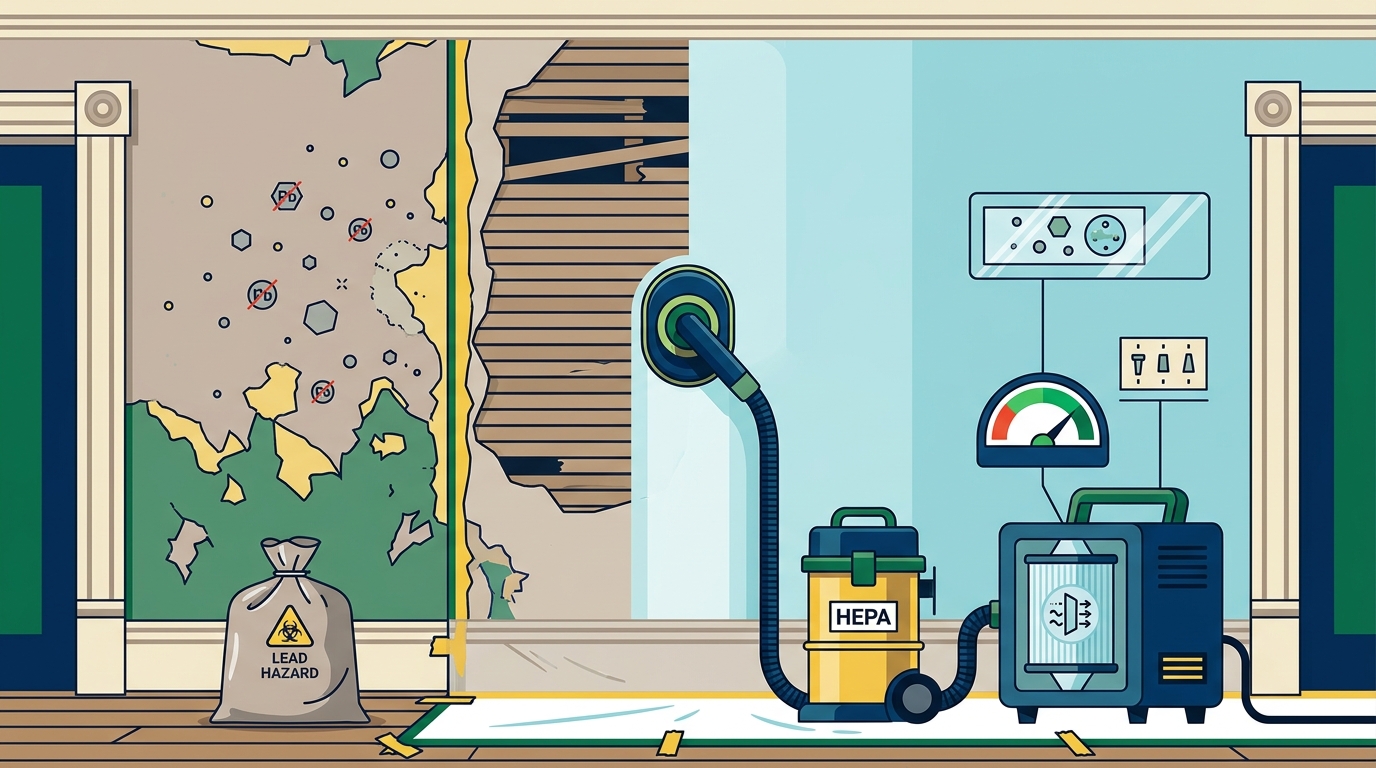
A detailed scope of work is essential. It should outline the containment strategies, removal methods, waste disposal plans, and clearance testing procedures. Ensure the scope includes post-abatement cleaning and verification. The contractor should explain how they will protect your HVAC system and other non-work areas from contamination. A vague proposal is a red flag. It often indicates a lack of thorough planning or an attempt to cut corners.
Comparing Abatement Service Models
Different abatement methods are suited for different situations. Understanding these options helps you choose the right contractor and service level.
| Service Model | Description | Best For | Regulatory Note |
|---|---|---|---|
| Full Abatement | Complete removal of lead-painted components. | Renovations or demolitions. | Requires strict EPA/State disposal protocols. |
| Encapsulation | Applying a special coating to seal lead paint. | Intact paint in low-risk areas. | Must be inspected annually for durability. |
| Enclosure | Building a new surface over lead paint. | Walls, ceilings, or structural elements. | Must be designed to prevent damage. |
| Replacement | Removing and replacing lead-painted items. | Windows, doors, and trim. | Waste must be handled as hazardous. |
Key Takeaways for Property Owners
- Regulatory Compliance is Mandatory: Federal and state laws require licensed professionals for any work disturbing pre-1978 paint. DIY attempts can result in fines and health hazards.
- Verify Local Licenses: DC, Maryland, and Virginia each have distinct licensing boards. Always check the specific state database for your property's location.
- Insurance is Critical: Ensure your contractor carries workers' compensation and general liability insurance to protect against liability.
- Clearance Testing is Non-Negotiable: Independent third-party testing is required in all three jurisdictions to verify the site is safe.
- Experience Matters: Choose contractors with a proven track record in the DMV region to ensure familiarity with local inspectors and codes.
- Detailed Contracts Protect You: A comprehensive scope of work prevents scope creep and ensures all safety protocols are documented.
- Health Risks are Severe: Lead exposure causes irreversible neurological damage. Professional abatement is the only safe solution.
Frequently Asked Questions
How much does lead abatement cost in the DMV area?
Costs vary based on the size of the area, the type of abatement method, and local labor rates. Generally, projects can range from a few thousand dollars for small rooms to tens of thousands for whole-house abatement. DMV Environmental provides detailed estimates after an initial inspection.
Do I need a license to perform lead abatement myself?
No. Individuals are generally prohibited from performing professional lead abatement without proper certification. The EPA and state agencies require specific training and licensing. DIY abatement is dangerous and often illegal.
How long does the abatement process take?
Timeline depends on the scope. Small projects may take a few days, while large commercial projects can take weeks. This includes containment setup, abatement, cleaning, and clearance testing.
What happens if the clearance test fails?
If the clearance test fails, the contractor must re-clean the area and re-test. This process continues until the dust lead levels meet regulatory standards. No one should occupy the space until it passes.
Can I stay in my home during abatement?
It is strongly advised that you and your family vacate the premises during abatement. Lead dust can easily spread to other parts of the home. Temporary relocation ensures your safety.
How do I verify a contractor's license in Maryland?
You can verify a contractor's license through the Maryland Department of the Environment's online database. Enter the license number to check status and any disciplinary actions.
What is the difference between lead inspection and abatement?
Inspection identifies the presence and location of lead paint. Abatement is the physical process of removing or sealing the lead paint. Both require specialized licensing.
Partner with DMV Environmental
Navigating the complexities of lead paint abatement in DC, Maryland, and Virginia requires expertise, precision, and unwavering commitment to safety. DMV Environmental offers comprehensive lead inspection, risk assessment, and abatement services tailored to residential and commercial properties. Our team of licensed professionals ensures full compliance with all federal and regional regulations. We provide transparent pricing, detailed scopes of work, and rigorous clearance testing. Do not risk your health or your property's value. Contact DMV Environmental today to schedule your lead paint assessment and secure a safe, compliant environment for your occupants.